
Library consortium sites want shared weekend catalog-vision training. What Slurm arrangement should admins use?
Select an answer to reveal the explanation.
Short Explanation
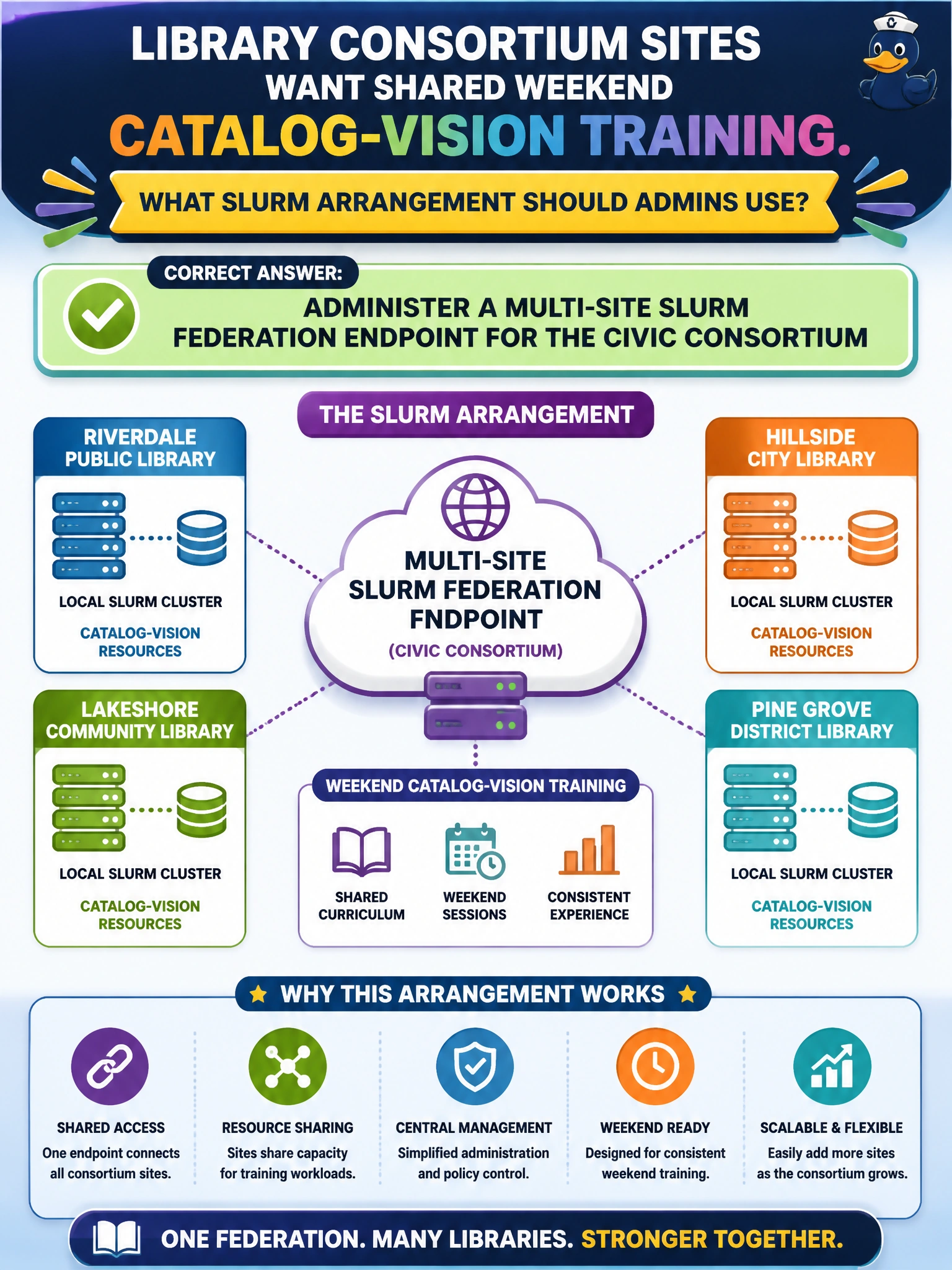
Federation links consortium queues so weekend catalog-vision can share capacity—think partner libraries lending seats, not GPUs in vans. Banning cross-site work or parking jobs on a cashier PC wastes the consortium.
Full Explanation
A library consortium that wants shared weekend catalog-vision training across sites needs a scheduler fabric that spans those sites. Administering a multi-site Slurm federation (or federated endpoints) lets each member keep local control while submitting or receiving eligible jobs into partner capacity for civic weekend windows. Federation is the operational arrangement that makes cross-site GPU sharing a policy decision rather than a courier problem. Shipping GPUs by courier every Friday with no scheduler is not an architecture—it is logistics theater with zero queue fairness, accounting, or reproducibility. Forbidding any cross-site submission forever rejects the consortium goal outright. Running training only on a single unused cashier PC lacks GPUs, isolation, and capacity for catalog-vision training and is not a multi-site admin design. Exam caveat: federation still requires compatible accounts, QOS, and network reachability between sites; federation alone does not fix mismatched CUDA/driver stacks or missing dataset replicas at the remote site. Operational check: register federation endpoints, submit a weekend catalog-vision job from one library site to eligible remote capacity, confirm accounting attributes the run correctly, and verify local weekday queues remain independently manageable.