
County clinic fabric operators want consistent DPU software across BlueField cards. What should they standardize?
Select an answer to reveal the explanation.
Short Explanation
Clinic DPUs should speak the same software dialect. Standardize one NVIDIA DOCA install profile across the BlueField fleet so county operators are not chasing one-off builds.
Full Explanation
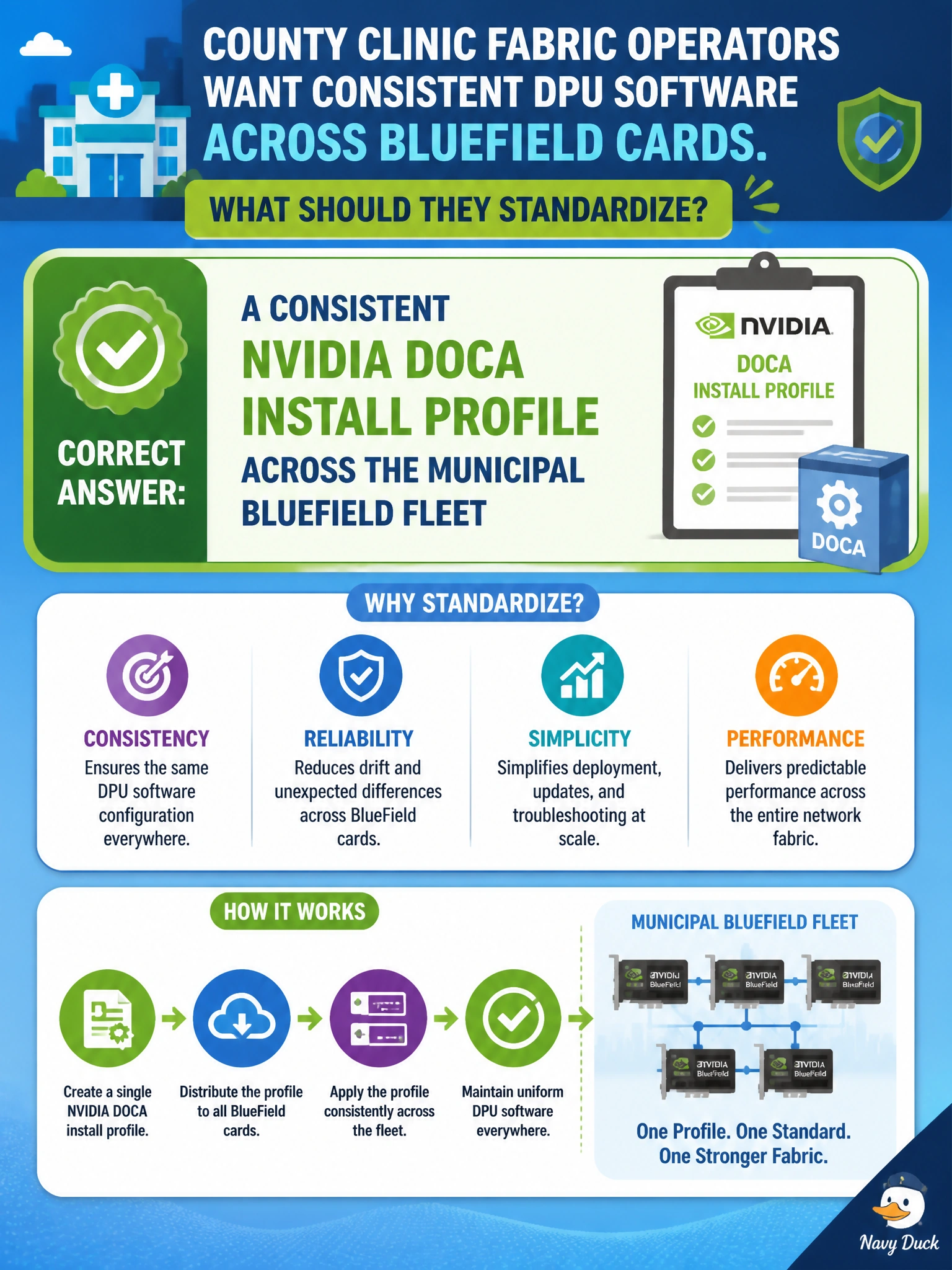
County clinic fabric operators who want consistent DPU software across BlueField cards should standardize a consistent NVIDIA DOCA install profile across the municipal BlueField fleet. One shared profile keeps versions, packages, and enablement flags aligned so clinic racks behave predictably under the same Spectrum-path offload expectations and so county ops can patch and audit as a fleet.
A unified BlueField BMC firmware image managed through centralized out-of-band update workflows misses the point: BMC firmware controls management and out-of-band access, not the DOCA software stack running on the DPU, so standardizing it does not align DOCA versions, packages, or enablement flags across clinic cards. A shared host OFED driver package validated against clinic server kernel releases addresses the host side only; it does not install or standardize DOCA on the BlueField DPU itself, leaving DPU software inconsistent across the fleet. A common DOCA development container image for building clinic AI processing pipelines is a build-time artifact, not a runtime DPU software standard; it does not ensure that every BlueField card in the fleet runs the same DOCA install profile.
Exam caveat: fleet consistency for BlueField means a controlled DOCA install profile, not ad-hoc builds or omitting DOCA on a subset of municipal cards.
Operational check: publish the county DOCA install profile (version, packages, config), apply it to all clinic BlueField cards, sample-verify versions match, and add a NetQ or inventory compliance check that flags DOCA drift on the municipal fleet.