
The finance agent recommends high-dollar resident refunds. What oversight gate protects accountability?
Select an answer to reveal the explanation.
Short Explanation
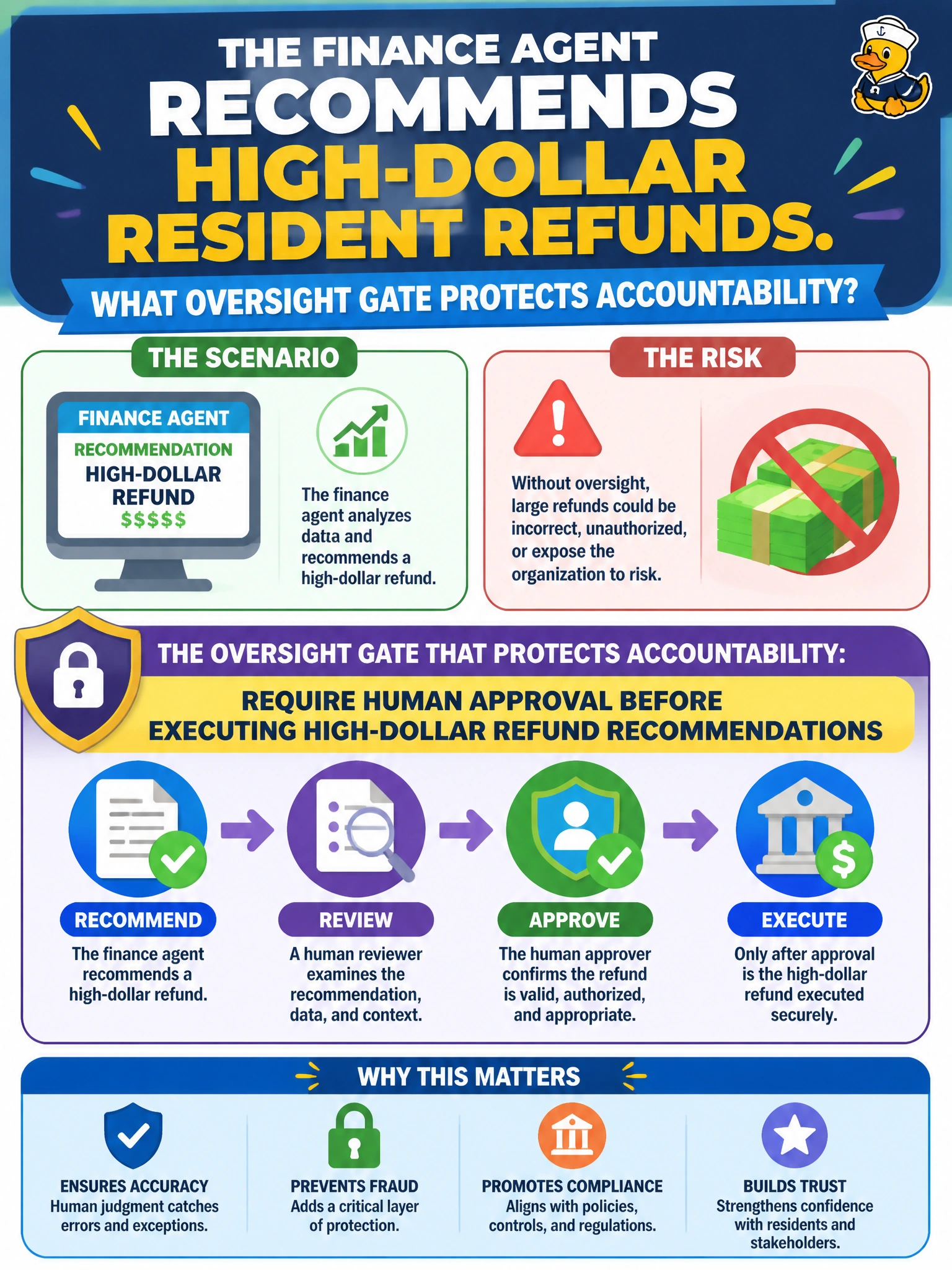
Big refunds aren’t self-serve for an agent. Human approval before execution keeps high-impact civic money moves accountable.
Full Explanation
When a finance agent recommends high-dollar resident refunds, accountability requires human approval before executing those recommendations. High-impact monetary actions must stay behind an authorization gate: the agent may draft or recommend, but execution (posting the refund) waits for an authorized human decision with recorded approval. That separation protects municipal funds and creates a clear accountability chain for large disbursements.
Auto-executing every refund the agent suggests with no review fails by concept because it treats model output as payment authority and invites erroneous or adversarial refunds. Capping nothing and letting the agent wire any amount overnight fails because unbounded automated disbursement is an extreme control failure on public money. Hiding refund actions from supervisors to speed throughput fails because concealment removes oversight precisely where financial risk is highest; speed is not a substitute for authorization.
Exam caveat: NCP-AAI oversight items repeatedly separate agent recommendation from privileged execution—especially for money movement. Prefer human approval before high-dollar refund execution over auto-pay, unbounded wiring, or hidden actions.
Operational check: set a refund amount threshold that forces approval workflow; bind execute APIs to approver roles; require dual control above policy limits; audit recommend→approve→execute events; test that the finance agent cannot call execute without a valid approval token.