
Auditors review a denial letter produced with agent help. What transparency artifact do they need?
Select an answer to reveal the explanation.
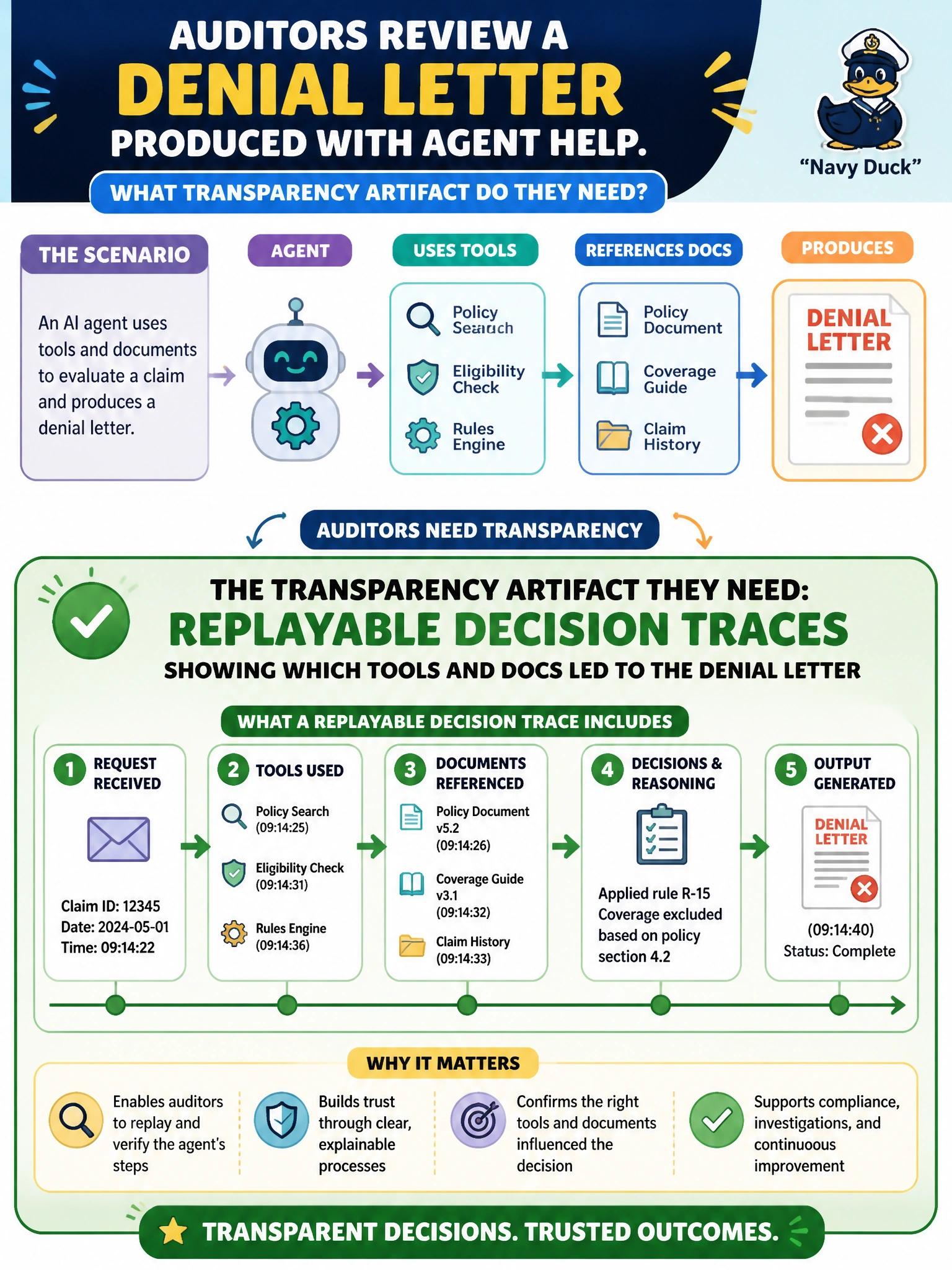
Short Explanation
Auditors need a flight recorder, not an avatar selfie. Replayable decision traces of tools and docs behind a denial letter make municipal accountability real.
Full Explanation
Auditors reviewing a denial letter produced with agent help need replayable decision traces showing which tools and documents led to the letter. A replayable trace reconstructs inputs, tool calls, retrieved docs, intermediate decisions, and the final denial text so auditors can verify process integrity and evidence sufficiency. Municipal accountability for adverse actions depends on reconstructability—not on decorative AI branding.
A screenshot of the agent avatar with no decision details fails by concept because visual chrome is not an audit artifact and contains no evidentiary chain. Providing only the final PDF with all tool and document links stripped fails because the letter alone does not show how the agent-assisted process reached denial. Relying on verbal recollections from staff with no stored trace fails because memory is incomplete, biased, and non-repeatable under audit standards.
Exam caveat: NCP-AAI audit/transparency items prefer stored, replayable decision traces for agent-assisted adverse outcomes. Prefer traces of tools/docs over avatars, stripped PDFs, or oral history.
Operational check: persist decision traces for denial workflows (tool names, doc IDs, timestamps, model/prompt versions); grant auditors read access; practice replaying a sample denial end-to-end; ensure traces survive retention rules appropriate to adjudicative records.