
A housing portal denies an application and explains why. Why require structured feedback right after that denial explanation?
Select an answer to reveal the explanation.
Short Explanation
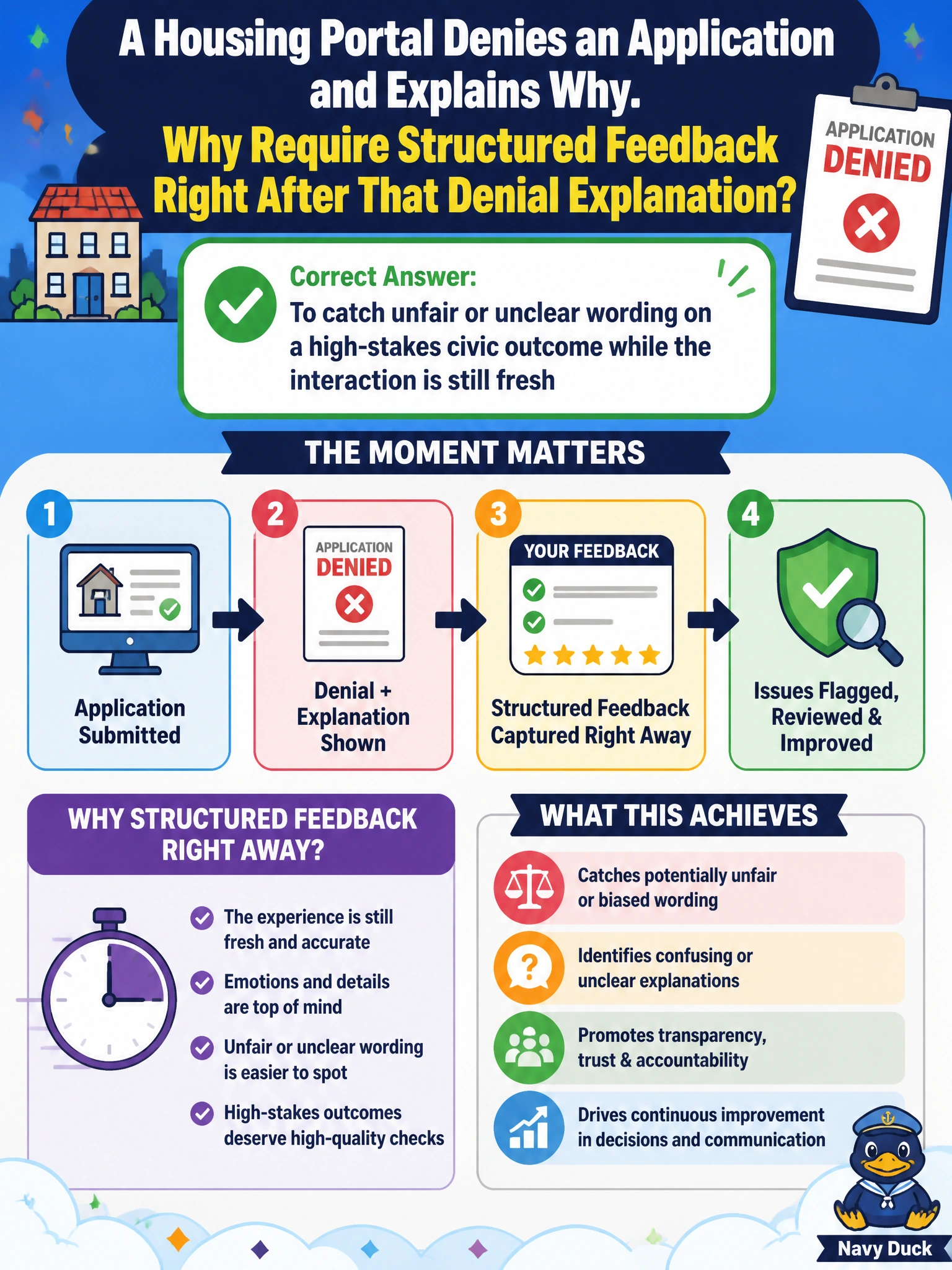
A housing denial can have serious consequences, so wording that feels unfair or unclear matters. You need structured feedback while the interaction is fresh to catch problems in the explanation; treating the denial as beyond review or rating only the screen’s color misses that purpose.
Full Explanation
Requiring structured feedback immediately after a housing-denial explanation captures residents’ perceptions of tone, clarity, and fairness while the interaction is fresh. That feedback helps identify unfair or unclear wording in a high-stakes civic outcome and supports equity review and improvements to the denial explanation. Treating a denial as beyond review once an agent has spoken overlooks the quality of the explanation residents actually receive. Asking residents to rate only the denial screen’s color theme gathers cosmetic feedback, not insight into whether the wording is fair or clear. Replacing denial notices with random approval messages does not address wording concerns and would undermine the integrity of the decision process. Exam caveat: feedback should assess the explanation, not merely the screen’s appearance, because wording problems in a high-stakes outcome can raise equity and compliance concerns. Practical check: after a staging denial explanation, confirm that a structured feedback form appears, includes fairness and clarity fields, and sends responses to a reviewable queue tied to the denial template version; verify that harsh or ambiguous wording is flagged for human review within the agreed SLA.