
An emergency-management fusion cell must add a new permit-attribute column to existing Parquet datasets used by multiple GPU jobs. What practice best manages that schema evolution?
Select an answer to reveal the explanation.
Short Explanation
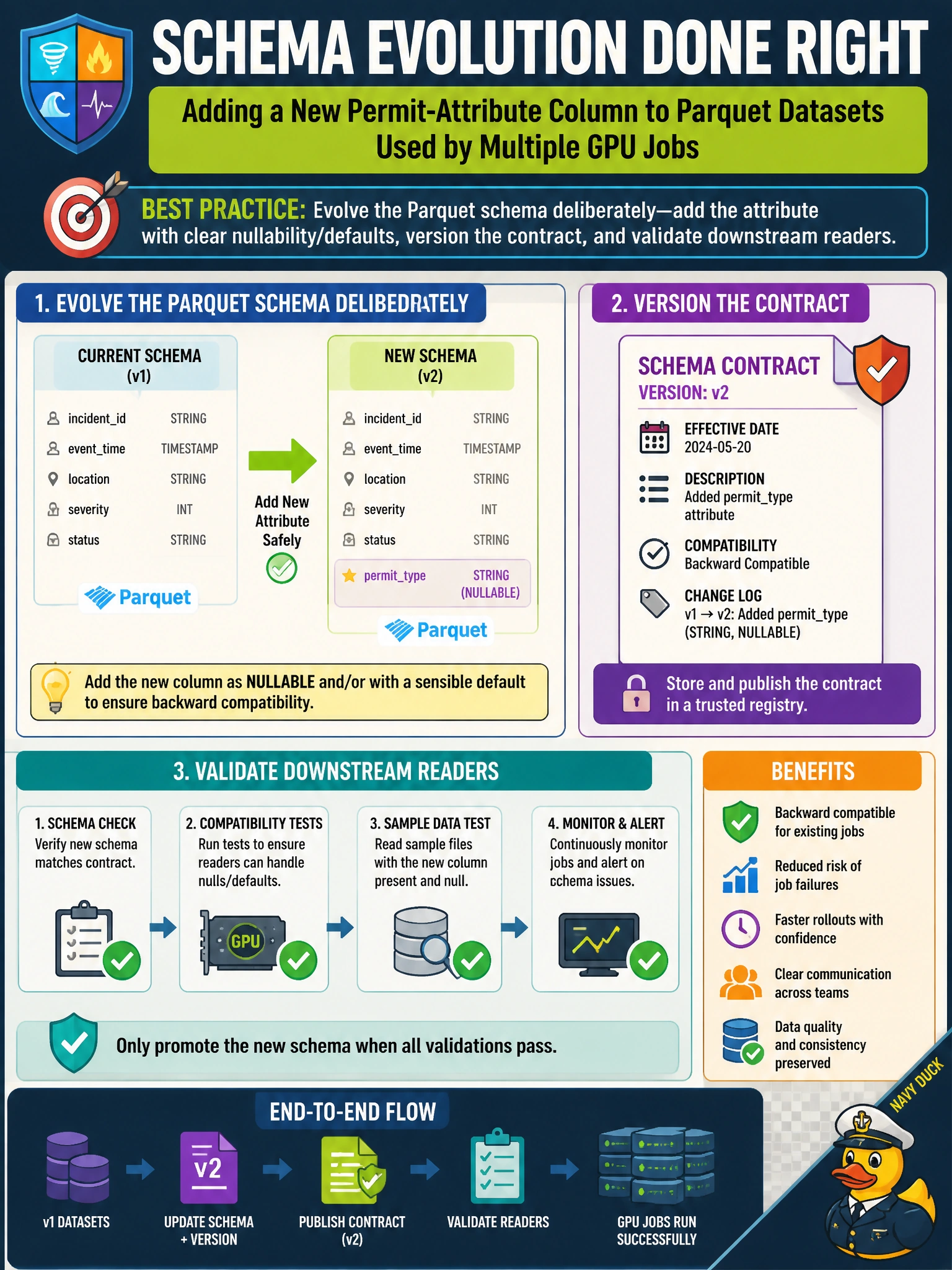
Adding a column midstream is like putting a new radio channel on every squad car—you announce it, set defaults, and make sure old cars still boot. You can evolve Parquet deliberately with a versioned contract instead of surprising downstream jobs with type breaks.
Full Explanation
An emergency-management fusion cell adding a permit-attribute column to Parquet datasets used by multiple GPU jobs should evolve the schema deliberately: add the attribute with clear nullability or defaults, version the contract, and validate downstream readers. Intentional evolution keeps historical partitions readable while making the new civic field available, helping the lake remain reproducible as permit-data requirements change. Silently overwriting historical files with incompatible types and no documentation fails because it can break existing jobs and undermines auditability. Deleting every existing Parquet file and rebuilding only current partitions fails because it discards historical records needed for trend and after-action analysis. Storing the attribute only in email attachments outside the lake fails because GPU jobs cannot reliably join an unofficial side channel into the governed dataset. Exam caveat: additive evolution is generally safer than in-place type changes; renaming or retyping an existing field without a versioned migration can still break readers, even when the change seems compatible. Practical check: add the permit attribute as a nullable or defaulted column under a versioned schema note, run representative downstream GPU jobs against old and new partitions, and confirm both succeed before updating the fusion-cell lake contract.