
Your team is running a high-performance compute environment handling continuous deep learning model training. To maximize system uptime and ensure the hardware runs at peak efficiency, which operational strategy should you implement?
Select an answer to reveal the explanation.
Short Explanation and Infographic
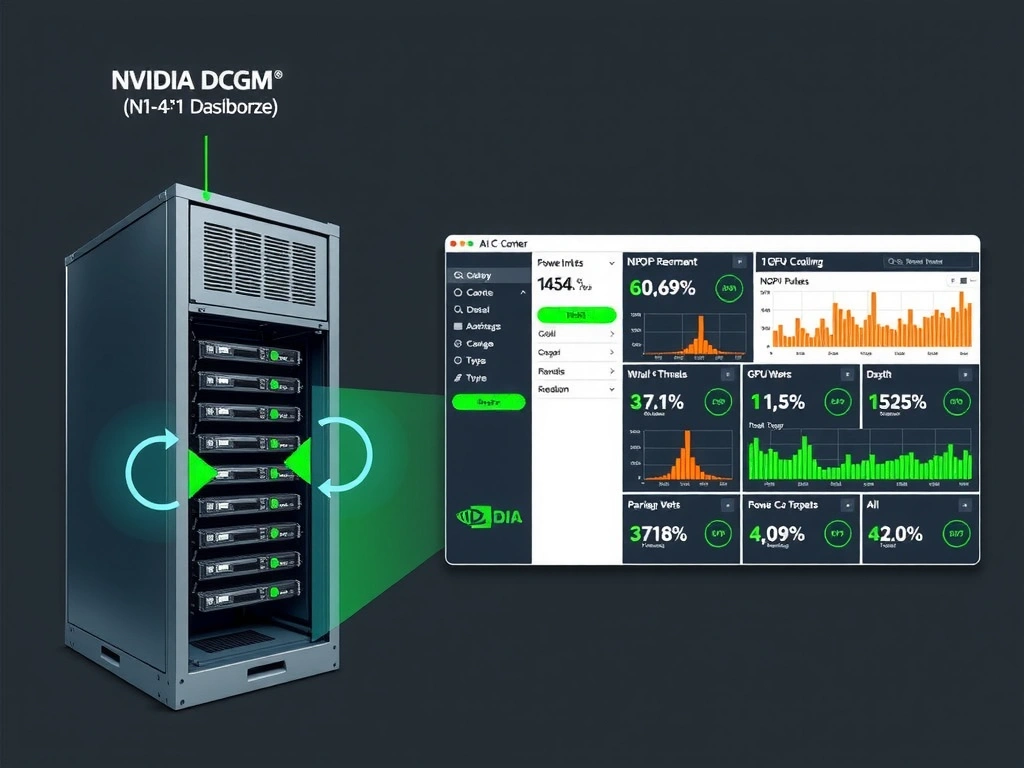
Look, running high-performance AI workloads is a completely different beast than managing standard web servers. These GPUs draw massive amounts of power and generate intense heat. If you lose power or your cooling drops for even a minute, you're looking at melted hardware and aborted training runs that cost thousands. That's why you need redundant power and cooling systems in place. But physical backup isn't enough; you also need eyes on the inside. That's where NVIDIA's Data Center GPU Manager (DCGM) comes in. It lets you audit GPU thermals, clock speeds, and utilization in real time. If a GPU starts throttling because it's too hot, DCGM will show you before the whole node crashes. Trust me, generic CPU monitoring tools won't help you here—they have no clue what's happening inside a GPU's Tensor Cores.
Full explanation below image
Full Explanation
Managing an AI-focused data center requires specialized infrastructure and telemetry. High-density GPU servers running deep learning training tasks consume significant power and generate substantial heat, making redundant power supplies and advanced cooling architectures critical for maintaining high availability. Furthermore, general-purpose system monitoring utilities are inadequate because they lack the ability to poll internal GPU metrics. Implementations should leverage specialized tools like NVIDIA Data Center GPU Manager (DCGM). DCGM provides low-overhead, real-time access to critical GPU health indicators, including thermal metrics, power consumption, memory utilization, and clock speeds. By combining hardware redundancy with proactive GPU-specific telemetry, operations teams can identify thermal bottlenecks, prevent hardware throttling, and minimize downtime for mission-critical training workloads.