
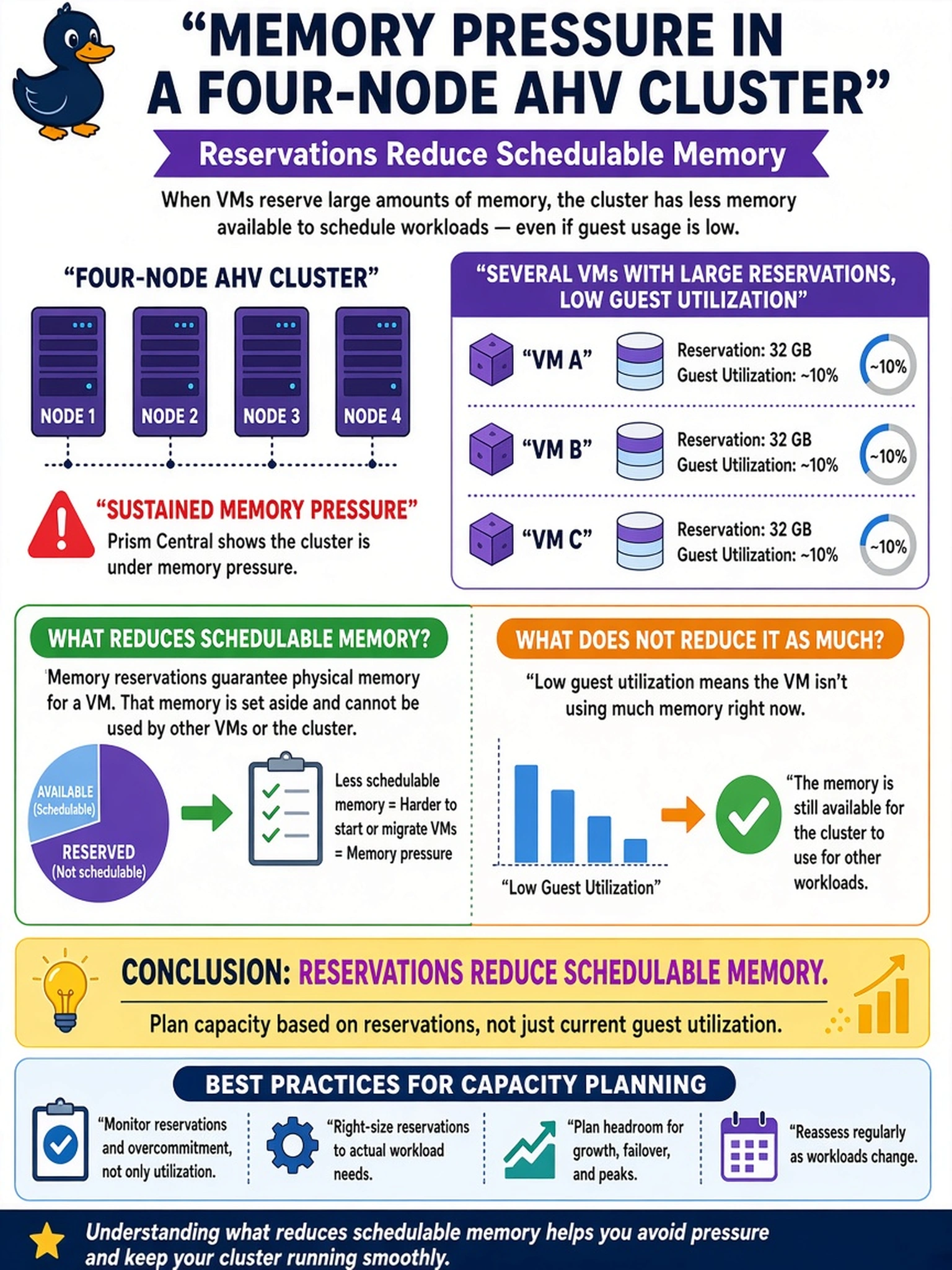
A four-node AHV cluster shows sustained memory pressure in Prism Central, while several VMs have large memory reservations but low guest utilization. When planning capacity, what should the administrator conclude?
Select an answer to reveal the explanation.
Short Explanation
Think of a reservation like a VIP seat: it's held even if nobody sits there. If you reserve lots of memory, your cluster has less schedulable room for everyone else. Low utilization doesn't mean low allocation.
Full Explanation
Mechanism: A memory reservation tells AHV to keep a set amount of physical memory available for a powered-on VM. That reserved memory is counted as allocated, even if guest utilization is low, so it is removed from the schedulable pool for other VMs and migrations. When reserved memory nears usable cluster memory, capacity pressure can appear despite low consumption. The snapshot-capacity distractor is wrong because snapshots consume storage, not host memory scheduling capacity. The overcommitment-toggle distractor is wrong because reservations constrain schedulable memory whenever the VM is on; they do not wait for a setting change. The ballooning distractor is wrong because reservations do not create capacity or trigger ballooning; ballooning reclaims unused memory under overcommitment, while reservations protect memory from reclamation. Exam caveat: on capacity questions, separate used memory from reserved memory because low utilization does not equal low allocation. Operational check: sum reservations for powered-on VMs and compare that total to cluster usable memory before adding more reservations or approving migrations.