
A Prism alert reports that a storage container has reached its configured capacity threshold. What is the primary operational purpose of this alert?
Select an answer to reveal the explanation.
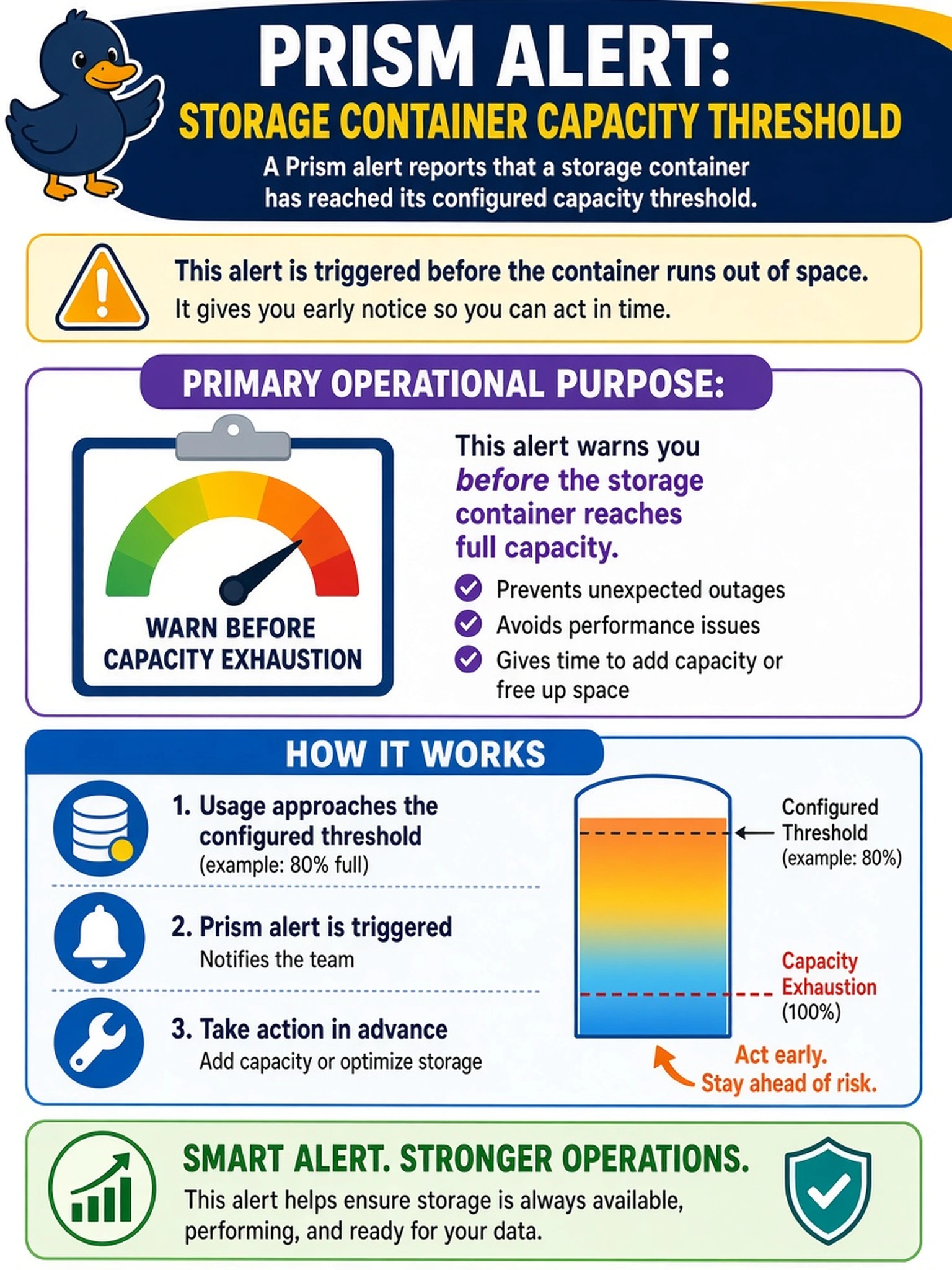
Short Explanation
Think of a capacity alert as the fuel gauge, not the tow truck. It tells you your container is getting full so you can act before space runs out. Don't confuse the warning with an automatic fix or a hardware failure.
Full Explanation
A capacity threshold alert exists to give administrators advance notice that a storage container is approaching the configured limit. When used capacity crosses the threshold, the alert serves as an operational prompt to investigate growth, reclaim space, or add capacity before the container becomes full. The correct purpose is proactive warning, not an action command or hardware fault signal. Curator rebalancing is wrong because Curator performs background storage processes such as data optimization, and a capacity threshold does not confirm completion. Failed CVM disk is wrong because disk failure is detected through hardware health or health-check events, not by container capacity reaching a threshold. Forced live migration is wrong because live migration is a workload placement action for maintenance or balancing, and a capacity alert does not automatically move VMs. Exam caveat: threshold values can vary by deployment, so read the alert details instead of assuming a fixed percentage. Operational check: review the container's capacity trend and alert definition, then validate runway and plan capacity expansion or cleanup.