
An administrator registers a new AHV cluster to Prism Central. What capability does this registration primarily provide?
Select an answer to reveal the explanation.
Short Explanation
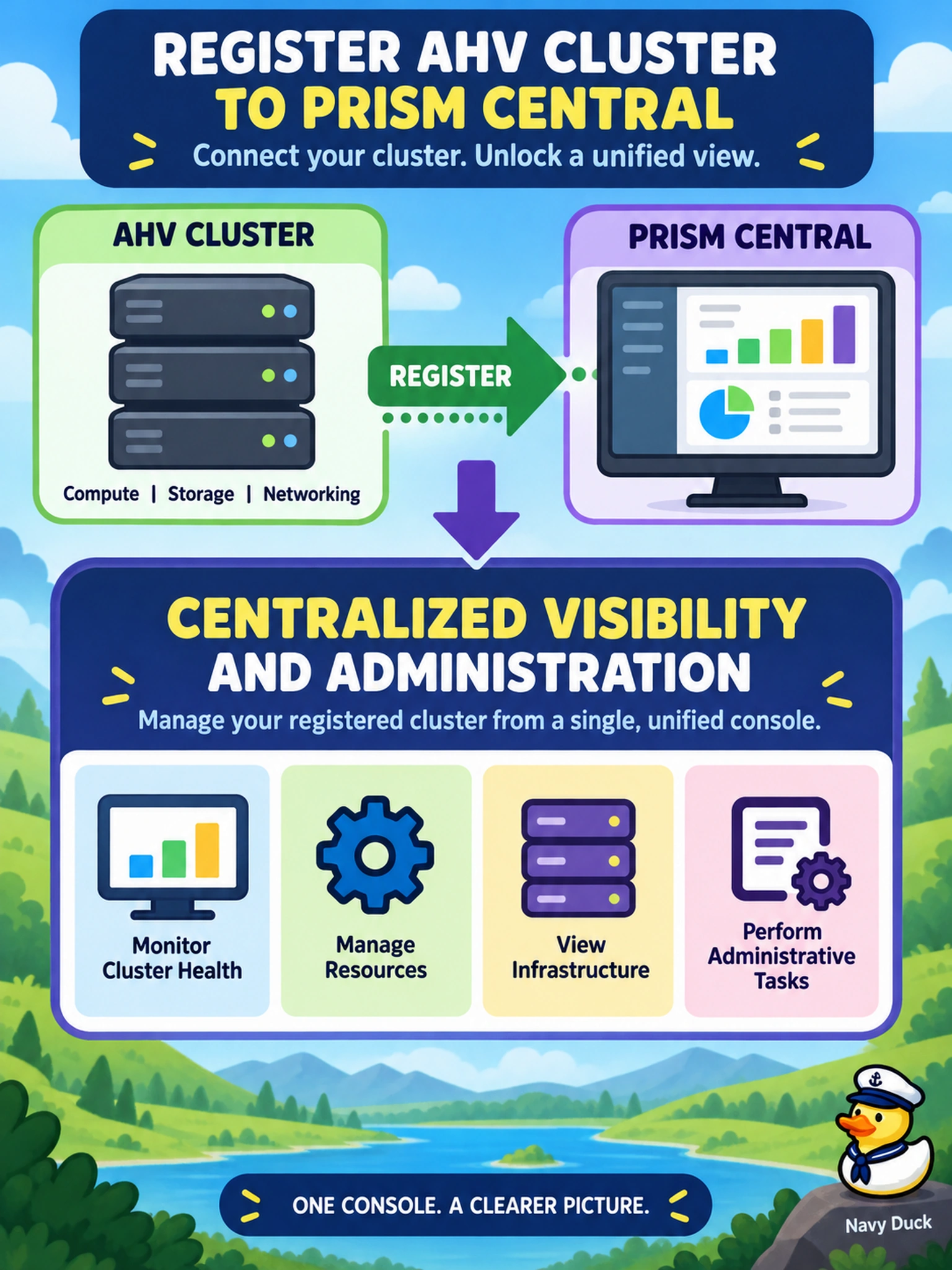
Think of registering a cluster like adding a TV to your remote: Prism Central can see it and control it, but the TV still runs its own settings. The key win is centralized visibility and administration, not magic VM placement or moving CVMs. Don’t confuse management registration with changing where workloads live or how the cluster is built.
Full Explanation
Registration connects a Nutanix cluster's Prism Element management interface to Prism Central, making the cluster an object that administrators can monitor and operate from a shared management plane. The primary result is centralized visibility and administration: cluster health, resources, alerts, and many operations become available through Prism Central while the cluster continues to run its own Prism Element and CVM services. Automated placement of all virtual machines across registered clusters is not implied, because placement depends on policies, resource availability, and explicit operations rather than simple registration. Migrating Prism Element management IP and CVM configuration to Prism Central is also incorrect, since Prism Central consumes management data but does not replace the cluster's local management endpoint or CVM configuration. Creating a separate Prism Element instance for each workload is wrong because Prism Element remains the cluster-level management service, not a per-workload instance. Exam caveat: registration means management plane integration, not workload migration or automated scheduling. Operational check: after registering the cluster, confirm it appears in Prism Central's cluster inventory and that its health and configuration pages load from Prism Central.