
A mechanic finishes grinding a contaminated valve inside a radiologically controlled area and reaches for a compressed-air hose to blow metal dust off the coveralls before exiting. Why must the radiation protection technician prohibit using compressed air for this purpose?
Select an answer to reveal the explanation.
Short Explanation
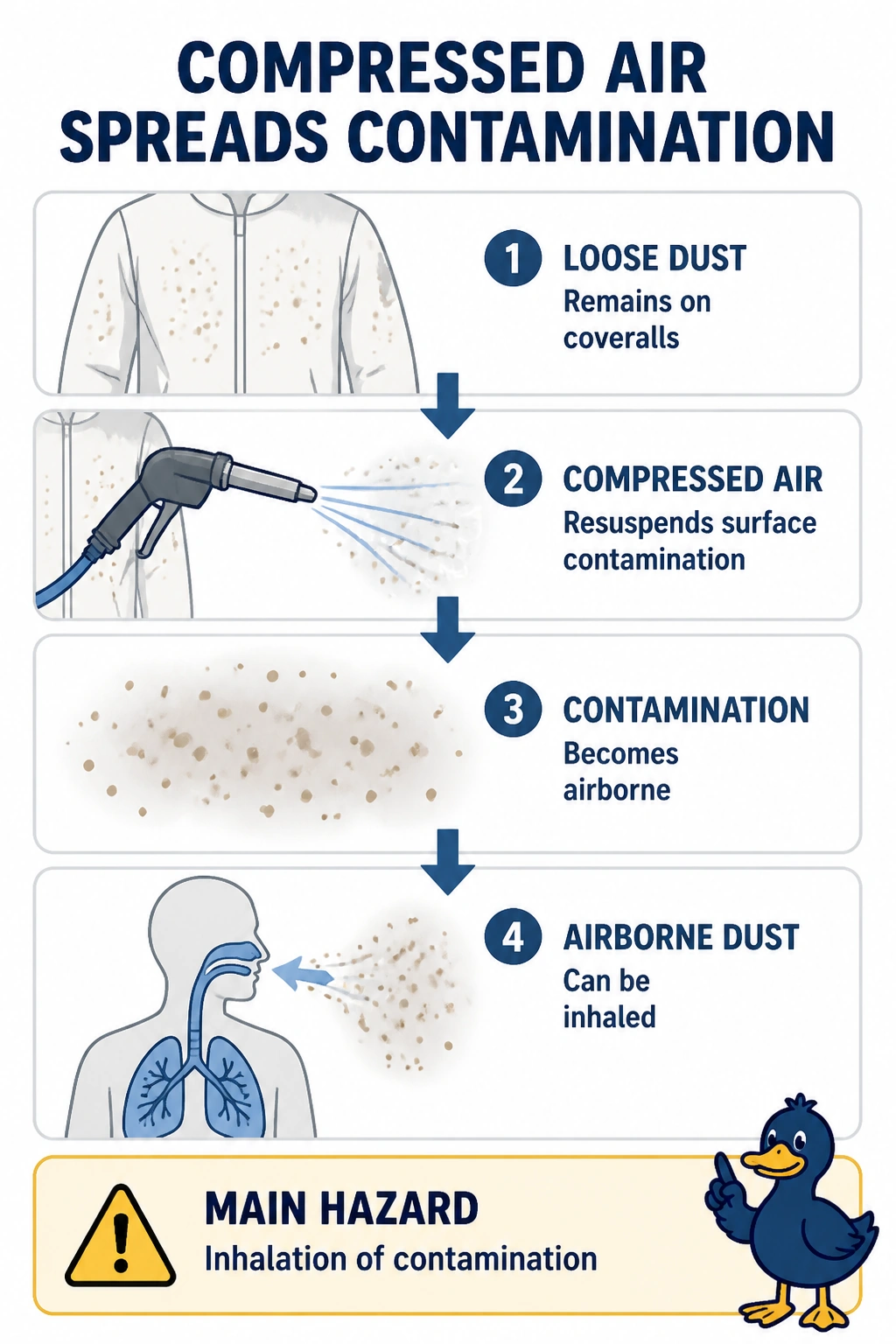
You’re right to pause before using the hose: compressed air can turn loose contamination on your coveralls into dust you and nearby coworkers could breathe. Avoiding that airborne hazard protects both you and the people around you.
Full Explanation
The radiation protection technician must prohibit compressed air because its airflow can resuspend loose surface contamination, creating an inhalation hazard. Once radioactive particles become airborne, they may enter a worker’s breathing zone and spread beyond the contaminated coveralls. The claim that high-pressure air forces particles deeper into fabric pores and makes laundry impossible does not identify the immediate radiological concern; the key risk is resuspension and possible internal uptake, not laundry difficulty. Rapid skin cooling and pore constriction do not explain the hazard either, because the concern is particulate contamination on clothing, not contamination being trapped in skin. Static electricity on synthetic coveralls interfering with exit friskers is also not the reason for the prohibition; any such effect does not account for the airborne release caused by the air jet. An exam caveat is that the prohibition is about using positive-pressure air to remove contamination, not merely about whether a hose or coverall is present. As a practical check, before leaving the controlled area, stop and follow the site’s contamination-control instructions for the coveralls rather than blowing dust into the air.
Prefer to study offline? Printable PDF study book + test engine ($7.50, unofficial). These questions stay free here.