
During hourly rounding the technician faces a high fall-risk patient needing toileting, another patient with a stat potassium draw due in 15 minutes, and a stable patient requesting an extra blanket. Which purposeful rounding and prioritization sequence best manages fall risk and time-sensitive labs?
Select an answer to reveal the explanation.
Short Explanation
You balance kindness with safety when urgent needs jump the line in smart order. Triage is like airport boarding for emergencies, so fall risk and stat labs board first.
Full Explanation
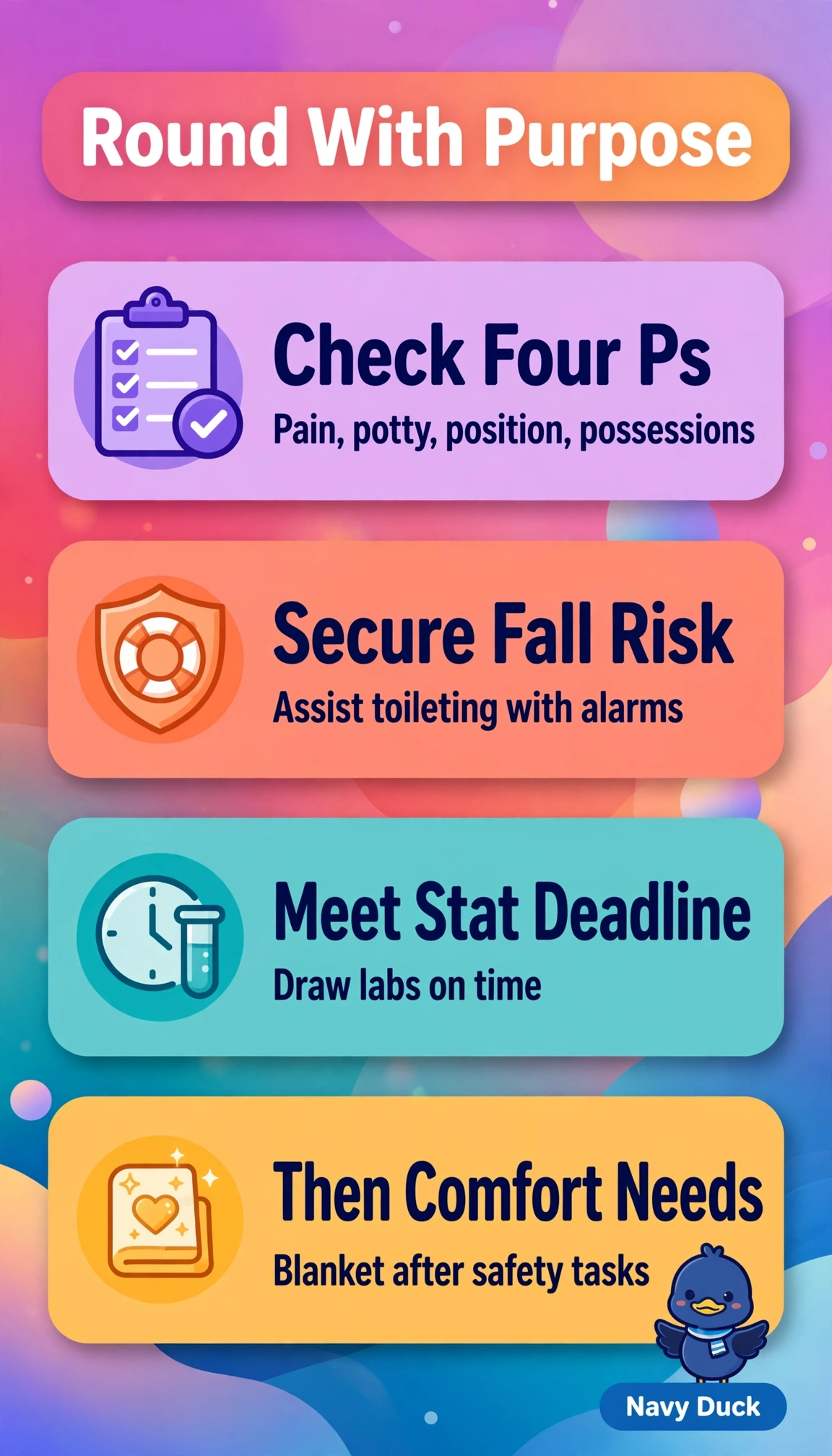
The correct sequence reflects purposeful hourly rounding combined with acuity and time-based prioritization because it retains the standardized rounding script for consistency and assessment, addresses imminent harm first by toileting the high fall-risk patient with assistance and alarms to prevent an unassisted attempt and incontinence-related complications, uses the remaining time in the 15-minute window to obtain the time-sensitive stat potassium without delay, and places the stable comfort request last. The sequence that draws the stat potassium before toileting is a commonly used time-critical approach but fails the concept of imminent-risk prioritization because a high fall-risk need to toilet cannot safely wait even when a stat has a short window. The sequence that delivers the blanket before the lab is sound comfort clustering for efficiency and satisfaction but fails time-sensitivity triage because stable comfort never outranks a stat diagnostic that guides urgent treatment decisions. The sequence that completes toileting, timely draw, and blanket delivery with thorough reassurance but without the rounding script is strong task-focused care but fails purposeful rounding fidelity because the script ensures pain, potty, position, possessions, fall reassessment, and clear expectations are consistently applied. Exam caveat is to not automatically rank any stat lab above toileting for a fall-risk patient and to interpret due in 15 minutes as must be done promptly but after preventing an immediate fall. Practical check is after toileting to re-enable bed and chair alarms, ensure call light and belongings are in reach, verify stat specimen labeling and timely transport, then document the round and promptly inform the nurse of any change.