
A nurse asks the technician to open a sterile dressing tray for a bedside change in a small double room where a visitor is present, the trash bin is full, and the bedside table is cluttered. Which sterile field setup and maintenance approach preserves aseptic and sterile technique?
Select an answer to reveal the explanation.
Short Explanation
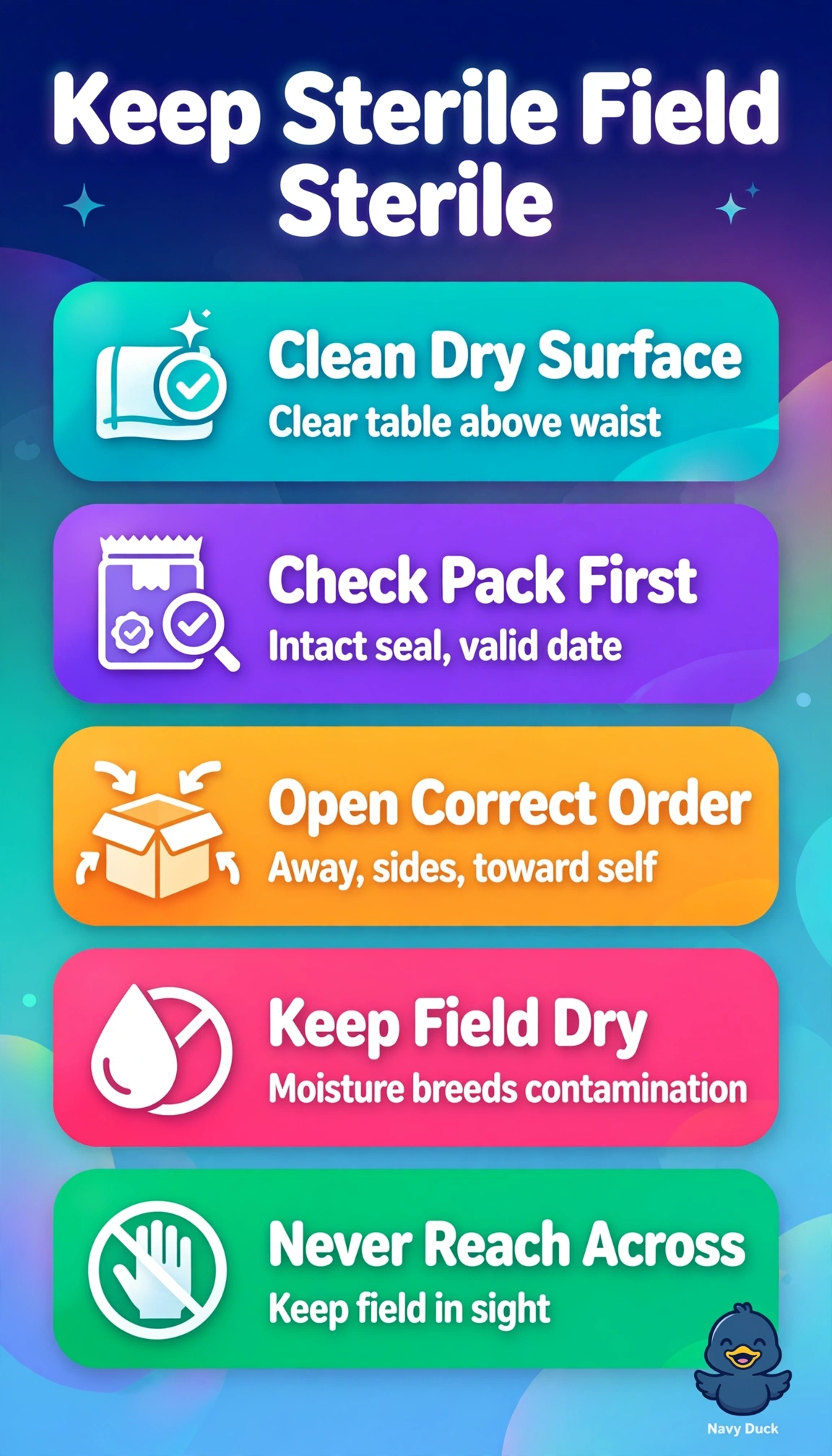
Sterile fields stay safe when you give them space, dryness, and respect for borders. Asepsis is like keeping a clean picnic blanket off the ground, so height and dryness protect it.
Full Explanation
The correct setup works because clearing provides clean dry surface, hand hygiene before handling reduces transfer, checking integrity and date confirms barrier, opening away then sides then toward self avoids reaching over sterile surface, and keeping field dry above waist keeps it visible and prevents wicking. The choice verifying date without inspecting for tears moisture or seal failure fails integrity because compromised wrapper voids sterility even when date is current. The choice doing hygiene last after clearing inspecting and opening fails sequencing because unclean hands contaminate wrapper edges that contact field during setup. The choice opening toward self first fails no-reach principle because opening far flap after center is exposed drops skin and sleeve contaminants onto sterile area. Exam caveat: do not select familiar ward routine if one aseptic element is missing because items deliberately make near-complete steps wrong to test full criteria. Practical check: confirm clear dry table, intact dry in-date package, clean hands just before opening, pull flaps without crossing field, keep field dry above waist in view until use.