
A patient care technician sustains a needlestick from a used needle during cleanup in a crowded emergency department, with visible blood on the glove and a small puncture. The source patient is present, sharps container is nearby, and the supervisor is on site. Which immediate response best follows the exposure control plan after occupational exposure?
Select an answer to reveal the explanation.
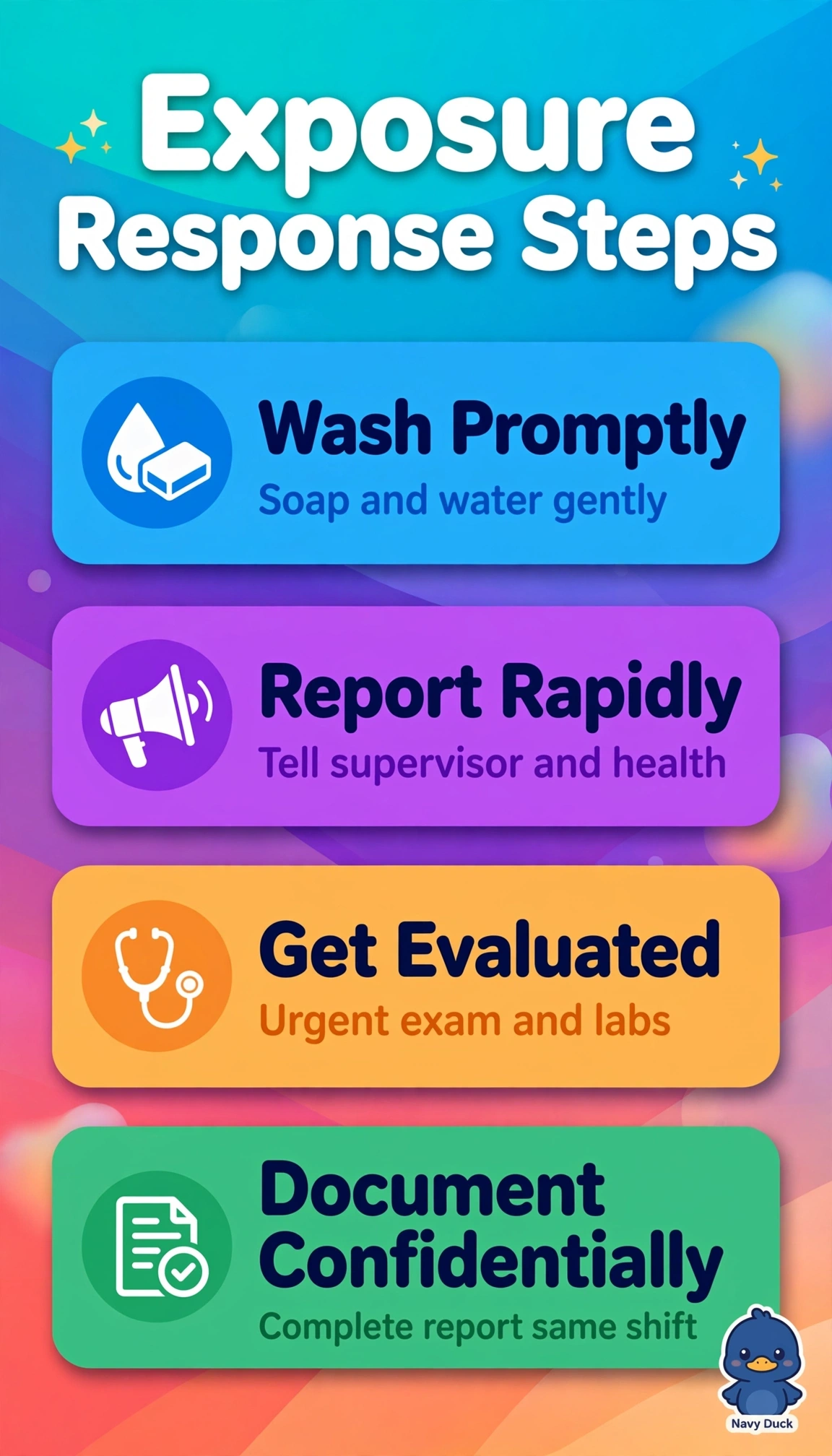
Short Explanation
You act fast but in the right order because exposure care is time sensitive. Washing and rapid reporting opens treatment pathways like pulling the alarm before smoke spreads.
Full Explanation
The correct response preserves the exposure control plan sequence of immediate decontamination, prompt chain-of-command notification, and urgent clinical follow-up for risk assessment, counseling, baseline testing, and time-sensitive consideration of post-exposure prophylaxis. Washing with soap and water reduces bioburden without further tissue trauma, prompt supervisor notification activates documentation, source evaluation, and referral pathways, and prompt medical evaluation protects prophylaxis windows. The distractor describing washing, safe disposal, and supervisor notification without medical follow-up fails on continuity of care because containment and reporting do not replace clinical stratification and prophylaxis decisions. The distractor describing washing, notification, and arranging source testing before seeking care fails on sequencing and urgency because source results must not delay the exposed worker’s own evaluation when effectiveness depends on hours. The distractor describing sharps containment, notification, and medical evaluation without washing fails on decontamination because it leaves the portal of entry inadequately cleansed despite correct escalation. An exam caveat is that familiar correct steps like disposal or source testing are often used to mask an omitted or delayed core element, so choose the response that preserves all elements in the proper timeframe rather than a strong partial sequence. A practical check is to confirm cleansing method, supervisor name and notification time, and employee health arrival time while securing the sharps container and identifying the source patient without delaying care.