
A PCT monitoring telemetry on a post-surgical unit sees a sudden flatline on the central monitor for a patient who was talking comfortably minutes ago. The bedside monitor shows a loose lead, the patient is pale and difficult to rouse, and the nurse is in another room. Which immediate response best addresses suspected cardiopulmonary compromise during rhythm monitoring?
Select an answer to reveal the explanation.
Short Explanation
You’re putting the patient before the tracing, exactly right. Assessment first turns a scary flatline into fast help, not just a cleaner signal.
Full Explanation
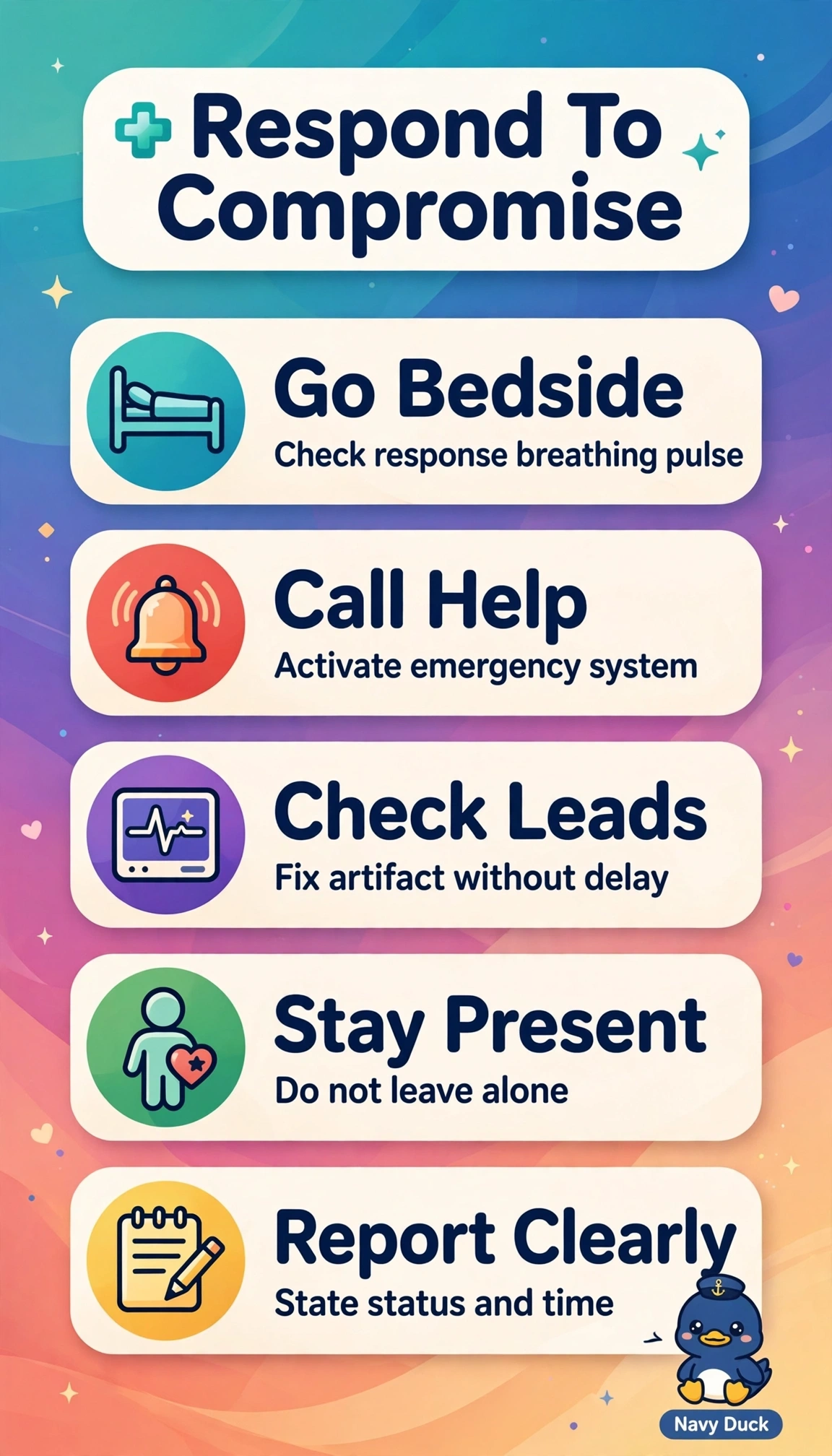
Suspected cardiopulmonary compromise with a flatline, new pallor, and difficult to rouse requires immediate bedside verification of responsiveness and breathing rather than trusting either the central or bedside display, careful handling of the loose lead so artifact troubleshooting never delays assessment or resuscitation, and prompt activation of the emergency response system because the clinical change suggests true deterioration even if artifact contributes. One plausible but incorrect approach of securing the tracing before assessing the patient fails by prioritization because equipment fidelity never precedes airway, breathing, and responsiveness when collapse is possible. Another plausible approach of activating the system from the central station and delegating bedside evaluation fails by assessment because telemetry cannot distinguish asystole from lead disconnect and requires direct examination of pulse, breathing, and consciousness. A third plausible approach of staying at the bedside to observe and correct artifact until normal rhythm returns fails by escalation because continued observation without emergency activation delays definitive help for a patient showing systemic hypoperfusion signs. As an exam caveat, do not assume flatline with a loose lead is only artifact when accompanied by pallor or altered responsiveness, always treat the patient before the monitor. As a practical check, approach the bedside, stimulate and assess breathing, call for help via the emergency system, and touch leads only if it does not interrupt care.