
A PCT is coaching a post-laparotomy adult on day one who has a nasal cannula at low flow, an incentive spirometer at bedside, and thick oral secretions the nurse said to suction orally only. The patient fears pain and takes shallow breaths. Which coaching approach should the PCT use for oxygen, spirometry, oral suction, and TCDB exercises?
Select an answer to reveal the explanation.
Short Explanation
You help lungs reopen when comfort and flow come first. Good breathing coaching is like sipping through a straw slowly — splinting eases pain so deep breaths and coughs work.
Full Explanation
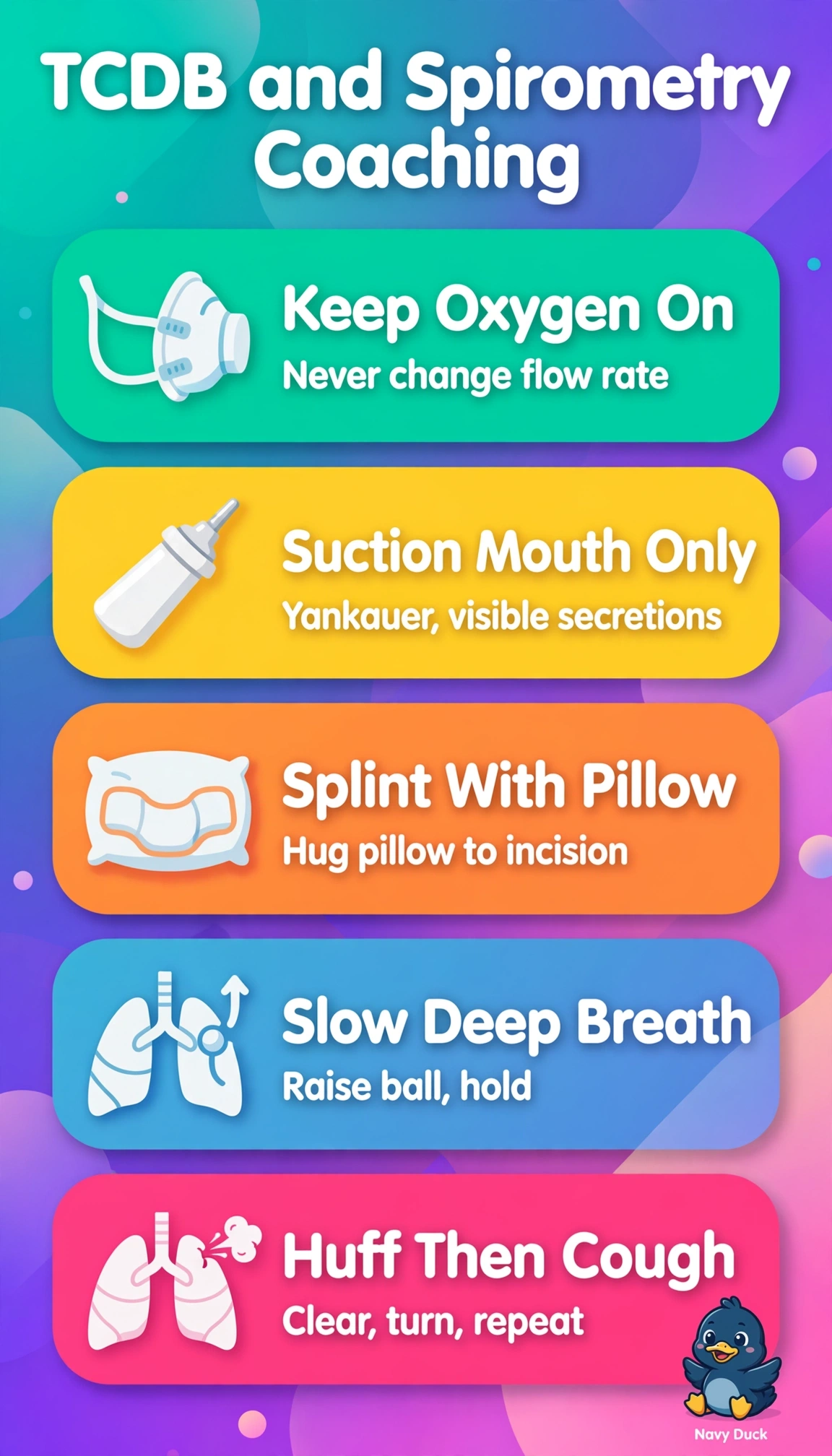
Postoperative pulmonary care requires maintaining prescribed oxygen without unsupervised adjustment, limiting suction to the oral cavity with a Yankauer to avoid vagal stimulation and mucosal trauma, then supporting turn-cough-deep-breathe with pillow splinting and slow sustained inspiration on the incentive spirometer to recruit alveoli and mobilize secretions. Removing oxygen, suctioning deep into the pharynx, and forcing unsplinted coughing causes hypoxemia, gagging and tissue injury, and incisional pain that inhibits effective ventilation. Increasing flow and shaking the device while omitting cough misuses both devices, as flow rates are nurse or provider ordered and spirometry requires slow maximal inspiration with breath hold rather than rapid shaking. Inserting deeper suction catheters and performing percussion are beyond PCT oral-suction scope and omit essential splinting and voluntary deep breathing mechanics. Exam caveat is that PCTs coach and assist but never titrate oxygen or perform deep suctioning independently. Practical check is to confirm pain control, sit the patient upright, keep the cannula on, suction mouth only if you see secretions, then demonstrate splint, inhale, hold, and huff-cough.