
A PCT prepares to enter the room of a patient with influenza-like illness requiring droplet plus contact precautions, has a gown, surgical mask, goggles, and gloves ready, has clean hands, and will provide close bedside care and remove a soiled gown afterward. Which donning and doffing sequence should the PCT follow to maintain protection and prevent self-contamination?
Select an answer to reveal the explanation.
Short Explanation
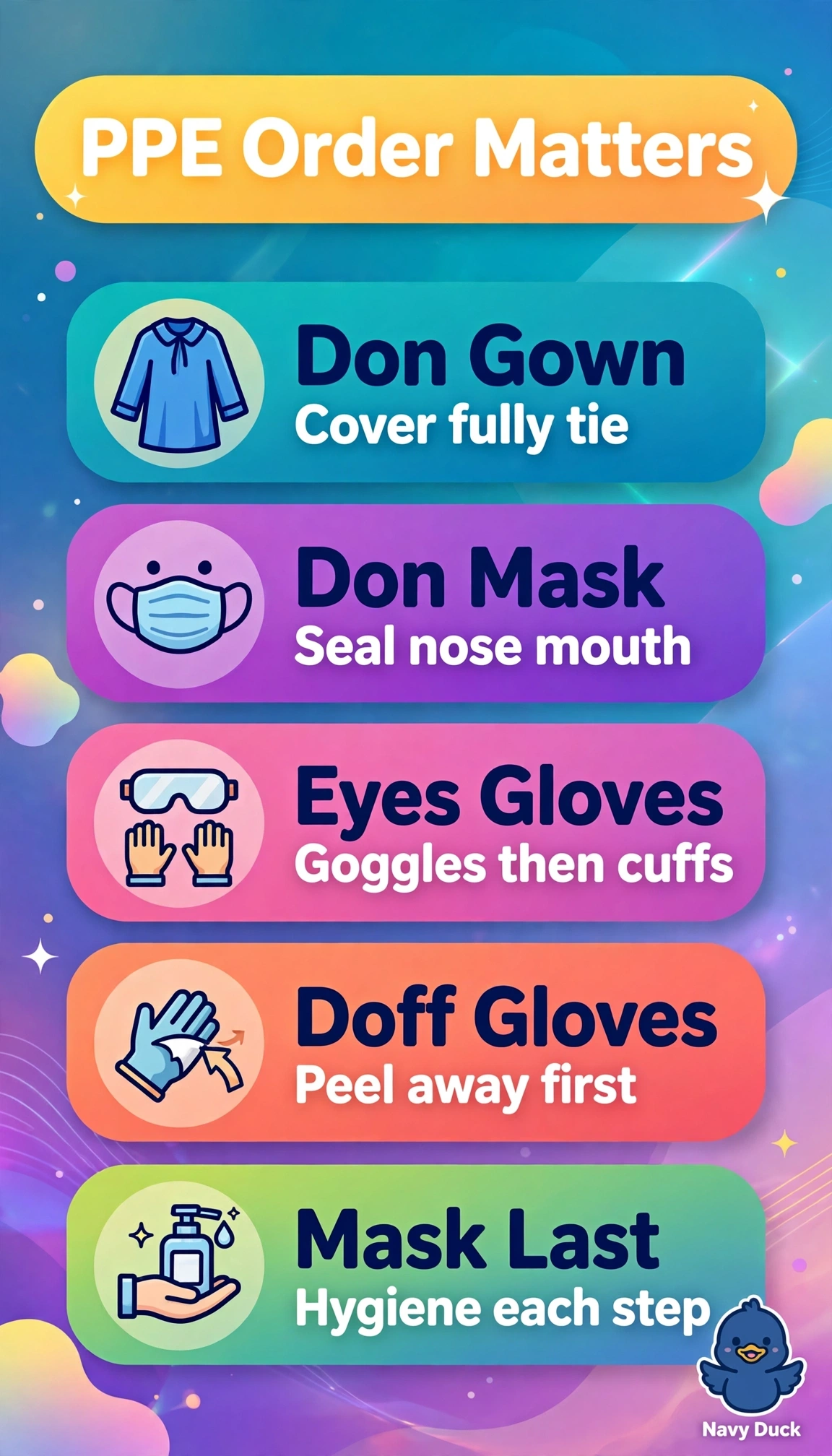
You'll don your gown, mask, then goggles, and pull gloves on last so nothing's exposed. To doff, you'll toss gloves, then goggles and gown, saving your mask for very last with hand hygiene, like peeling off muddy layers without touching the grime.
Full Explanation
CDC donning order of gown, mask or respirator, goggles or face shield, then gloves over cuffs ensures full coverage with each layer, and doffing by removing gloves first, then eyewear, then gown, then mask away from the patient with hand hygiene before and after and between steps prevents contaminated outer surfaces from contacting face, mucous membranes, or clothing during close droplet and contact care. Donning gloves first traps the gown cuffs underneath and removing the mask first with dirty gloves brings contamination directly to the face. Omitting eye protection leaves conjunctiva exposed to droplets and pulling a soiled gown over gloves drags contamination onto hands and wrists rather than peeling away cleanly. Donning and removing in any convenient bundle ignores the principle of handling only clean ties and inner surfaces and increases self-inoculation risk for speed. Exam caveat is that mask removal location and hand hygiene timing are heavily tested, so remember to remove the mask last away from the room and clean hands repeatedly, and practical check is to inspect for gaps, secure ties, and discard disposables without shaking.