
A mutoscope parlor wants a one-line practice for trustworthy multimodal models covering stills, speech, and a possible ACE face. A vendor pushes Guardrails, confidential GPUs, and servers from another exam. What summary fits this exam?
Select an answer to reveal the explanation.
Short Explanation
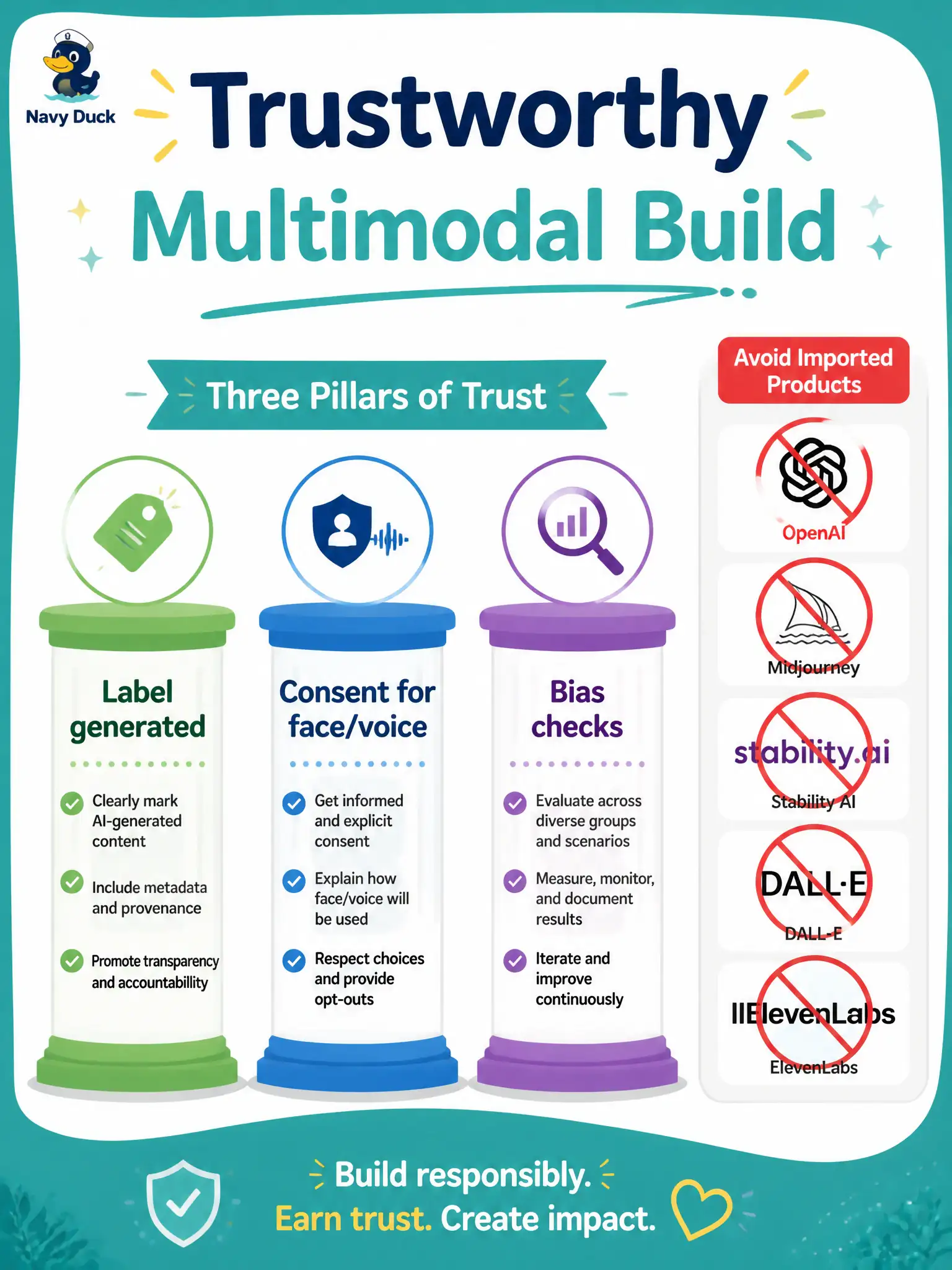
Trustworthy multimodal build here is three honest habits: say what was generated, ask before using faces and voices, and watch for bias. Do not paste in another exam’s gadget list.
Full Explanation
A mutoscope parlor wanting a one-line practice for trustworthy multimodal models covering stills, speech, and a possible ACE face should mark generated content, take consent for faces and voices, and check bias—without importing another exam’s product list when a vendor pushes Guardrails, confidential GPUs, and unnamed servers.
Installing NeMo Guardrails and confidential H100 branding as the official NCA-GENM checklist fails by importing another exam’s product list. Skipping labels if ACE and Riva are already wired in Domain 4 fails: implementation wiring does not satisfy Domain 7 disclosure. Replacing consent and bias checks with unnamed third-party serving products fails trustworthy substance.
Exam caveat: the associate trustworthy line is disclose, consent, and bias-check—not a shopping list of off-exam brands.
Operational check: publish a one-page parlor policy: label generated stills/speech/avatars; require consent for face/voice reuse; run bias probes on role prompts; reject vendor checklists that substitute product logos for those civic duties. In municipal trustworthy-AI stewardship, record the disclosure, consent, or bias decision and the rejected shortcuts in the gallery change log so future stewards protect residents from undisclosed synthesis and stereotyped generation. Re-audit labels, consent records, and bias samples after the next model or exhibit update to keep the city's public trust intact.