
A sundial yard hears an official two-stage high-resolution session: work in a compressed stage, then a second stage. At associate depth, how may that path be used?
Select an answer to reveal the explanation.
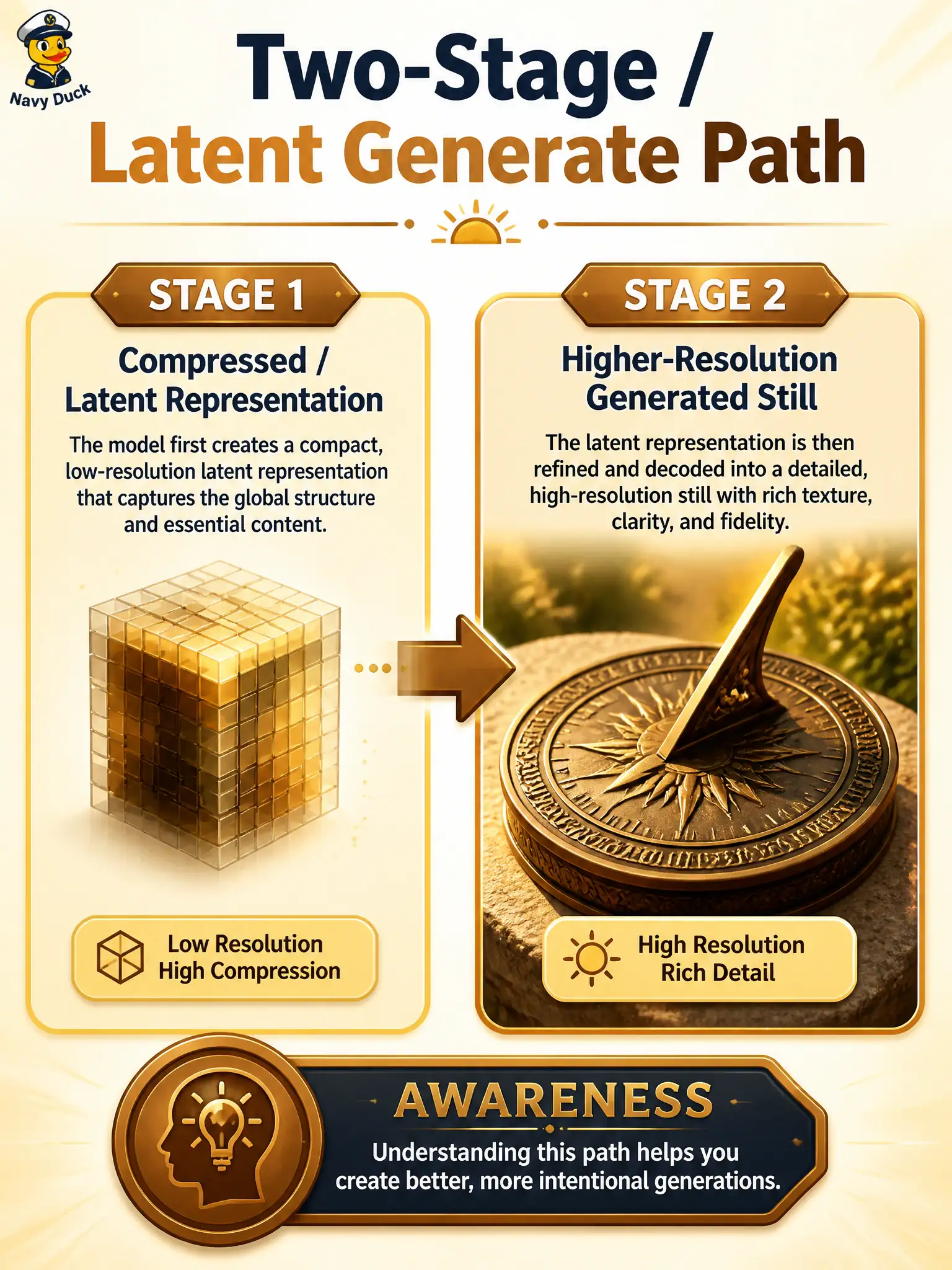
Short Explanation
Two stages means rough draft in a small room, then a finish pass—awareness-level choice when you assemble the generator. Don’t turn the talk into a fake product exam.
Full Explanation
An official two-stage high-resolution session—work in a compressed stage, then a second stage—may be used at associate depth as an allowed two-stage / latent generate path when assembling the generator. That use is correct for the sundial yard. Civic high-res still generation may follow that allowed path without inventing product SKUs or writing CUDA upscalers.
Treating it as a full product exam that invents a named SKU from a GTC talk fails scope. Requiring a handwritten CUDA upscaler kernel fails associate limits. Claiming noise-to-image must always start from a real photograph fails the noise/latent generate skill.
Exam caveat: two-stage/latent generate is an allowed assembly pattern, not a license to invent SKUs or kernels. Operational check: if civic materials allow the two-stage path, assemble it in the framework generator; do not rename it as a new product. Align this choice with the agency’s published multimodal runbook so civic operators can audit why the configuration was accepted. Record the civic software choice in the service README—named modules, inputs, and domain—so operators can replay the same path during audits and handoffs. Prefer explicit, reversible civic decisions over silent assumptions when multimodal data or software paths move toward production.