
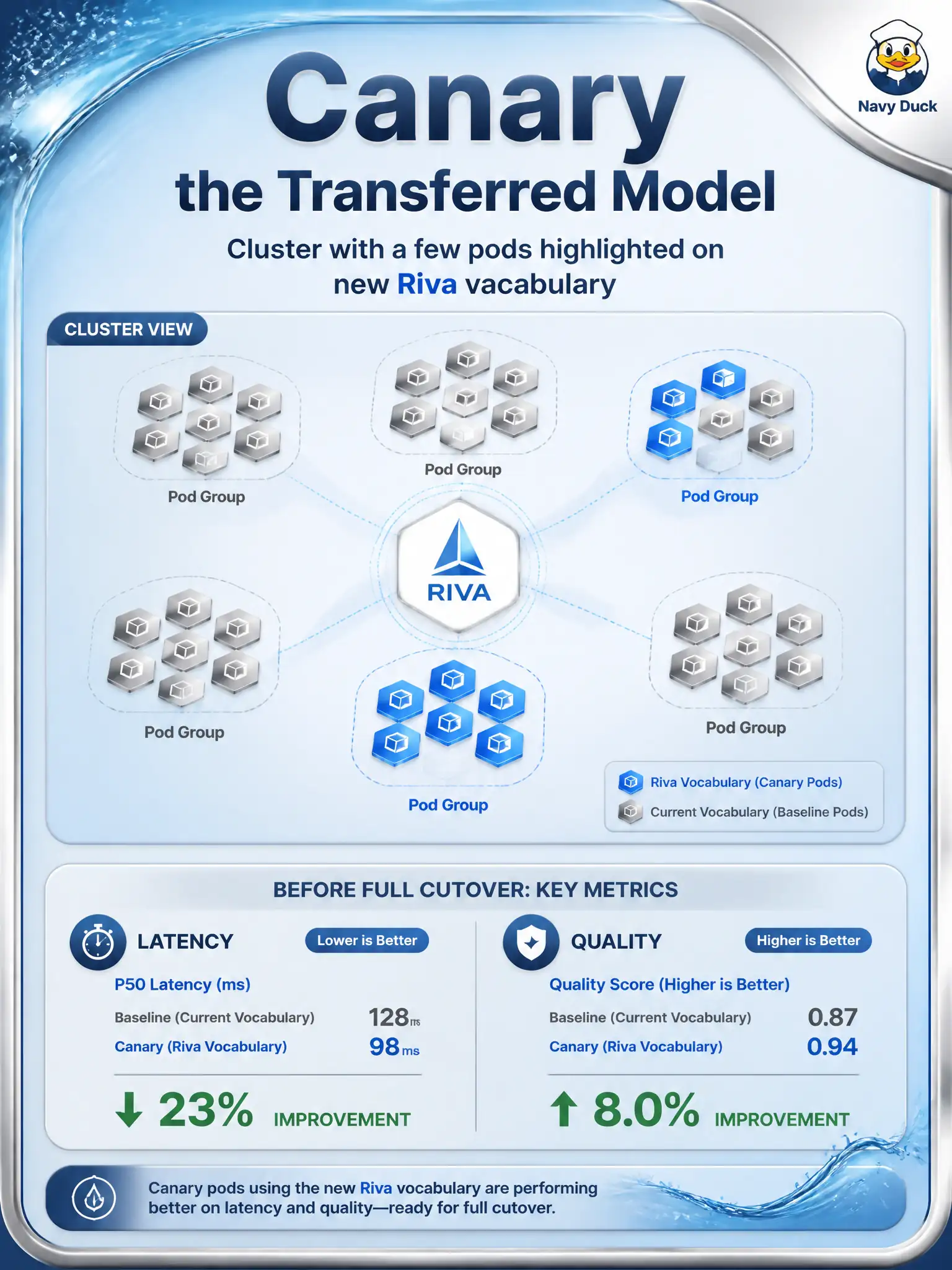
A spring-house team adapted a new Riva vocabulary (transfer) and wants it on some pods first. How should they roll it out?
Select an answer to reveal the explanation.
Short Explanation
New ears on a few pods first—watch the stopwatch and the words—then open the gates. Transfer brings the weights; Helm stages the safe reveal.
Full Explanation
A spring-house team that adapted a new Riva vocabulary (transfer) and wants it on some pods first should roll a subset of pods through the Helm release so latency and quality can be watched before a full cutover. Canary-style partial rollout is the operational performance practice for civic speech updates.
Cutting over every pod at once with no partial rollout because transfer never needs canaries fails risk control. Skipping Helm and hand-editing each node so canary behavior cannot be measured fails operability. Treating the new vocabulary as a Domain 7 authenticity vote instead of a deploy concern fails domain.
Exam caveat: transfer produces the new vocabulary; Helm partial rollout validates it under live traffic before full cutover.
Operational check: ship vocabulary to a pod subset; compare WER and latency to control pods; promote or roll back; only then cut over the full municipal spring-house chart. In municipal platform operations, record the chosen performance lever and the rejected alternatives in the change record so future on-call engineers understand the failure modes avoided for citizen services. Re-check the decision after the next traffic spike or model update to ensure the same answer still holds for the city's estate.