
A posting-house desk keeps the same adapted models; only the line of riders grew. What should the candidate change?
Select an answer to reveal the explanation.
Short Explanation
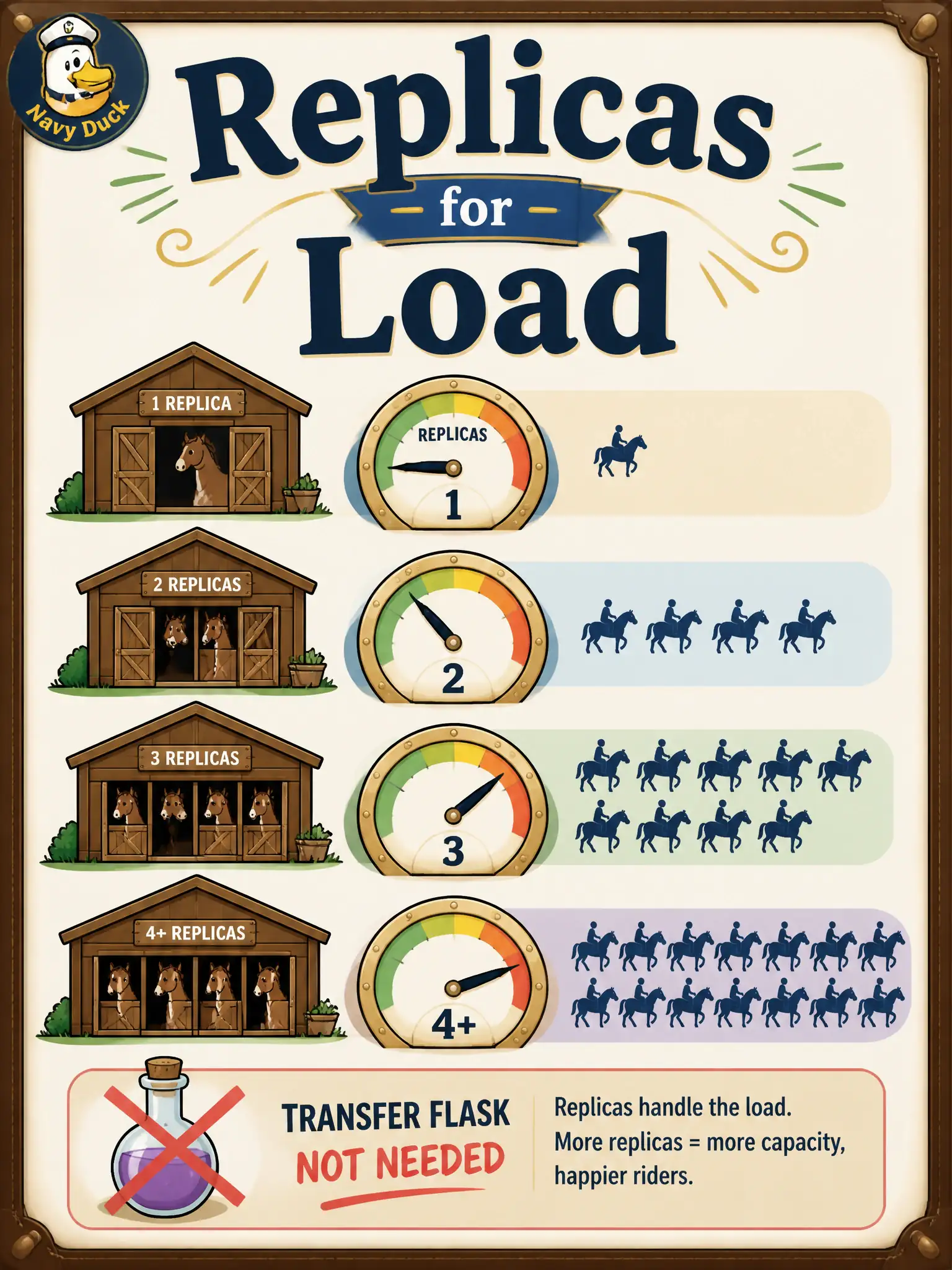
Same good ears, longer line—add replicas, not a new school semester. Load is a chart dial when the models already know their jobs.
Full Explanation
A posting-house desk that keeps the same adapted models while only the line of riders grew should increase replica count in the chart to recover throughput without starting a new transfer-learning run. Capacity follows load when model fit is already good enough for civic replies.
Starting a new transfer-learning run even though the models are already good enough fails by confusing traffic growth with model inadequacy. Lowering replica count to force riders to wait as a Domain 1 quality experiment fails both performance and visitor service. Rewriting CLIP contrastive loss because rider lines are a vision-pretraining problem fails modality and misreads a serving-scale issue.
Exam caveat: if quality is fine and queues grow, raise replicas. Do not reopen transfer or contrastive loss as a default response to lines.
Operational check: verify WER/quality still meets target; chart queue depth; increase Helm replicas; re-measure turns/minute for the municipal posting desk; leave transfer idle unless quality regresses. In municipal platform operations, record the chosen performance lever and the rejected alternatives in the change record so future on-call engineers understand the failure modes avoided for citizen services. Re-check the decision after the next traffic spike or model update to ensure the same answer still holds for the city's estate.