
A locksmith bench records spoken key-cut requests and types what was said for each clip. What is the correct unit of ASR customization data?
Select an answer to reveal the explanation.
Short Explanation
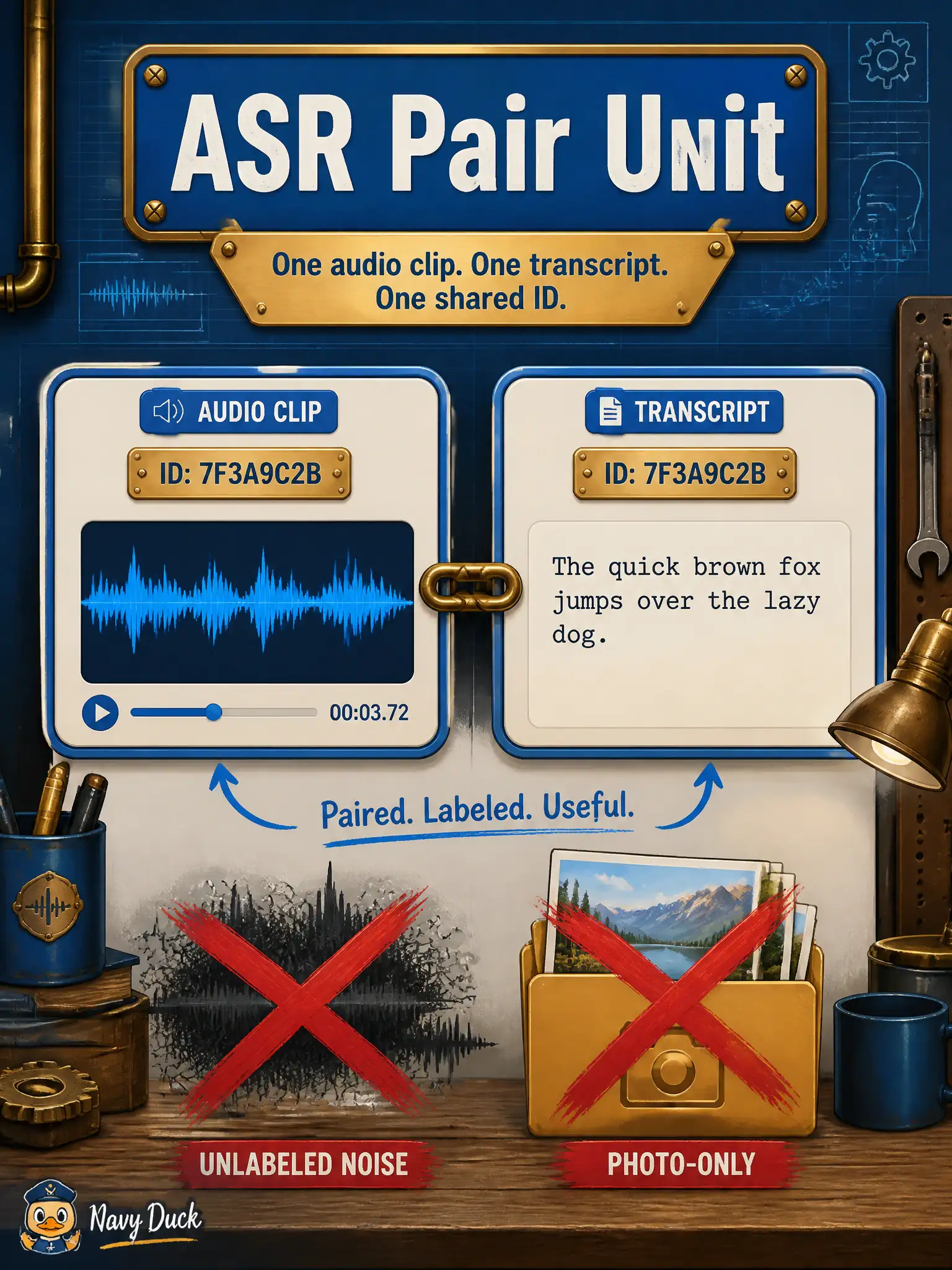
ASR learning is like flash cards: one spoken clip on the front, the written line on the back. Unlabeled buzz, stills, or a vague mood note leave the recognizer without that paired lesson.
Full Explanation
The correct unit of ASR customization data for a locksmith bench is aligned audio clips paired with their matching transcripts. A folder of unlabeled buzzing from the key machine is not a drop-in ASR set. A gallery of lock photographs with no audio is the wrong modality. A single mood note covering an entire shift of mixed recordings lacks per-clip transcript alignment. Exam caveat: ASR customization needs speech–text pairs, not stills or unlabeled noise dumps. Operational check: for each key-cut request clip, confirm a matching typed transcript exists and share the same clip id before adding it to the Riva customization corpus. Enforce clip↔transcript join keys in the locksmith ASR database before training jobs start. ASR customization units are aligned clip–transcript pairs from key-cut requests—not unlabeled buzz or lock photos. Reject unlabeled machine buzz and photo galleries as ASR rows; only aligned locksmith clip–transcript pairs enter customization training. Close q137 with a municipal evidence note that records why the correct mechanism fits this civic multimodal scenario, why each of the three distractors fails by a distinct concept, and which operational check was observed in logs or dataset cards before promotion. File that note with the run packet so later maintenance cannot silently revive a rejected framing.