
An intern edits replica count and resource requests in the conversational Helm chart and claims they “invented a new Riva model.” How should that change be labeled?
Select an answer to reveal the explanation.
Short Explanation
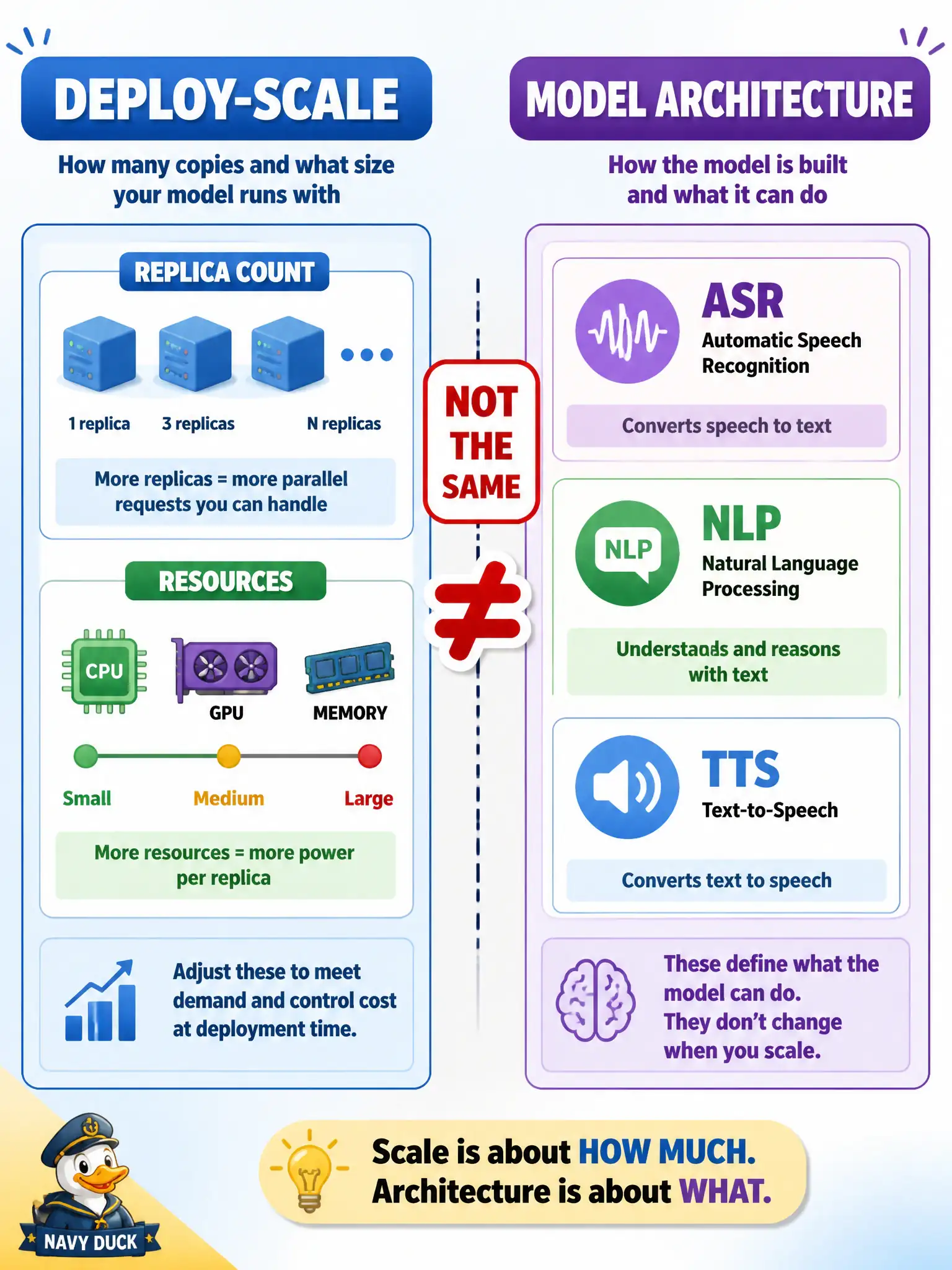
Turning the replica dial is scaling the booth, not inventing a new ear or voice. Chart values package and size the app. They are not ASR, NLP, or TTS architecture changes.
Full Explanation
When an intern edits replica count and resource requests in the conversational Helm chart and claims they “invented a new Riva model,” that change should be labeled as a deploy-scale experiment on packaging knobs—not a model-architecture experiment. Civic ops must keep language honest: turning the replica dial sizes the booth; it does not create a new ASR, NLP, or TTS architecture. Clear labels protect public reporting from confusing capacity tweaks with model science.
Labeling it as a new ASR architecture experiment that must report word-error deltas fails by treating packaging knobs as recognition architecture. Calling it an NLP fine-tune because chart values retrain the language stage automatically fails by inventing a false claim that Helm values retrain models. Calling it a TTS voice redesign because replica count selects synthesis checkpoints fails by misunderstanding replicas as voice checkpoint selectors.
Exam caveat: replica and resource chart edits are deploy-scale packaging experiments, not Riva model invention. Operational check: record the change as replica/resource only, keep model versions unchanged in the release notes, and measure latency/capacity—not word-error architecture claims—unless the model artifact actually changed.