
A 79-year-old with end-stage COPD and documented DNI wishes is in severe distress, but the adult child demands intubation while the patient Mouths no and shakes head. The care team is divided and time is limited. Which ethical reasoning step should the therapist prioritize to apply medical ethics in this scenario?
Select an answer to reveal the explanation.
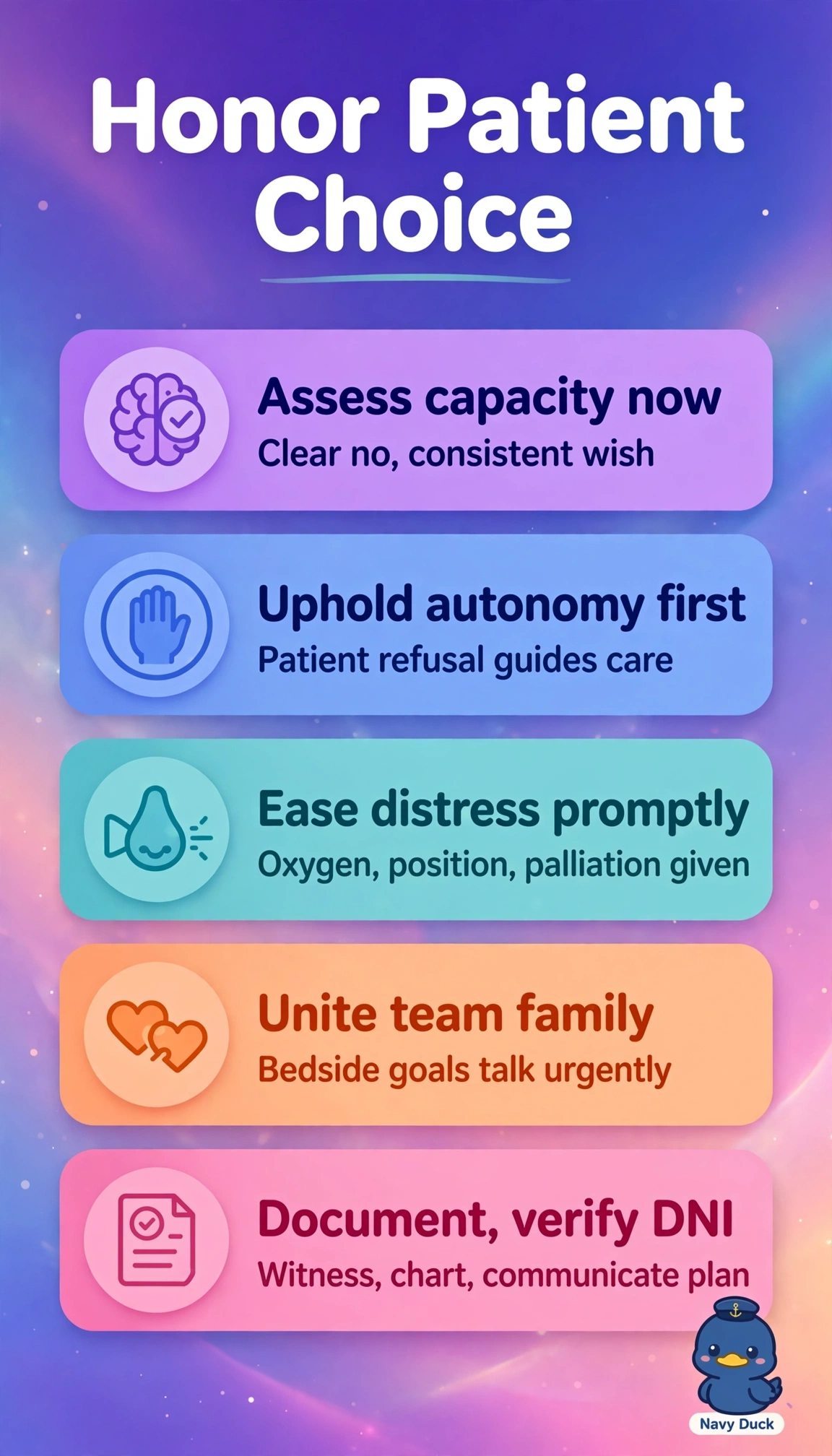
Short Explanation
You're hearing love from the hallway, but your compass is the patient's clear no. Like a captain's hand stays on the wheel, autonomy means you honor your capable patient's refusal while you bring the team together for comfort now.
Full Explanation
The correct response prioritizes respect for autonomy because the patient, despite distress, demonstrates current decision-making through consistent mouthing and head-shaking refusal that aligns with a documented DNI, and a capable patient's informed refusal outweighs surrogate demands and team disagreement, while urgent bedside goals-of-care clarification with nursing, physician, social work, chaplaincy, and palliative support both validates understanding and de-escalates conflict without delaying needed dyspnea care. Deferring to the child's request for intubation reflects appropriate surrogate hierarchy only when the patient lacks capacity, so it fails here by inverting autonomy by replacing a capable refusal with family preference despite distress management and discussion. Focusing solely on skilled dyspnea relief with palliative involvement for team unity reflects beneficence and collaboration, yet it fails by omission by not explicitly upholding the binding refusal and DNI when intubation is being actively pressed. Relying only on the chart DNI with capacity reassessment and confirmation reflects fidelity to advance directives, yet it fails procedurally by omitting the required urgent mediation with the dissenting family and divided team that the scenario makes time-sensitive. Exam caveat: do not equate a DNI form alone with informed refusal, nor family distress or team division with loss of patient capacity; look for present, consistent choice and require bedside clarification before procedural escalation. Practical check: at bedside, treat dyspnea, confirm capacity briefly, use closed-loop communication to restate the refusal, invite the child to voice concerns with team support present, and document refusal, capacity, discussion, and team plan immediately.