
A community hospital's stroke committee wants to pursue a voluntary national specialty certification to strengthen payer partnerships and community trust. Before submitting an application, what should the quality director evaluate first?
Select an answer to reveal the explanation.
Short Explanation
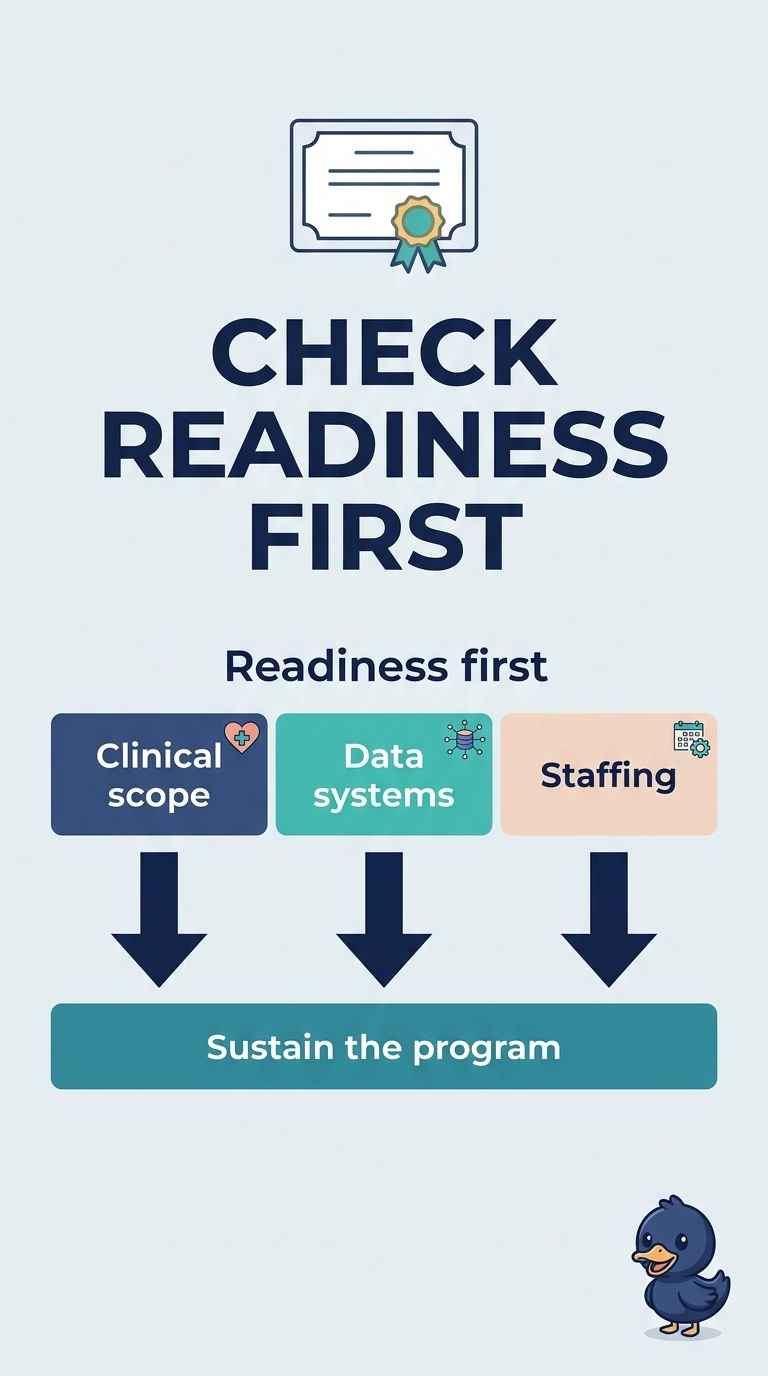
Chasing a prestigious wall plaque before checking the wiring behind it can leave your team scrambling mid-survey. You should first confirm whether the hospital's clinical scope, data infrastructure, and staffing can sustain the program requirements. The common trap is assuming specialty recognition exempts you from CMS Conditions of Participation or lets you reduce internal audits while applying.
Full Explanation
Voluntary specialty certification requires sustained alignment between clinical operations and external standards, so the quality director must first evaluate "Whether the hospital's clinical scope, data infrastructure, and staffing can sustain the program requirements". Confirming volume, abstraction capacity, and multidisciplinary coverage upfront prevents costly withdrawals or compliance gaps. Considering "Whether earning the specialty certification would exempt the stroke program from CMS Conditions of Participation requirements" confuses voluntary disease-specific recognition with mandatory CMS hospital requirements that continue to apply to all services. Checking "Whether the hospital can reduce internal stroke quality audits once the application is accepted" conflicts with ongoing QAPI duties under 42 CFR 482.21, which remain mandatory during applications. Considering "Whether marketing staff can announce the application as a planned certification in community materials" puts promotion ahead of readiness and risks misrepresenting status in breach of accreditor advertising rules. Caveat: even when an accreditor holds Medicare deeming authority, specialty certifications remain separate programs with distinct eligibility rules. Operational check: map stroke registry workflows, staffing coverage, and governance accountability in a readiness gap analysis against published standards.
Prefer to study offline? Printable PDF study book + test engine ($7.50, unofficial). These questions stay free here.