
A hospital's compliance team updates its medication storage policy and discovers that federal CMS Conditions of Participation, state pharmacy licensing rules, and its accrediting organization specify different inspection intervals. Which standard must the hospital policy follow?
Select an answer to reveal the explanation.
Short Explanation
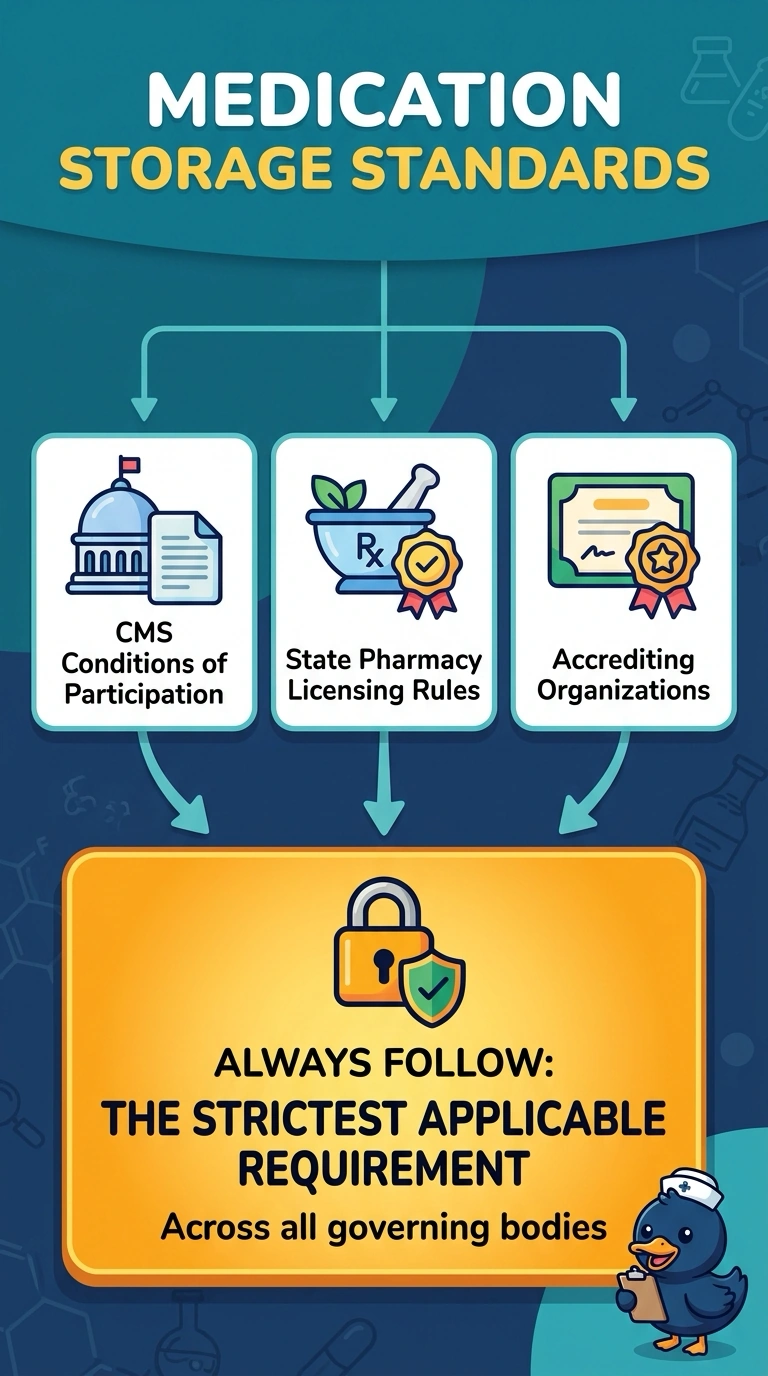
When three rulebooks give you different deadlines, following the easiest one leaves you exposed to the other two inspectors. Always build your policy around the strictest applicable requirement so meeting that single bar keeps you compliant everywhere.
Full Explanation
Following The strictest applicable requirement across all governing regulatory bodies is the foundational compliance rule when federal regulations, state laws, and accreditation standards overlap. Because a hospital remains accountable to state licensing authorities and its accrediting organization in addition to CMS, satisfying the most stringent interval automatically fulfills the less frequent requirements. Relying on The federal CMS requirement because it is the baseline for Medicare participation leaves the facility exposed to state pharmacy board or accreditor citations when those bodies enforce tighter rules. Choosing The least frequent interval to minimize nursing and pharmacy administrative burden guarantees noncompliance with stricter oversight bodies during unannounced surveys. Aligning with The interval set by the hospital's own policy committee, once approved subordinates statutory and safety requirements to administrative convenience. As a caveat, compliance teams should still confirm that a stricter local rule does not directly conflict with a mandatory federal patient-rights or emergency provision. As an operational check, maintain an annual regulatory crosswalk comparing CMS, state, and accreditor intervals for high-risk policies.
Prefer to study offline? Printable PDF study book + test engine ($7.50, unofficial). These questions stay free here.