
During an unannounced accreditation survey, a surveyor requests daily temperature logs for a clinic medication refrigerator, and the supervisor discovers three weeks of blank rows and asks whether staff should fill in estimated temperatures from memory before handing over the binder. What should the quality coordinator advise?
Select an answer to reveal the explanation.
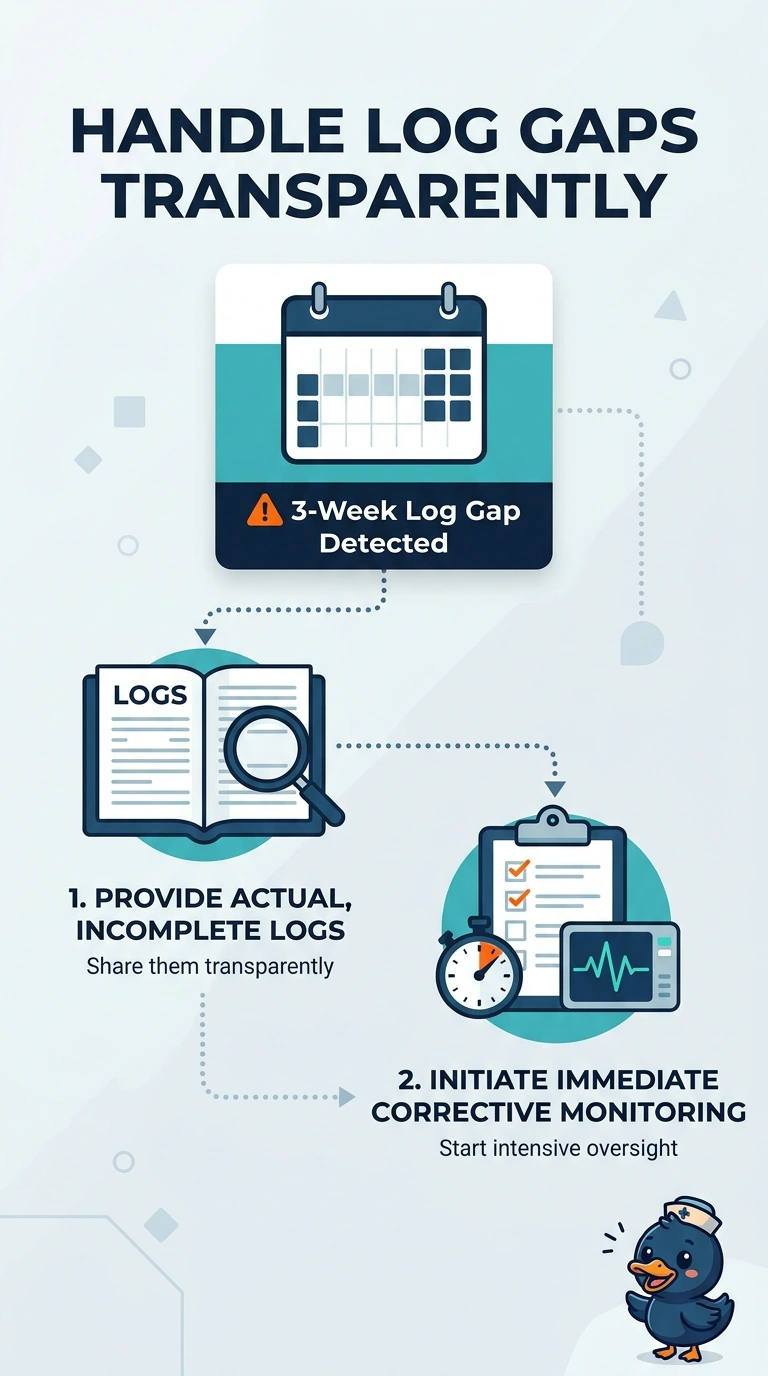
Short Explanation
You can address the gap honestly by providing the incomplete logs and starting corrective monitoring right away. Transparency helps you avoid turning a fixable documentation lapse into falsification by estimating temperatures or entering average temperatures.
Full Explanation
Regulatory and accreditation survey integrity depends on complete honesty, so you should provide the actual incomplete logs transparently and initiate immediate corrective monitoring. Surveyors expect occasional process gaps and evaluate how quickly leadership detects the failure, assesses any medication storage risk, and restores reliable daily checks. Reconstructing missing temperatures from thermostat memory and filing them as complete records introduces unverified data and risks misrepresenting retrospective entries as contemporaneous records. Telling the surveyor the logs are stored offsite and offering them after the survey ends obstructs the survey process and signals concealment rather than continuous compliance. Filling each blank day with the average temperature calculated from the prior complete month falsifies compliance records and can trigger severe accreditation sanctions or immediate jeopardy findings. A critical caveat is that transparency must be paired with an immediate clinical assessment of whether any refrigerated medications experienced out-of-range temperatures. As a practical check, install continuous digital temperature data loggers with automated out-of-range alerts and audit log completeness weekly.
Prefer to study offline? Printable PDF study book + test engine ($7.50, unofficial). These questions stay free here.