
A health system stores Ongoing Professional Practice Evaluation (OPPE) scorecards and peer-review case summaries on a central network folder. Which governance practice best protects practitioner confidentiality and legal privilege?
Select an answer to reveal the explanation.
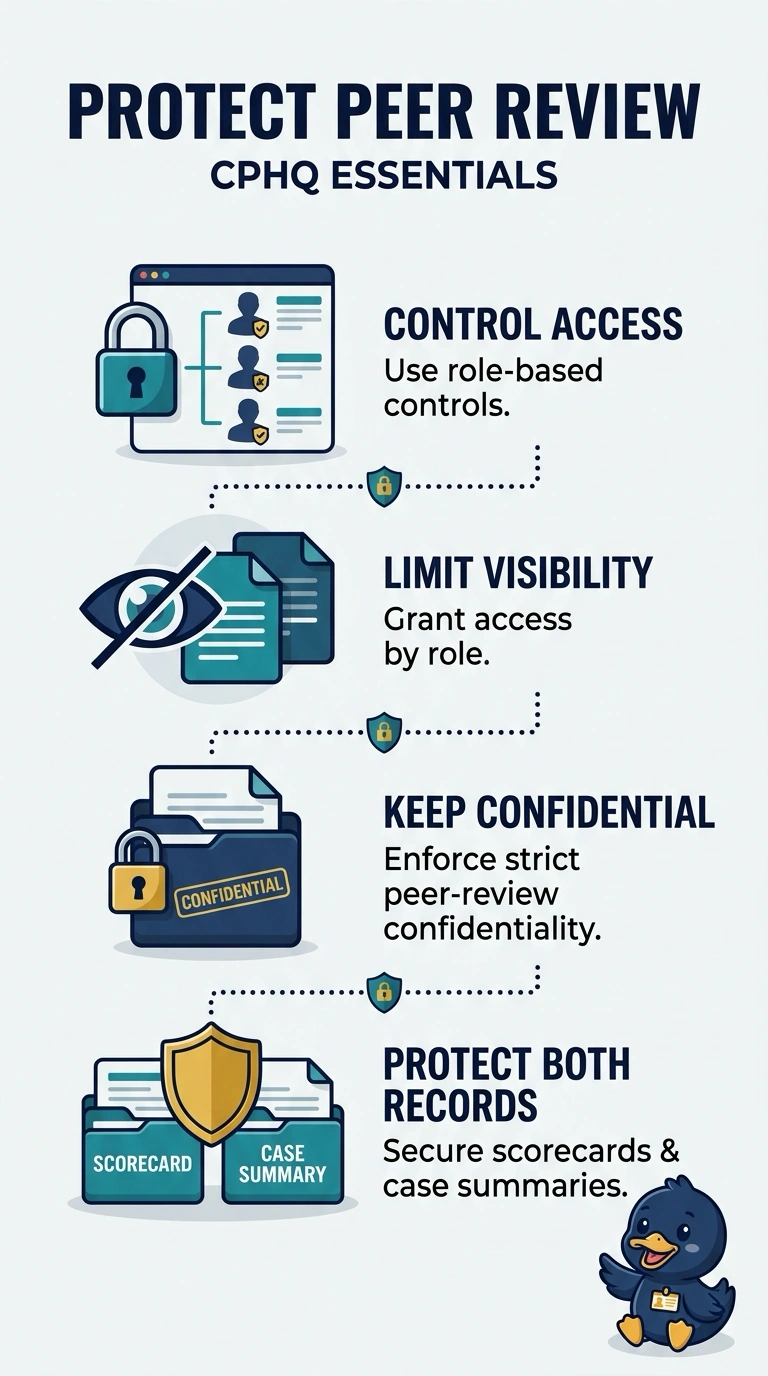
Short Explanation
Practitioner performance files are like sealed personnel evaluations: your medical staff will engage honestly in peer review when they trust the records stay protected. You protect confidentiality and legal privilege with role-based access controls and strict peer-review confidentiality, not by opening files to everyone in the name of transparency.
Full Explanation
Credentialing and peer-review records contain sensitive practitioner performance data and often carry statutory confidentiality protections that can be lost if mishandled. Enforcing role-based access controls and strict peer-review confidentiality is effective because limiting files to authorized medical staff leaders, credentialing specialists, and quality reviewers preserves legal protections and fosters candid clinical evaluation. Sharing surgeon-specific complication rates in a department meeting that includes residents breaches practitioner confidentiality, undermines trust, and invites misinterpretation without risk-adjustment context. Allowing all credentialed medical staff to view colleagues' OPPE files on the quality drive violates need-to-know standards and risks waiving state peer-review privilege. Sending encrypted practitioner scorecards to external referring physicians still discloses protected evaluation data outside the organization's legal boundary, since encryption alone does not preserve privilege. A caveat is that anonymized, aggregate unit trends can still be shared broadly for improvement while practitioner-identifiable files remain restricted. As an operational check, conduct quarterly permissions audits on quality network folders to remove stale or unauthorized user accounts.
Prefer to study offline? Printable PDF study book + test engine ($7.50, unofficial). These questions stay free here.