
A multi-specialty medical group participates in four value-based payer contracts that each emphasize slightly different diabetes and hypertension targets, causing clinic staff to juggle conflicting pop-up reminders. What is the most sustainable quality strategy for the medical group?
Select an answer to reveal the explanation.
Short Explanation
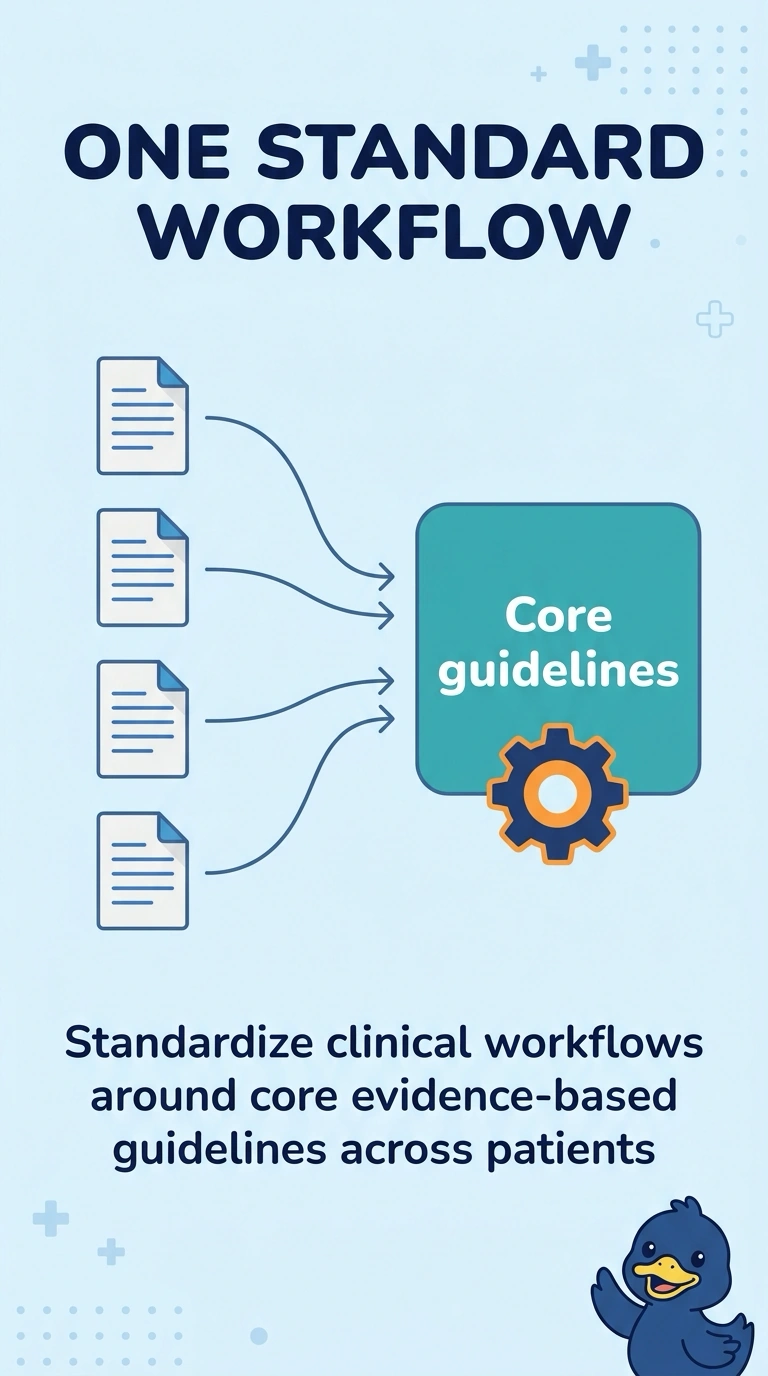
Trying to run a different clinical workflow for every insurer is like asking a kitchen to cook the same dish four ways depending on which credit card the diner uses. When you anchor care to one strong evidence-based standard, staff deliver reliable care to every patient while mapping results to payer reports behind the scenes.
Full Explanation
Choosing to Standardize clinical workflows around core evidence-based guidelines across patients reduces alert fatigue, prevents clinical confusion, and ensures equitable care regardless of a patient's insurance card. When care teams follow one coherent clinical standard, the analytics team can translate that structured documentation into each payer's specific reporting thresholds. Attempting to Build separate electronic health record order sets for each individual insurance plan multiplies maintenance burden and forces clinicians to alter care based on coverage rather than clinical evidence. Deciding to Drop participation in value-based contracts that use differing quality thresholds forfeits revenue incentives and avoids solving multi-payer complexity. Choosing to Assign billing staff to choose the clinical target after each visit based on the patient's payer does not improve bedside care and risks inaccurate coding or compliance violations. One caveat is that analytics staff must still validate how unified clinical data map to each contract's numerator, denominator, and exclusion specifications. As an operational check, review quarterly contract scorecards alongside clinic alert-override rates to confirm unified workflows meet payer benchmarks without clinician overload.
Prefer to study offline? Printable PDF study book + test engine ($7.50, unofficial). These questions stay free here.