
A community hospital's utilization review committee sees a surge in payer denials for one-day inpatient admissions involving low-risk chest pain that could have been managed in observation status. Which quality review action best addresses this pattern?
Select an answer to reveal the explanation.
Short Explanation
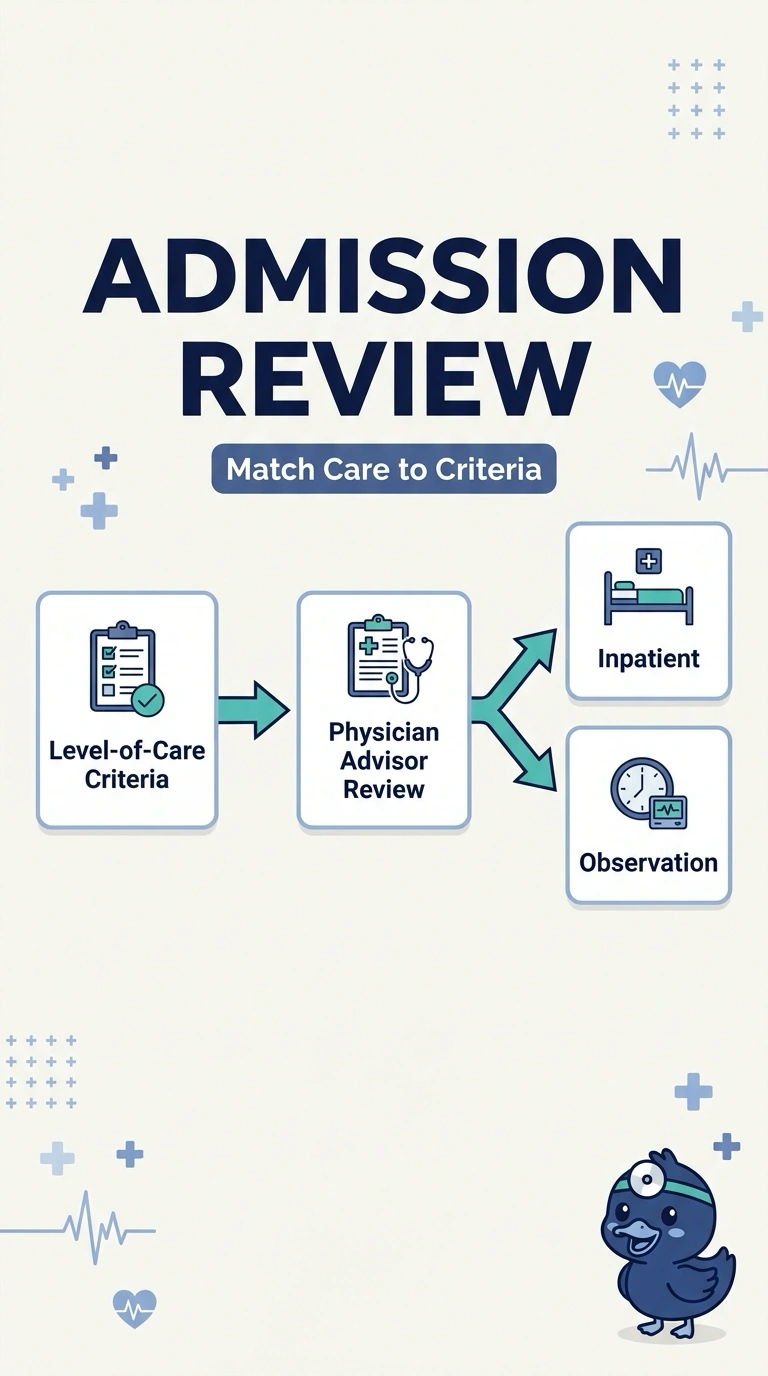
Picking the right bed status at admission is like matching a patient's needs to the right lane on the highway before traffic backs up. The trap is fighting payers after discharge instead of checking medical necessity upfront, so make sure your team uses objective criteria in real time.
Full Explanation
Under CMS Conditions of Participation for utilization review at 42 CFR 482.30, hospitals must maintain a system to evaluate the medical necessity of admissions and appropriateness of level of care. Choosing to Apply standardized level-of-care criteria with physician advisor review enables case managers and admitting physicians to match patient acuity to inpatient or observation status concurrently, reducing avoidable denials and ensuring accurate billing. By contrast, to Assign inpatient status to one-day chest-pain stays defaults to inpatient without individualized necessity review instead of providing concurrent correction. Choosing to Delay utilization review checks until after patient discharge misses the regulatory window to correct patient status while the patient is still hospitalized, since Condition Code 44 status corrections must occur before discharge. Likewise, to Appeal denied inpatient claims after discharge wastes resources on cases that legitimately fail medical necessity thresholds. As a caveat, standardized screening criteria support clinical judgment rather than replacing it, so complex cases with social or comorbidity risks require documented physician rationale. Operationally, track short-stay denials by service and audit whether advisor input occurred before discharge.
Prefer to study offline? Printable PDF study book + test engine ($7.50, unofficial). These questions stay free here.