
A hospital's medical peer review committee notices that different physician reviewers assign vastly different care-quality ratings to similar surgical complication cases, depending on whether the patient eventually recovered or suffered permanent harm. How should the quality director improve peer review consistency?
Select an answer to reveal the explanation.
Short Explanation
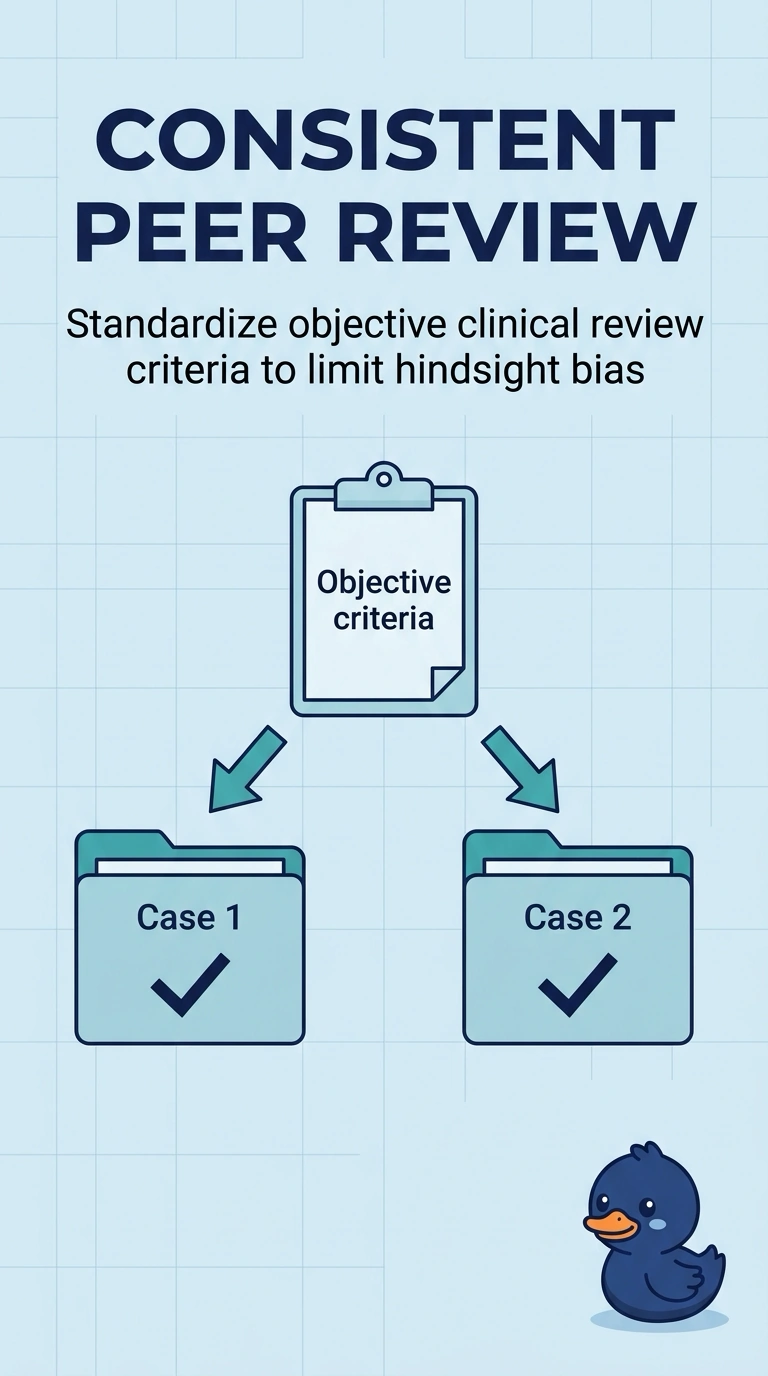
When reviewers already know a patient suffered harm, even solid care can suddenly look careless in the rearview mirror. You protect fair peer review when you Standardize objective clinical review criteria to limit hindsight bias. The trap is judging clinical decisions by the final outcome instead of what was reasonable at the time.
Full Explanation
Consistent practitioner performance evaluation requires structured methodology, so the quality director should Standardize objective clinical review criteria to limit hindsight bias. Hindsight bias occurs when reviewers judge a clinician's decisions more harshly simply because a severe complication occurred; explicit clinical criteria anchored to guidelines and contemporaneous facts help reviewers evaluate whether care met accepted standards at the time. Choosing to Assign only department chairs to rate cases using their own judgment concentrates subjectivity in one role and fails to improve inter-reviewer reliability. Choosing to Weight standard-of-care ratings heavily toward final patient outcome conflates unavoidable disease progression or known procedural risks with substandard clinical care. Deciding to Replace individual case ratings with departmental mortality tracking alongside peer review removes individual case accountability and misses diagnostic or technical opportunities for improvement. As a governance caveat, structured criteria should still allow clinical reviewers to document justified exceptions when unusual patient anatomy or acuity required deviation. As an operational check, periodically have two reviewers independently score a sample of de-identified cases and reconcile scoring differences.
Prefer to study offline? Printable PDF study book + test engine ($7.50, unofficial). These questions stay free here.