
After discharge, a patient's family submits a formal letter to a hospital's patient relations office alleging delayed pain management and unprofessional communication during an inpatient stay. Under CMS Conditions of Participation (42 CFR 482.13), how must the organization handle this submission?
Select an answer to reveal the explanation.
Short Explanation
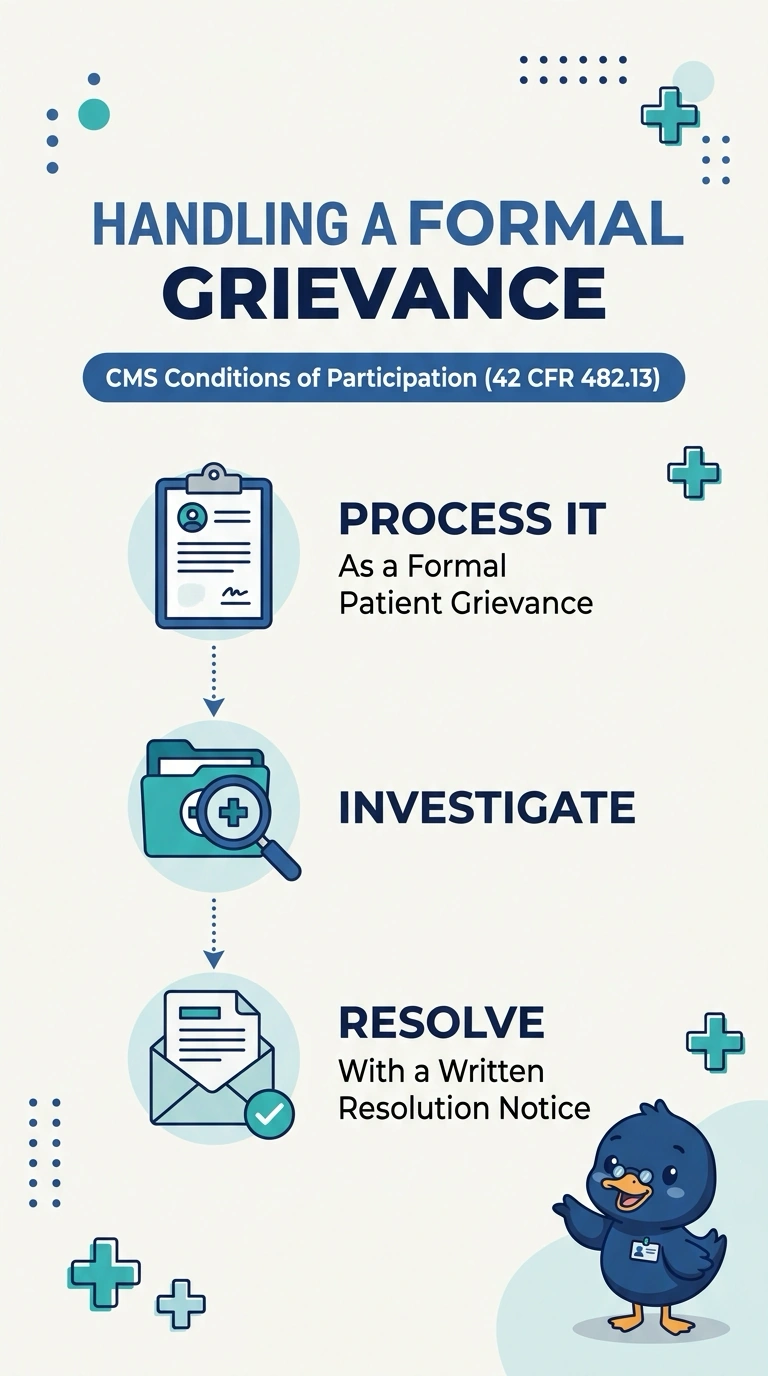
A written complaint arriving after discharge is not an informal hallway chat—it triggers specific federal patient-rights duties. You must treat it as a formal grievance, investigate it thoroughly, and send a written response. The trap is downgrading post-discharge letters to informal complaints or waiting for survey cycles.
Full Explanation
Under CMS Conditions of Participation at 42 CFR 482.13, post-discharge written complaints regarding patient care, abuse, or unresolved concerns meet the definition of a patient grievance rather than an informal complaint resolved promptly at the point of care. Choosing to process it as a formal patient grievance with investigation and written resolution notice ensures compliance by tracking the concern, reviewing clinical records and staff accounts, and providing the patient or family a written decision naming a hospital contact, investigative steps, outcomes, and completion date. Choosing to log the letter as an informal bedside complaint and close it after notifying the nurse manager violates federal grievance-handling expectations because the issue was submitted in writing after discharge and cannot be resolved immediately at the bedside. Choosing to send the family a brief thank-you note and file the letter in the patient's record fails to meet the standard because a courtesy acknowledgment without investigation does not substitute for the required review and written resolution with contact, steps, results, and date. Choosing to hold the letter for the next quarterly patient experience committee meeting ignores the requirement for prompt grievance resolution and individualized written notification. As a caveat, coordinate grievance findings with the QAPI program when trends reveal systemic pain-management or communication gaps. Operationally, track grievance turnaround times and audit written response letters for all required regulatory elements.
Prefer to study offline? Printable PDF study book + test engine ($7.50, unofficial). These questions stay free here.