
A small community hospital renews privileges every two years for a visiting vascular surgeon who performs only three specialized procedures at the facility annually. Because internal case volume is too low for meaningful statistical rate comparisons, how should the medical staff evaluate this practitioner's ongoing competency?
Select an answer to reveal the explanation.
Short Explanation
When a specialist performs only three cases a year at your hospital, a single complication swings the rate from zero to thirty-three percent. The trap is either overreacting to tiny denominators or skipping evaluation altogether instead of gathering outside evidence.
Full Explanation
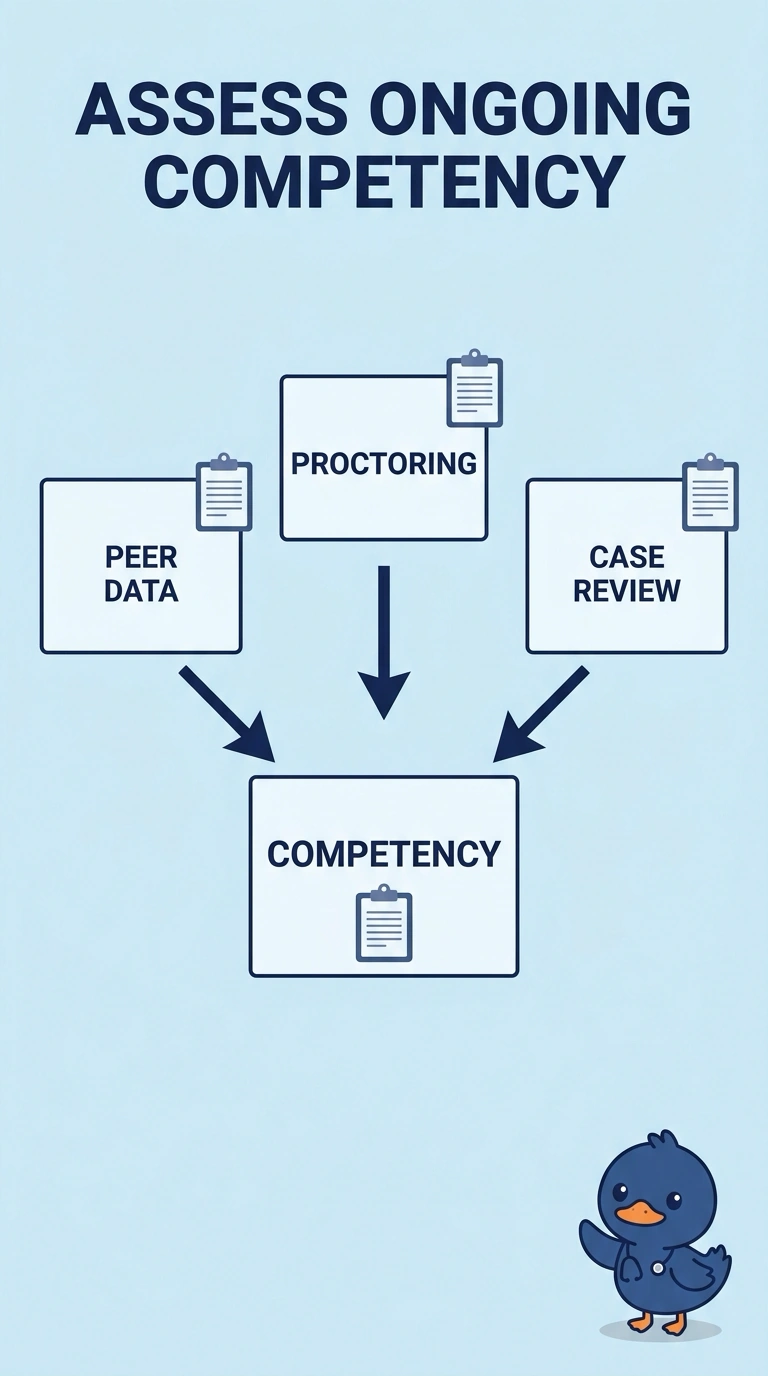
Low-volume practitioners pose a classic credentialing challenge because small denominators make internal complication rates statistically unstable and misleading. To maintain fair, evidence-based oversight, the medical staff should Use external peer data, proctoring, or focused case reviews to assess competency, incorporating verified volume and outcomes from the surgeon's primary practice site alongside detailed review of each local case. Choosing to Compare the specialist's raw complication percentage directly against high-volume national benchmarks misinterprets tiny sample sizes where one event creates an extreme, unreliable rate. Comparing the three local cases only with the surgeon's self-reported complication log from the primary hospital uses an unverified self-report and skips proctoring or focused review of the local cases. Choosing to Rely on the surgeon's board certification as the sole evidence of ongoing competency confuses initial qualification with current performance and leaves privileged care unmonitored. Caveat: obtain signed practitioner authorization and follow medical staff bylaws when requesting performance data from external hospitals. As an operational check, document the specific low-volume evaluation pathway in your medical staff credentialing policy and review every local case through peer review.
Prefer to study offline? Printable PDF study book + test engine ($7.50, unofficial). These questions stay free here.