
A health system's quality director notices that its risk-adjusted mortality and readmission scores look worse than peer hospitals in a value-based payment program, even though bedside complication audits show stable care. What should the quality team check first?
Select an answer to reveal the explanation.
Short Explanation
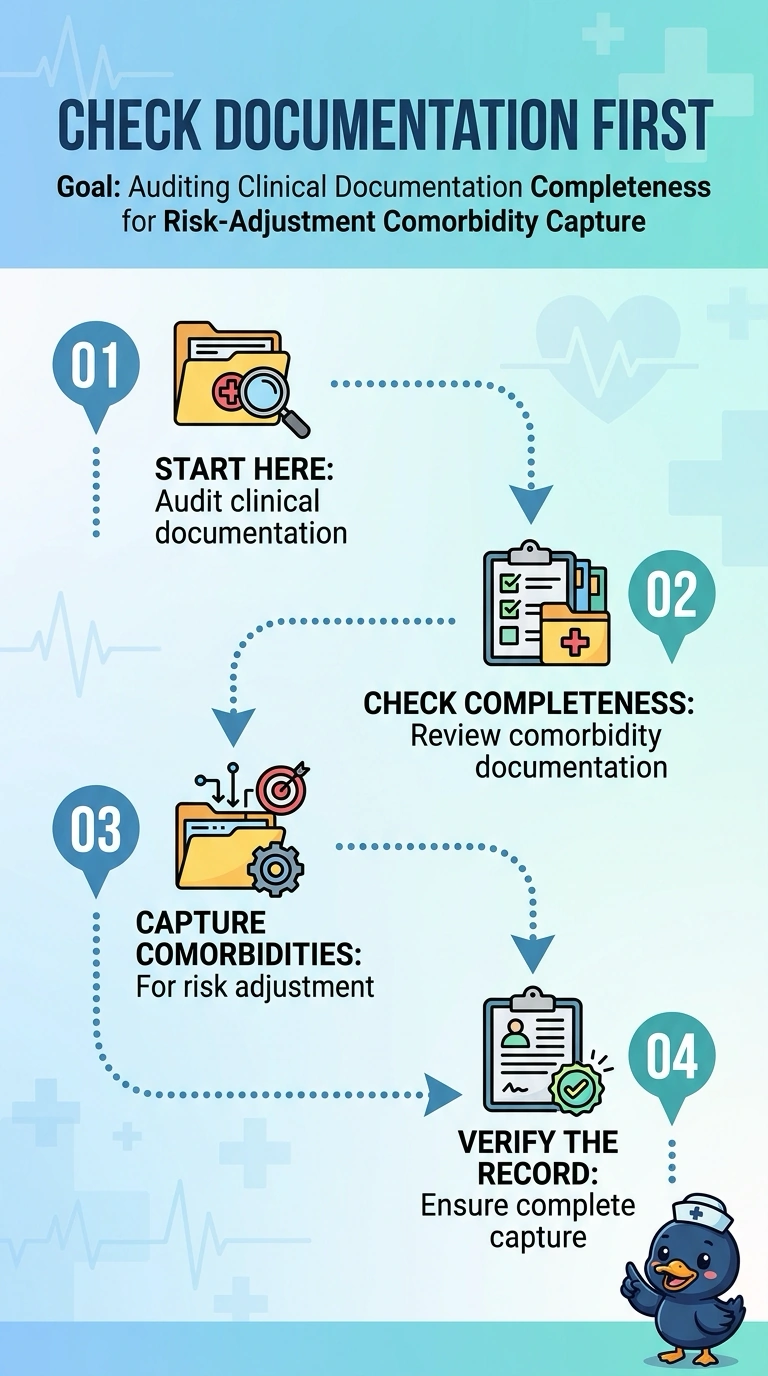
Risk-adjusted scores only see what gets documented and coded, much like a tax return only reflects reported deductions. The trap is assuming poor scores always mean failing bedside care when missing comorbidities make your sickest patients look healthy on paper. You should verify documentation capture before redesigning clinical care.
Full Explanation
Auditing clinical documentation completeness for risk-adjustment comorbidity capture is the right first step because external value-based payment models rely on coded diagnoses to calculate expected mortality and readmissions; if chronic conditions and present-on-admission comorbidities are under-documented, expected rates drop artificially and inflate observed-to-expected ratios. Excluding high-acuity patient encounters from internal mortality rate calculations distorts internal surveillance without changing the claims data payers actually score, and selective exclusion compromises measurement integrity. Reducing observation-status stays to lower readmission counts attempts to game counting methodology rather than fixing risk-adjustment capture, and reclassifying observation care does not change true outcomes or correct expected-rate calculations. Requesting an immediate payer contract renegotiation to remove risk-adjusted penalties is premature and unlikely to succeed when the hospital has not yet verified its own coding accuracy. Caveat: documentation improvement must reflect true clinical conditions supported in the medical record, never upcoding. Operational check: partner with health information management and clinical documentation specialists to compare coded comorbidities against chart notes on a sample of recent mortality and readmission cases.
Prefer to study offline? Printable PDF study book + test engine ($7.50, unofficial). These questions stay free here.