
A 95-bed community hospital relies on a single quality specialist to manage all NHSN infection surveillance, CMS abstraction, and accreditation readiness. When that specialist takes unexpected medical leave, regulatory submissions stall. Which leadership action best prevents this vulnerability?
Select an answer to reveal the explanation.
Short Explanation
Having only one person who knows how your quality reporting works is like flying a plane with no co-pilot. The trap is treating specialized quality roles as solo silos instead of building cross-trained bench strength.
Full Explanation
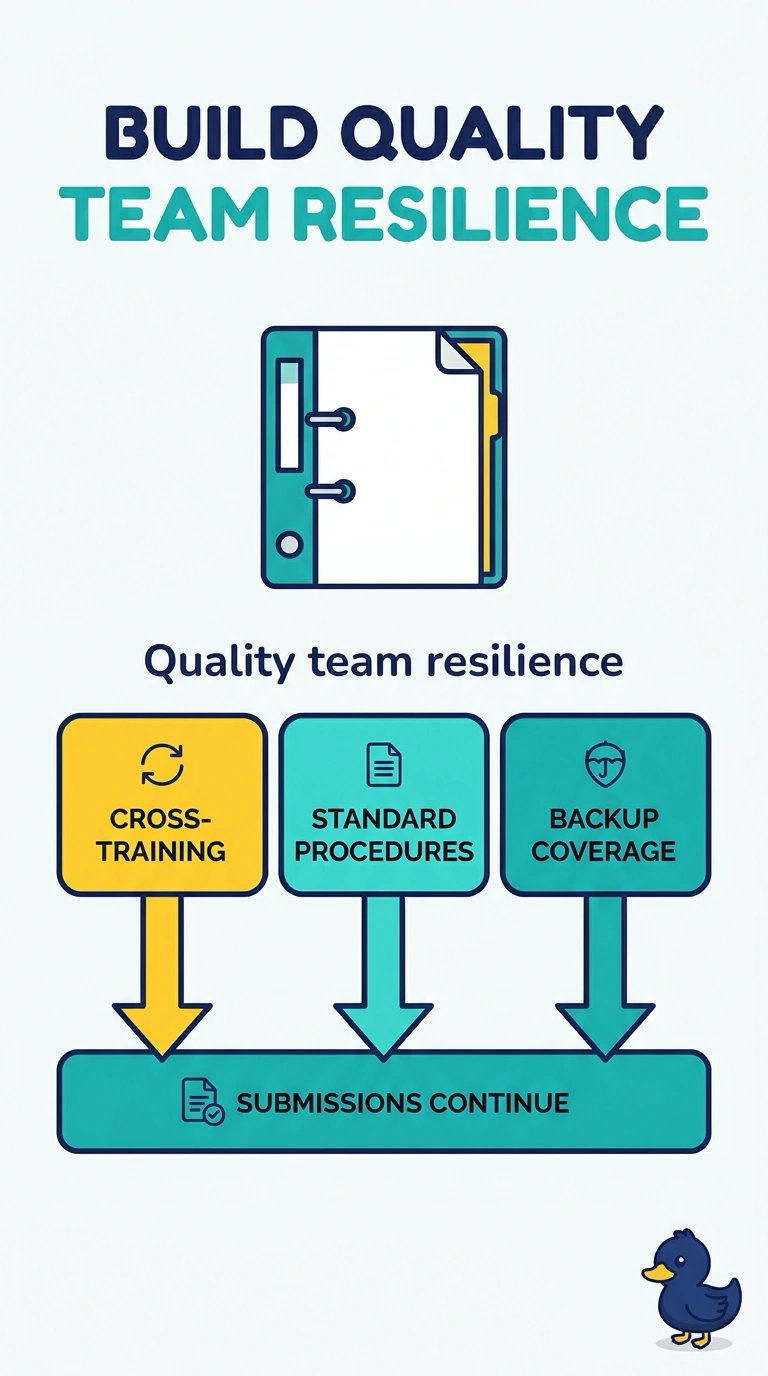
Building cross-training and documented standard procedures for key quality roles protects organizational continuity when specialized staff are absent or depart. Pairing written step-by-step workflows with designated backup analysts or nurses ensures NHSN surveillance, abstraction deadlines, and survey readiness continue without interruption. Pausing external quality data submissions until the specialist returns to duty fails because CMS and state reporting deadlines carry financial penalties and compliance citations regardless of internal staffing gaps. Outsourcing quality committee facilitation to an external consulting group does not replace daily operational surveillance or clinical chart abstraction capabilities. Transferring surveillance duties to bedside charge nurses during shifts adds unmanageable workload to direct care staff who lack protected time and standardized abstraction training. As a caveat, cross-training requires periodic hands-on practice rather than simply filing a binder on a shelf. Operationally, require backup staff to complete at least one supervised submission cycle each quarter and maintain an updated role-continuity matrix.
Prefer to study offline? Printable PDF study book + test engine ($7.50, unofficial). These questions stay free here.