
A hospital's orthopedic unit has rising surgical urinary retention rates, and the nurse manager asks the quality director to take over daily catheter audits and run unit staff huddles until rates drop. How should the quality director respond to build sustainable leadership integration?
Select an answer to reveal the explanation.
Short Explanation
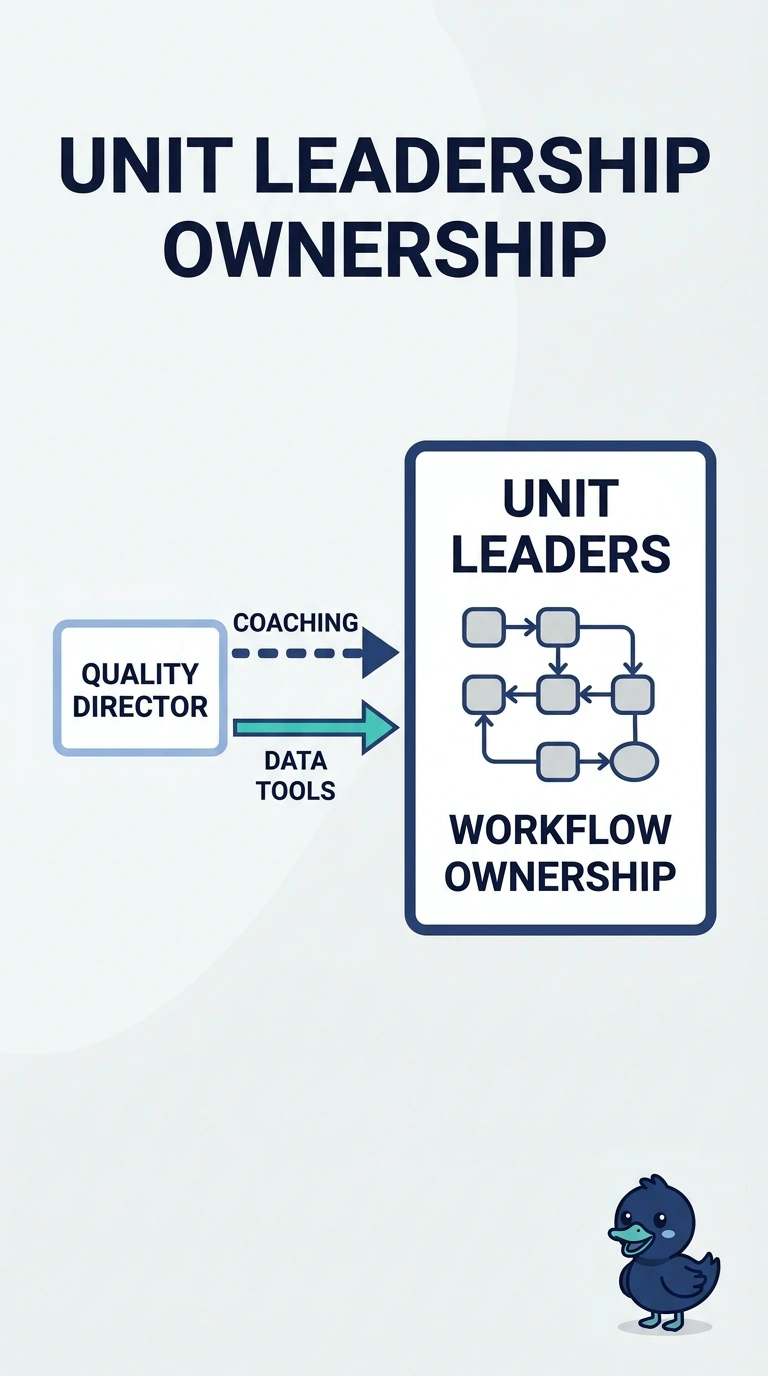
It is tempting to step in and rescue a struggling unit by running their daily huddles for them, yet the moment you walk away, old habits snap right back. Providing consultative coaching keeps ownership where it belongs—with the unit leaders who actually run the shift. Beware of confusing helpful support with taking over frontline operations.
Full Explanation
Provide consultative coaching and data tools while keeping workflow ownership with unit leaders strengthens local accountability and embeds quality skills directly into daily operations. By equipping the nurse manager and physician champion with run charts, audit templates, and facilitation coaching, the quality director builds lasting capability across the unit. Assume direct management of the unit's daily catheter rounds for the next quarter creates temporary compliance that collapses as soon as the quality team steps back to other priorities. Assign a hospital-wide infection preventionist to write and enforce new unit disciplinary rules damages psychological safety and treats a clinical workflow problem as a punitive staffing failure. Defer quality support until the next annual quality plan cycle begins delays timely patient harm reduction over an unnecessary administrative hurdle. As a caveat, consultative support must still include clear escalation triggers if patient safety deteriorates and unit leaders fail to act. For an operational check, verify after 60 days that unit charge nurses and physicians—not quality staff—are leading daily catheter-removal reviews and tracking their own trend data.
Prefer to study offline? Printable PDF study book + test engine ($7.50, unofficial). These questions stay free here.