
A health system's executive team launches a three-year strategic goal to reduce hospital-acquired infections, yet nurse managers treat the initiative as extra work and focus only on daily staffing and throughput. What should the quality leader recommend to align middle-management execution with the strategic plan?
Select an answer to reveal the explanation.
Short Explanation
You can turn an executive goal into a bedside habit by building accountability into how managers run shifts and are evaluated. Awareness or centralized audits alone may not change unit priorities.
Full Explanation
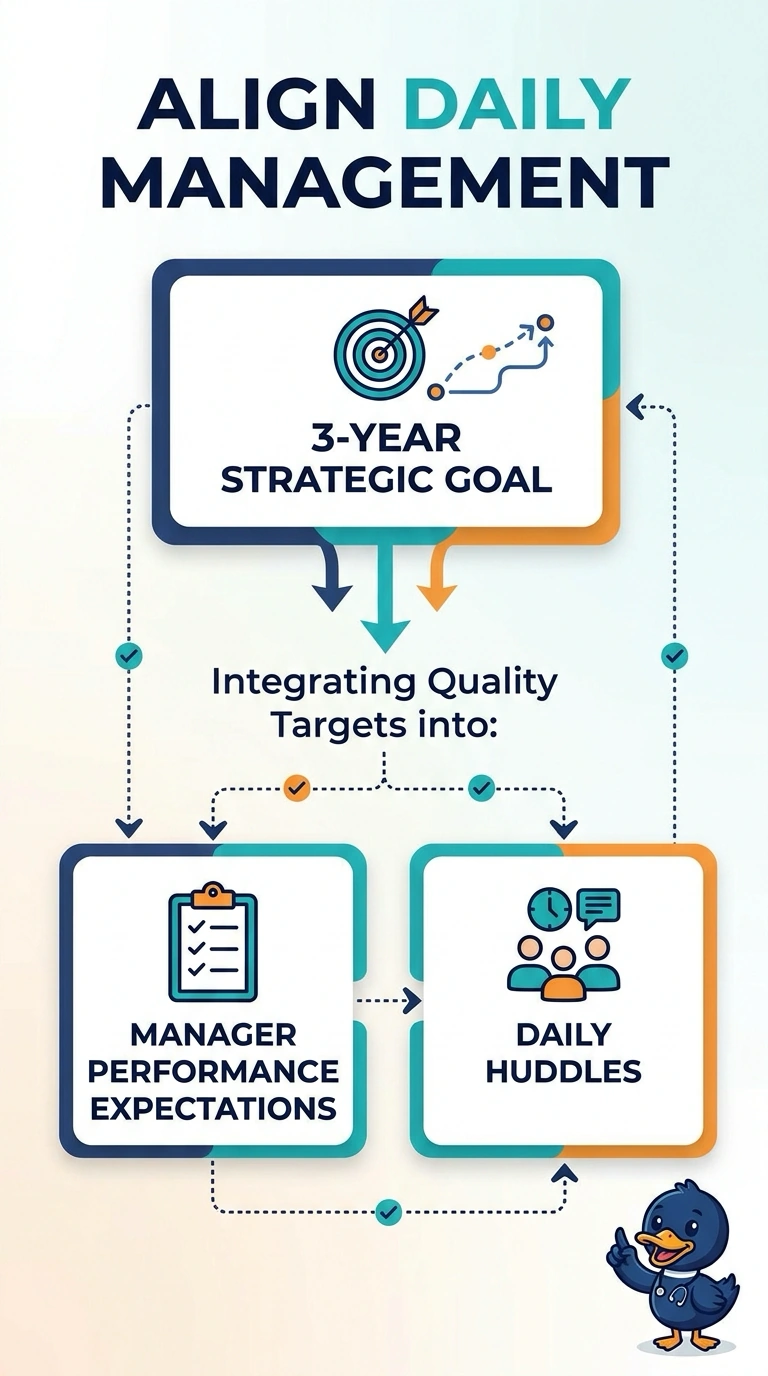
Strategic quality goals can stall when middle managers see them as competing with staffing and patient-flow demands. Integrating quality targets into manager performance expectations and daily huddles connects executive intent to frontline execution: infection prevention becomes part of routine operational leadership, with clear accountability and regular opportunities to coach workflow, rather than an optional side project. A monthly system-wide infection-rate newsletter for frontline staff may raise awareness, but passive communication does not establish supervisory accountability or provide real-time coaching. An annual quality governance retreat can support periodic alignment, yet it does not change the priorities managers face during busy daily shifts. Centralized quality abstractors completing all unit-level infection audits may provide measurement, but moving audit work away from units can reinforce the idea that quality belongs only to the quality department instead of unit leaders. One caveat: performance expectations work best when paired with coaching and removal of barriers, not punitive blame for systemic problems. As a practical check, review unit huddle boards and manager scorecards quarterly to confirm infection-prevention metrics are discussed alongside staffing and throughput.
Prefer to study offline? Printable PDF study book + test engine ($7.50, unofficial). These questions stay free here.