
A health system plans to redesign its outpatient oncology infusion scheduling and waiting-room communication after rising complaints about unpredictable wait times. How should the quality leader incorporate the patient perspective into governance and redesign?
Select an answer to reveal the explanation.
Short Explanation
If you design patient workflows without patients in the room, you will miss the friction they feel every visit. The trap is relying on lagging annual surveys or internal guesses instead of partnering directly with advisors.
Full Explanation
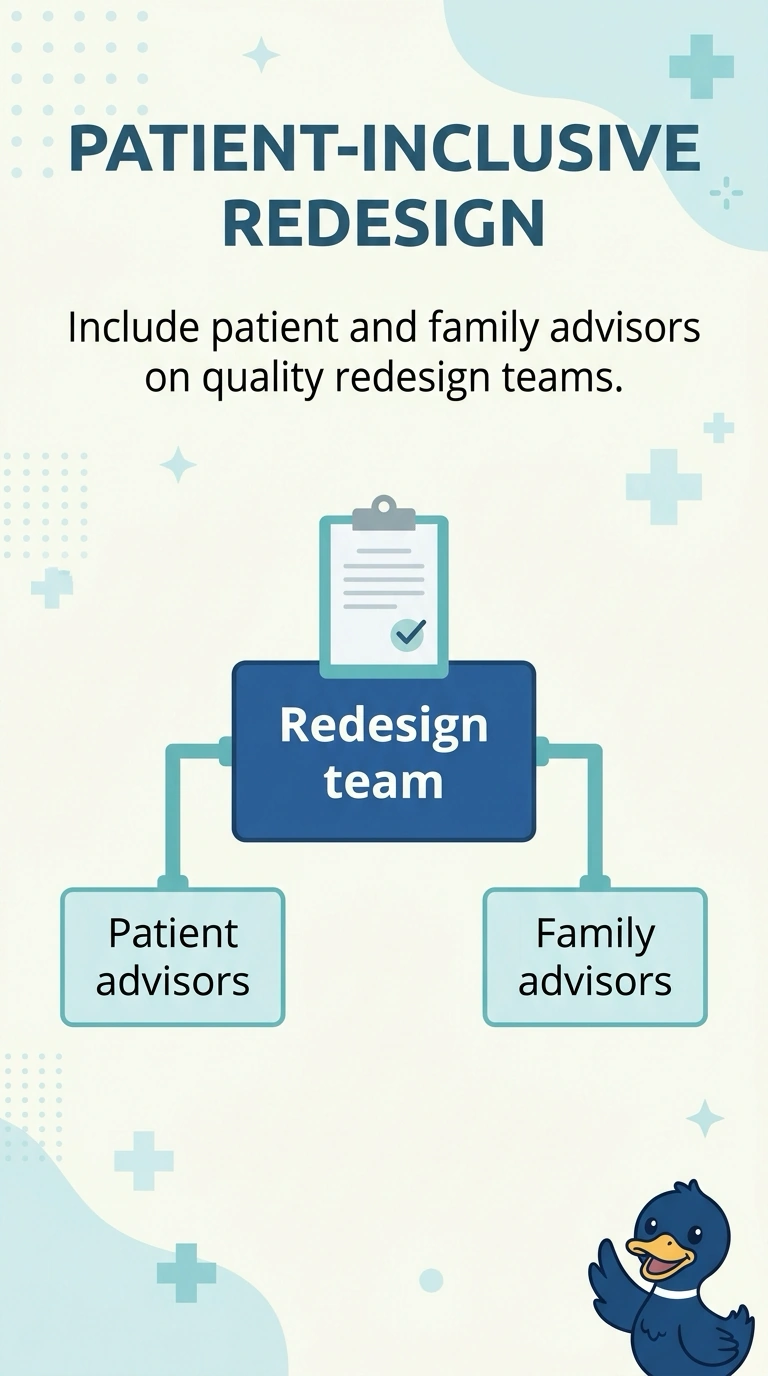
To align service redesign with what patients actually experience, the quality leader should include patient and family advisors on quality redesign teams through a structured Patient and Family Advisory Council (PFAC) or committee seat. Advisors bring firsthand insight into check-in confusion, wait-time communication, and care coordination that clinicians often overlook. Choosing to limit patient input to annual post-discharge satisfaction surveys yields delayed, aggregate scores with too little detail to guide real-time workflow design. Having teams ask marketing staff to draft patient-facing workflow assumptions substitutes internal messaging for genuine lived experience and misses operational pain points. Deciding to restrict quality committee seats to clinicians and administrators nominated by department heads keeps governance insider-driven and excludes the very stakeholders the redesigned process serves. Caveat: orient advisors clearly on charter scope, confidentiality expectations, and plain-language data so their participation is meaningful rather than symbolic. Operational check: track advisor attendance, adopted redesign recommendations, and post-implementation wait-time communication metrics over the first two quarters.
Prefer to study offline? Printable PDF study book + test engine ($7.50, unofficial). These questions stay free here.