
A multi-site ambulatory care network must select three clinical processes for its annual Quality Assessment and Performance Improvement (QAPI) workplan from twenty candidate topics proposed by clinic managers. Which prioritization criteria best guide leadership in selecting high-impact QAPI initiatives?
Select an answer to reveal the explanation.
Short Explanation
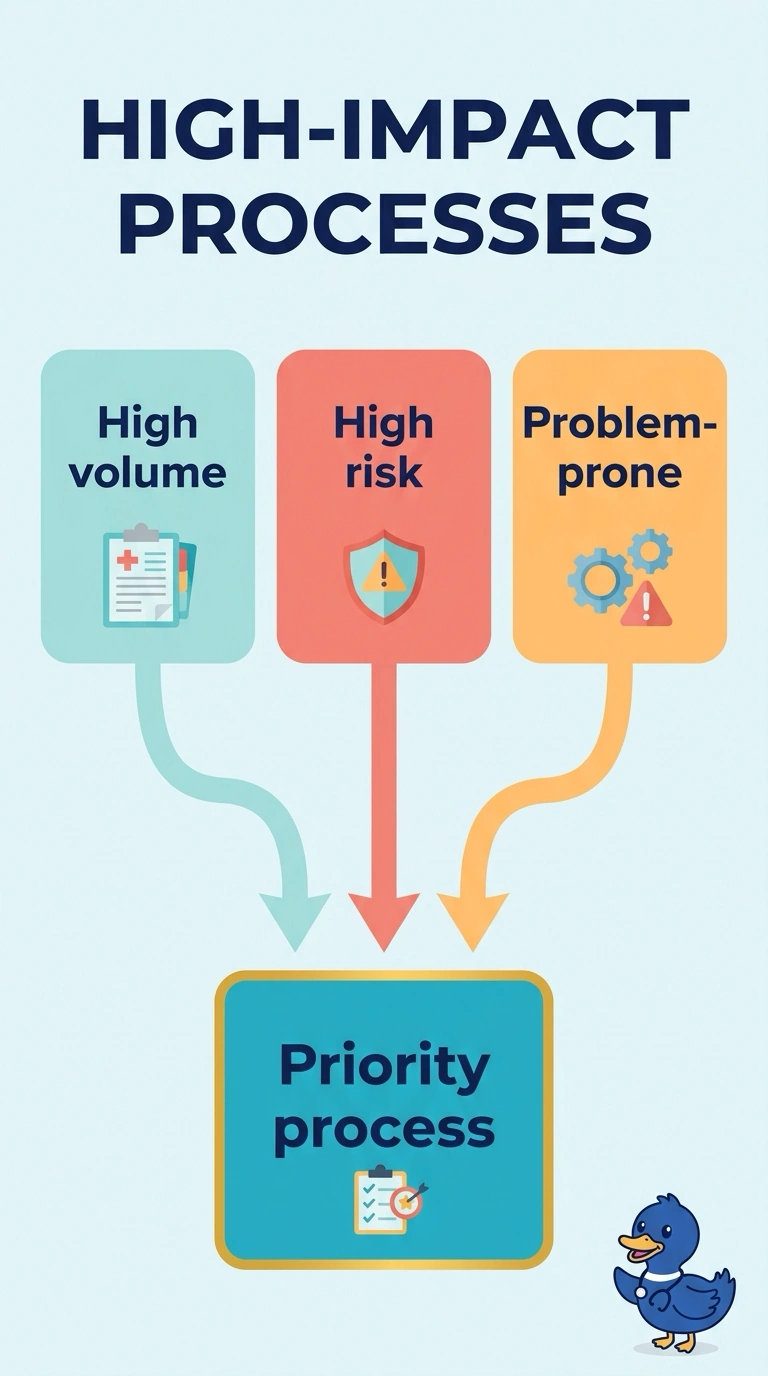
With twenty ideas on the table and bandwidth for only three, picking the easiest projects will not protect your patients. You want criteria that spotlight where care touches the most people, carries the highest stakes, and breaks most often. The trap is letting convenience or existing success drive your annual quality plan.
Full Explanation
Effective QAPI governance directs limited improvement resources toward areas with the greatest potential to reduce harm and improve outcomes across the population. Prioritizing high-volume, high-risk, and problem-prone clinical processes aligns directly with foundational CMS QAPI principles by targeting care pathways where failures affect many patients, carry severe clinical consequences, or demonstrate persistent performance gaps. Selecting processes with the easiest manual chart abstraction requirements optimizes administrative convenience rather than patient safety or clinical impact. Selecting topics requested most frequently during staff satisfaction surveys may improve workplace morale, yet staff preferences do not necessarily reflect the organization's highest clinical risks or patient harm. Selecting clinics that already exceed national preventive screening benchmarks wastes improvement capacity on high-performing sites while leaving vulnerable workflows unaddressed. As a caveat, pair these three core criteria with an assessment of leadership readiness and data availability so selected projects remain actionable within the annual cycle. Operationally, score all twenty candidate topics on a weighted prioritization matrix and present the top three recommendations to the governing body for formal approval.
Prefer to study offline? Printable PDF study book + test engine ($7.50, unofficial). These questions stay free here.