
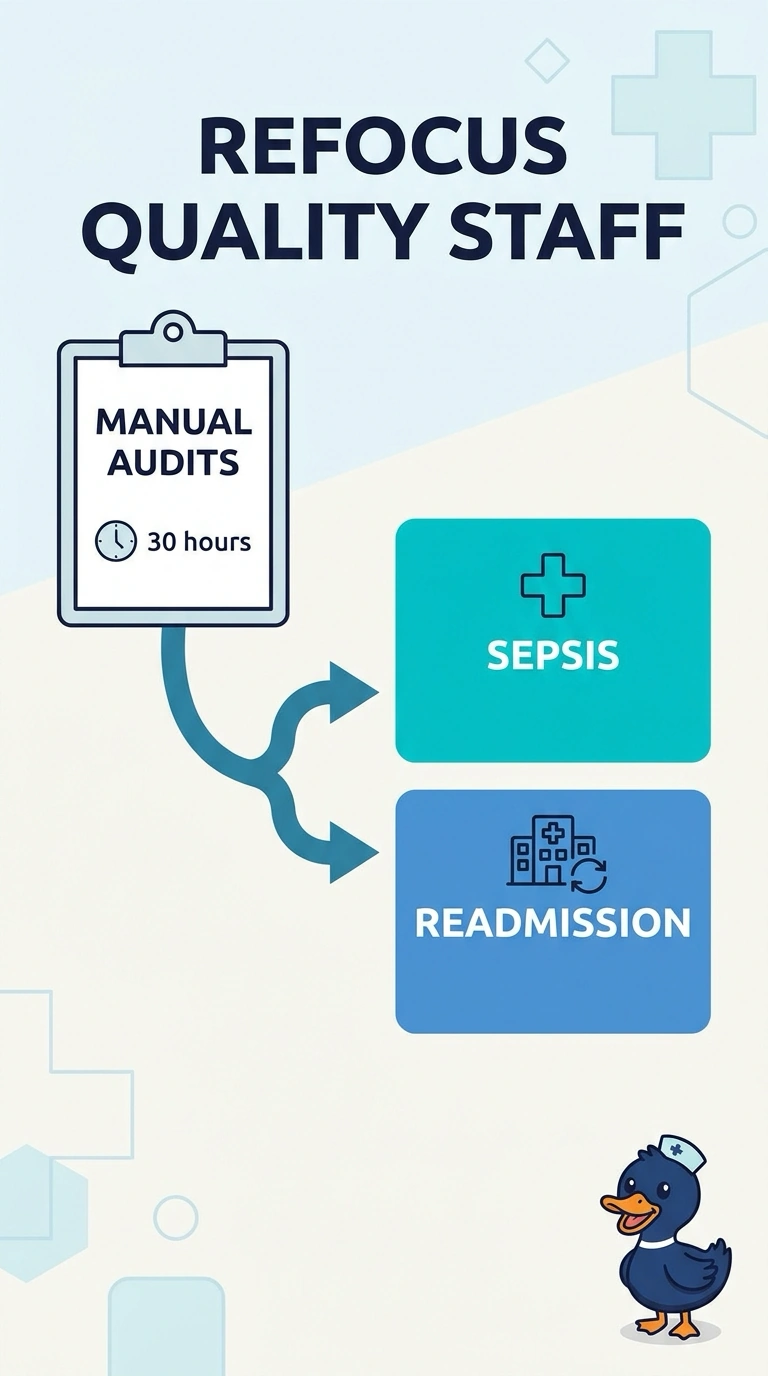
A hospital's quality staff spends 30 hours each week manually auditing paper charting elements that were automated in the electronic health record two years ago, leaving little time for active sepsis and readmission projects. What should the quality leader do?
Select an answer to reveal the explanation.
Short Explanation
You can give your team more room for sepsis and readmission work by retiring paper audits the EHR already performs. Reallocate those hours instead of hiring temporary abstractors, shifting audits to nurse managers on night shifts, or duplicating EHR metrics with weekly manual checks. The trap is adding work without clearing obsolete tasks.
Full Explanation
Retiring obsolete manual audits and reallocating staff to priority work aligns quality department resources with current organizational risks and strategic goals. When the EHR reliably captures those data elements, continuing redundant paper checks consumes skilled analyst hours needed for sepsis and readmission reduction. Hiring temporary abstractors to continue the legacy paper audits spends budget to preserve work that no longer adds value, rather than correcting the resource allocation. Asking unit nurse managers to complete the manual audits during night shifts shifts work onto clinical leaders, risks burnout, and adds no patient benefit. Duplicating the automated EHR metrics with weekly manual spot checks maintains ongoing manual labor after automation has already been validated. The exam caveat is to verify with compliance and medical records leaders that no external regulatory or accreditation mandate still requires a manual log before formally sunsetting the audit. As a practical check, review the annual quality workplan inventory, document which legacy audits are retired, and track weekly analyst hours redirected to strategic projects.
Prefer to study offline? Printable PDF study book + test engine ($7.50, unofficial). These questions stay free here.