
A multi-hospital health system adopts an enterprise strategic goal to reduce hospital-acquired pressure injuries, but inpatient units continue tracking unrelated local metrics without clear accountability. How should the quality leader align bedside execution with the system priority?
Select an answer to reveal the explanation.
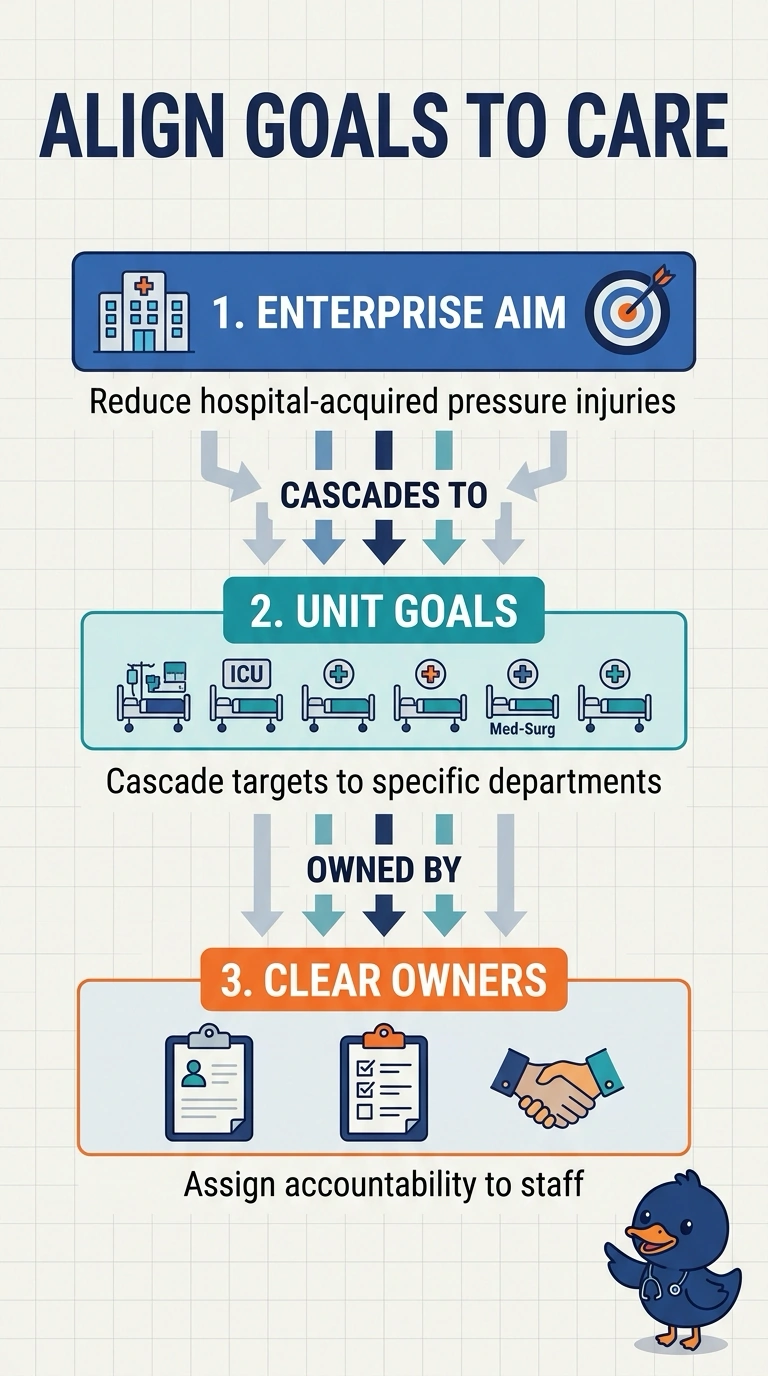
Short Explanation
Strategic goals stall on the executive whiteboard unless you translate them into daily unit ownership. The trap is mistaking passive annual reporting or top-down centralization for real frontline alignment.
Full Explanation
To turn system strategy into reliable bedside practice, you must cascade the enterprise aim into unit goals with clear owners so each clinical manager and unit champion knows their specific target, measurement cadence, and improvement role. This alignment links daily nursing workflows directly to organizational governance while preserving local adaptability. Choosing to publish an annual quality report summarizing systemwide trends provides retrospective visibility, yet it arrives too late and lacks unit-level accountability to change day-to-day care. Attempting to centralize all unit skin assessments under the quality office removes clinical ownership from bedside teams and creates an unsustainable staffing bottleneck. Moving to replace unit huddles with quarterly executive committee reviews slows feedback loops and disconnects senior oversight from real-time clinical risk. Caveat: ensure cascaded targets are paired with shared definitions and adequate unit resources, or staff may view the mandate as an unfunded quota. Operational check: verify during monthly leadership rounds that every inpatient unit displays its current pressure-injury goal, named owner, and action plan on its unit quality board.
Prefer to study offline? Printable PDF study book + test engine ($7.50, unofficial). These questions stay free here.