
An urban hospital finds that unhoused patients discharged after inpatient wound infections return to the emergency department within two weeks because they lack a clean environment for dressing changes and medication storage. Which care transition intervention most directly addresses this gap?
Select an answer to reveal the explanation.
Short Explanation
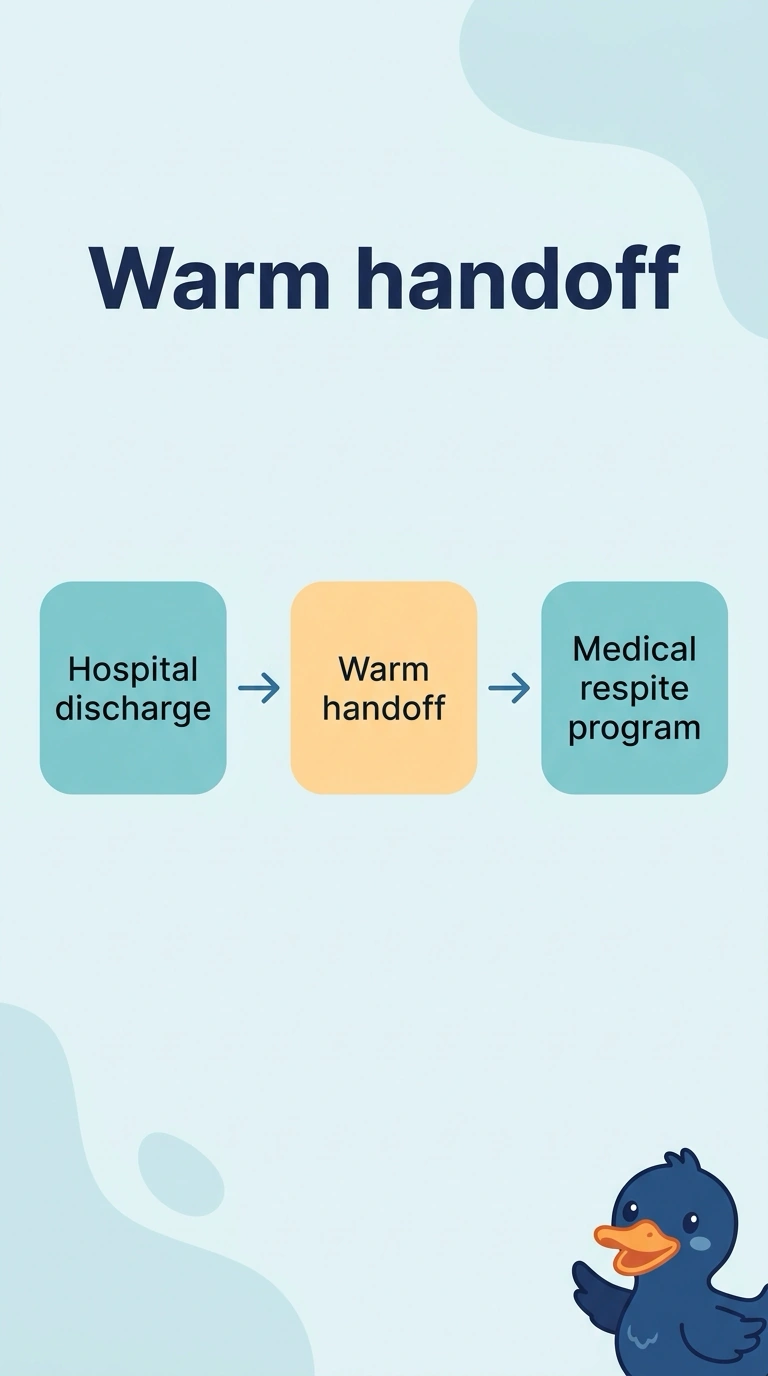
Handing an unhoused patient a discharge packet without a safe place to heal is like prescribing refrigeration to someone without electricity—you have to bridge the environment first. The trap is relying on phone lists or routine appointments, instead of Coordinating a warm handoff to a community medical respite program before discharge.
Full Explanation
Post-discharge recovery requires a safe, hygienic setting where patients can rest, store medications, and receive follow-up wound care. Coordinating a warm handoff to a community medical respite program before discharge works because medical respite provides short-term residential recuperation paired with clinical oversight and housing navigation, directly preventing predictable emergency department returns. Discharging the patient to the street with printed shelter phone numbers leaves acute wound-care needs unmet and shifts the burden onto a patient in crisis. Extending the inpatient stay until a shelter bed is confirmed still leaves the patient without the clinical monitoring a medical respite setting provides. Scheduling a wound-care clinic visit within one week and giving the patient dressing supplies improves follow-up on paper but still leaves the patient without a clean environment for daily dressing changes and safe medication storage, so exposure and missed care drive rapid recurrence. One caveat is that respite capacity can be limited, so discharge planners should screen for housing instability at admission to secure beds early. As an operational check, track 30-day emergency department revisits among unhoused discharges alongside respite placement completion rates.
Prefer to study offline? Printable PDF study book + test engine ($7.50, unofficial). These questions stay free here.