
A rural health system launches a patient-portal remote monitoring program for heart failure patients after discharge, yet six months later readmissions remain high among older adults in outlying counties with limited broadband and smartphone access. Which population health strategy best addresses this transition gap?
Select an answer to reveal the explanation.
Short Explanation
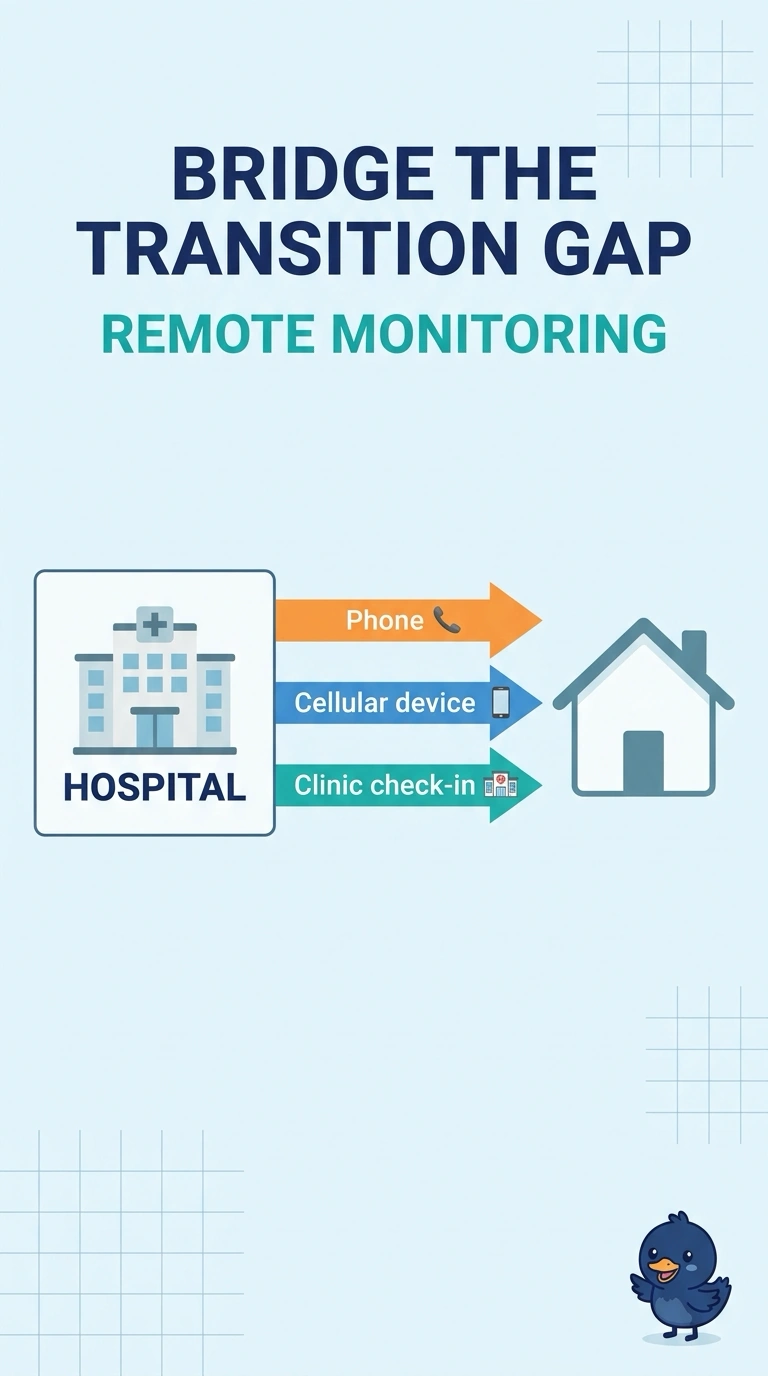
A high-tech patient portal does no good if your rural patients cannot get online in the first place. You close that digital equity gap when you Offer telephone-based monitoring, cellular-enabled devices, or community clinic check-ins. The trap is blaming patients for low engagement instead of adapting the transition model to their reality.
Full Explanation
Equitable care transitions require matching communication channels to patient access and capability, so the population health team should Offer telephone-based monitoring, cellular-enabled devices, or community clinic check-ins. Providing low-barrier alternatives ensures older adults and rural residents without home broadband still receive timely symptom checks, weight monitoring, and medication adjustments during the vulnerable post-discharge window. Choosing to Send automated portal password reset reminders to non-responding patients misdiagnoses an infrastructure and usability barrier as a forgotten login. Choosing to Offer a printed portal guide and a one-time login demo before discharge still depends on portal access and does not help patients without broadband, devices, or digital confidence. Choosing to Give enrollment priority to patients who pass a smartphone skills check excludes the highest-risk older adults and biases program outcome metrics upward. As a health equity caveat, stratify enrollment and readmission rates by age, rurality, and broadband access so digital tools never silently widen disparities. As an operational check, screen every heart failure patient for internet, device access, and caregiver support before discharge and assign the matching follow-up modality.
Prefer to study offline? Printable PDF study book + test engine ($7.50, unofficial). These questions stay free here.