
A primary care network screens adult patients for food insecurity and housing instability, yet 30-day emergency department visits for screened patients remain unchanged. Leadership discovers that staff simply hand out printed resource flyers. Which population health intervention best closes this care gap?
Select an answer to reveal the explanation.
Short Explanation
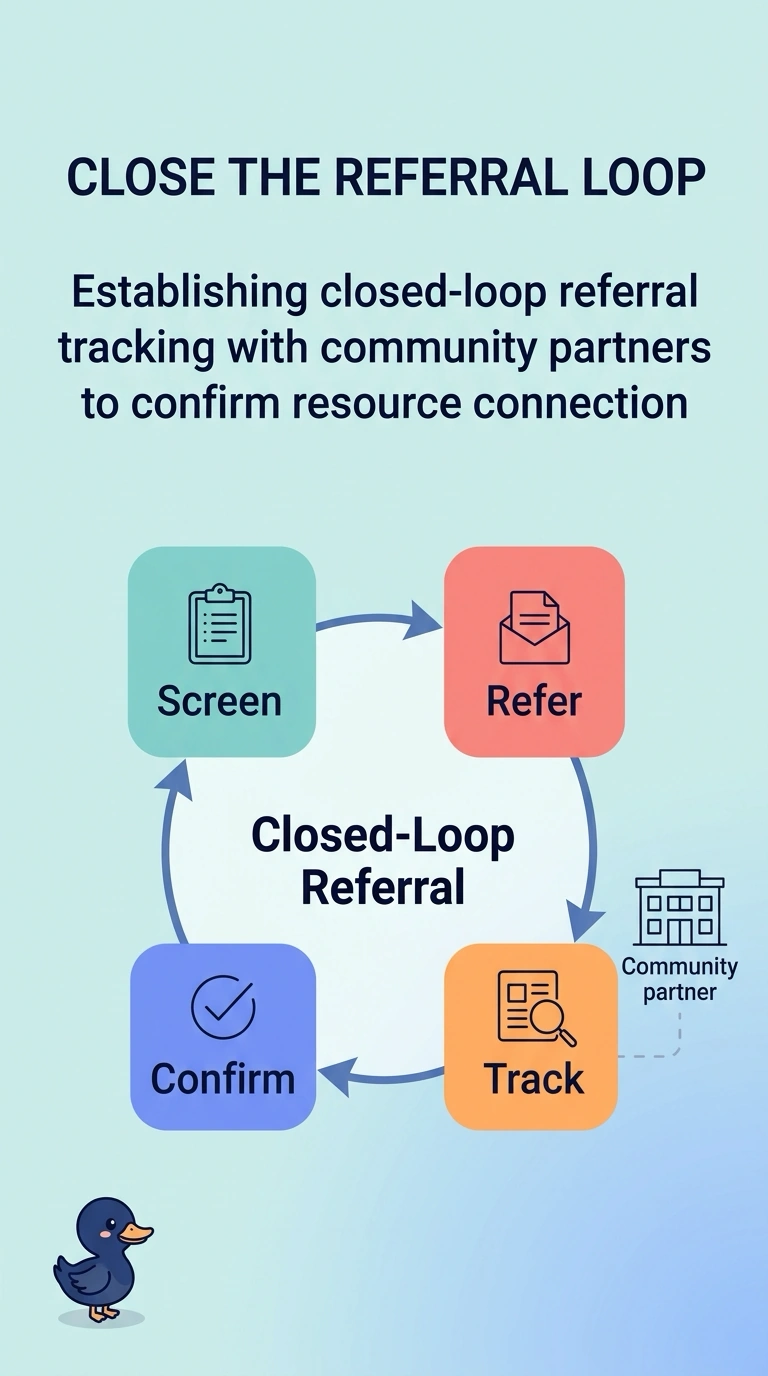
You’re right to focus on what happens after screening: handing out flyers alone may not connect patients with help. Closed-loop tracking lets you confirm referrals reach community services and address barriers along the way.
Full Explanation
Identifying social determinants of health improves outcomes only when patients successfully receive needed community services. Establishing closed-loop referral tracking with community partners enables care teams or community health workers to make electronic or warm referrals, track enrollment status, and intervene when transportation or eligibility barriers block access. Rescreening patients for social needs at each annual wellness visit without navigation support repeats identification without improving connection and can create survey fatigue for patients and staff while leaving the underlying barrier unresolved. Printing generic community hotline phone numbers on standard discharge instructions shifts the navigation burden onto stressed or unwell patients, resulting in low connection rates. Restricting social needs screening to patients enrolled in Medicaid misses high-risk individuals with commercial coverage or uninsured status who may face stigma or not realize community programs exist. A caveat is that closed-loop data sharing requires clear patient consent and privacy safeguards with external community organizations. As a practical check, measure monthly the percentage of positive social needs screens that result in a documented, completed community service connection within 30 days.
Prefer to study offline? Printable PDF study book + test engine ($7.50, unofficial). These questions stay free here.