
A primary care clinic books routine follow-up visits three months in advance, leaving no same-day openings for urgent needs and driving a 22% no-show rate. Which scheduling redesign best aligns appointment capacity with patient demand?
Select an answer to reveal the explanation.
Short Explanation
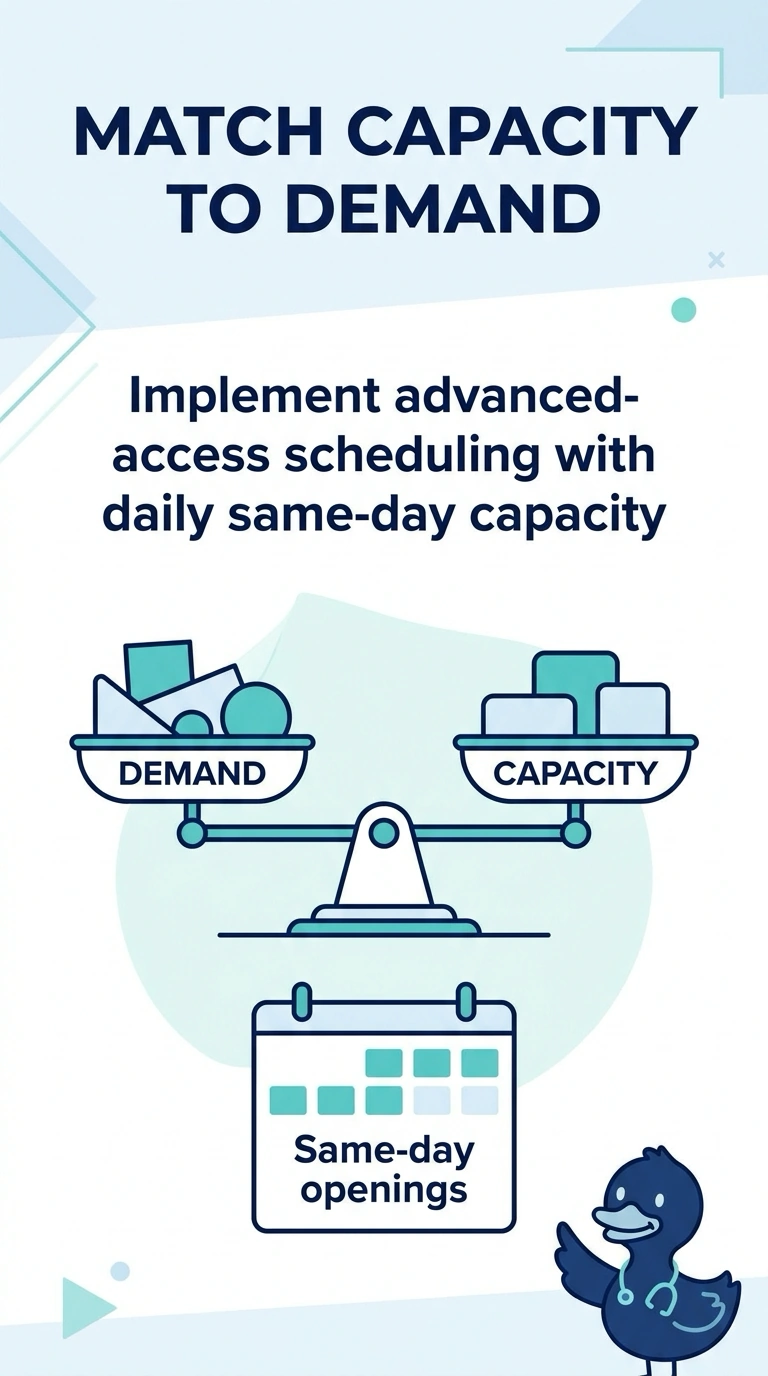
Booking appointments three months out practically guarantees no-shows, because nobody knows what their life will look like next season. The trap is double-booking slots or locking out new patients, which only worsens delays and staff stress. When you shift to advanced-access scheduling with daily same-day capacity, you match supply to real-time demand.
Full Explanation
Implement advanced-access scheduling with daily same-day capacity aligns clinic supply with daily patient demand by reserving open slots each day for urgent and timely follow-up visits, reducing the backlog window during which patients forget appointments or seek emergency care. Double-book slots in sessions with the highest no-show rates creates severe waiting-room bottlenecks and clinician burnout whenever most scheduled patients actually arrive. Limit new patient scheduling to one slot per day until the backlog clears harms community access, delays needed care, and fails to fix the underlying mismatch between daily demand and slot templates. Overbook the last hour of clinic so expected no-shows can be filled from a same-day call list creates evening crowding and staff overtime, relies on unpredictable cancellations, and leaves daytime templates still mismatched to actual demand. As an exam caveat, transitioning to advanced access requires temporarily working down the existing backlog before opening same-day templates so daily capacity is not immediately overwhelmed. As an operational check, monitor third-next-available appointment days alongside weekly no-show rates to verify that access is genuinely improving.
Prefer to study offline? Printable PDF study book + test engine ($7.50, unofficial). These questions stay free here.