
Surgical technicians at an outpatient center assemble custom instrument case carts three days before scheduled procedures, resulting in frequent teardown, re-sterilization, and wasted sterile wraps whenever surgeons cancel or reschedule cases. Which Lean waste does this early batching primarily represent?
Select an answer to reveal the explanation.
Short Explanation
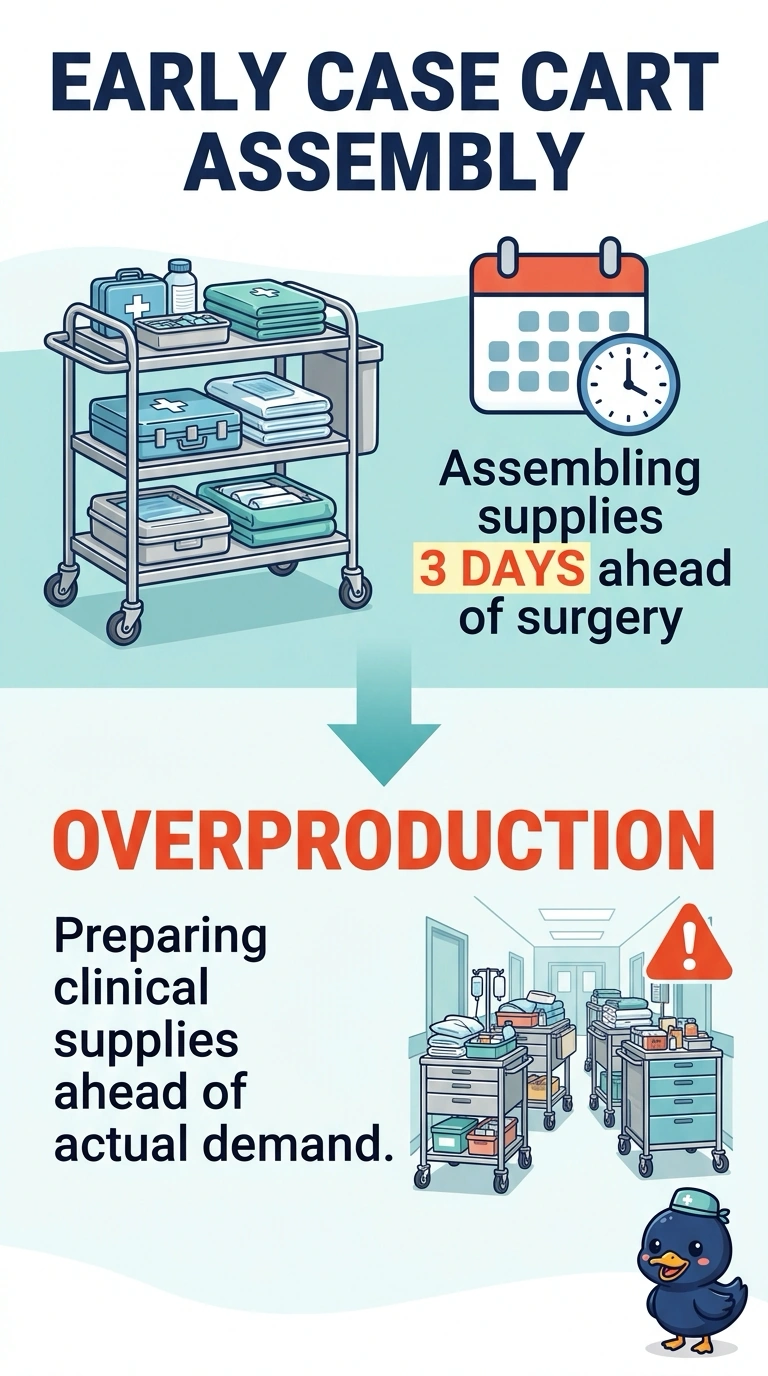
Prepping surgical carts days in advance feels productive until schedule changes force your team to undo half the work. In Lean thinking, making items before the next step actually needs them is overproduction, and it quietly multiplies rework and supply waste.
Full Explanation
Identifying Overproduction from preparing clinical supplies ahead of actual demand pinpoints the root Lean waste in building surgical carts three days early. Overproduction occurs whenever a process produces outputs earlier or in larger batches than downstream demand requires, triggering extra storage, expired sterility, and teardown rework when schedules shift. Attributing the problem to Unnecessary staff motion caused by poorly arranged sterile storage shelves describes physical movement waste rather than premature batch assembly. Blaming Excessive waiting caused by delayed turnover between morning surgical cases describes idle downstream time, which is the opposite of assembling supplies days too early. Citing Defect waste from incorrect sterilization of surgical instrument trays describes a sterilization quality failure, not the timing error of building correct carts before they are needed. One caveat is that shifting toward just-in-time cart assembly requires dependable schedule lock-in cutoffs so operating rooms still start on time. As an operational check, track the weekly number of pre-assembled case carts torn down or re-sterilized due to schedule changes before and after adjusting assembly timing.
Prefer to study offline? Printable PDF study book + test engine ($7.50, unofficial). These questions stay free here.