
A nursing home's quality committee historically focused only on auditing charts after falls occurred and disciplining staff when monthly rates exceeded a preset threshold. Now leadership wants to proactively redesign toileting, lighting, and mobility workflows to lower falls continuously. Which shift in approach does this represent?
Select an answer to reveal the explanation.
Short Explanation
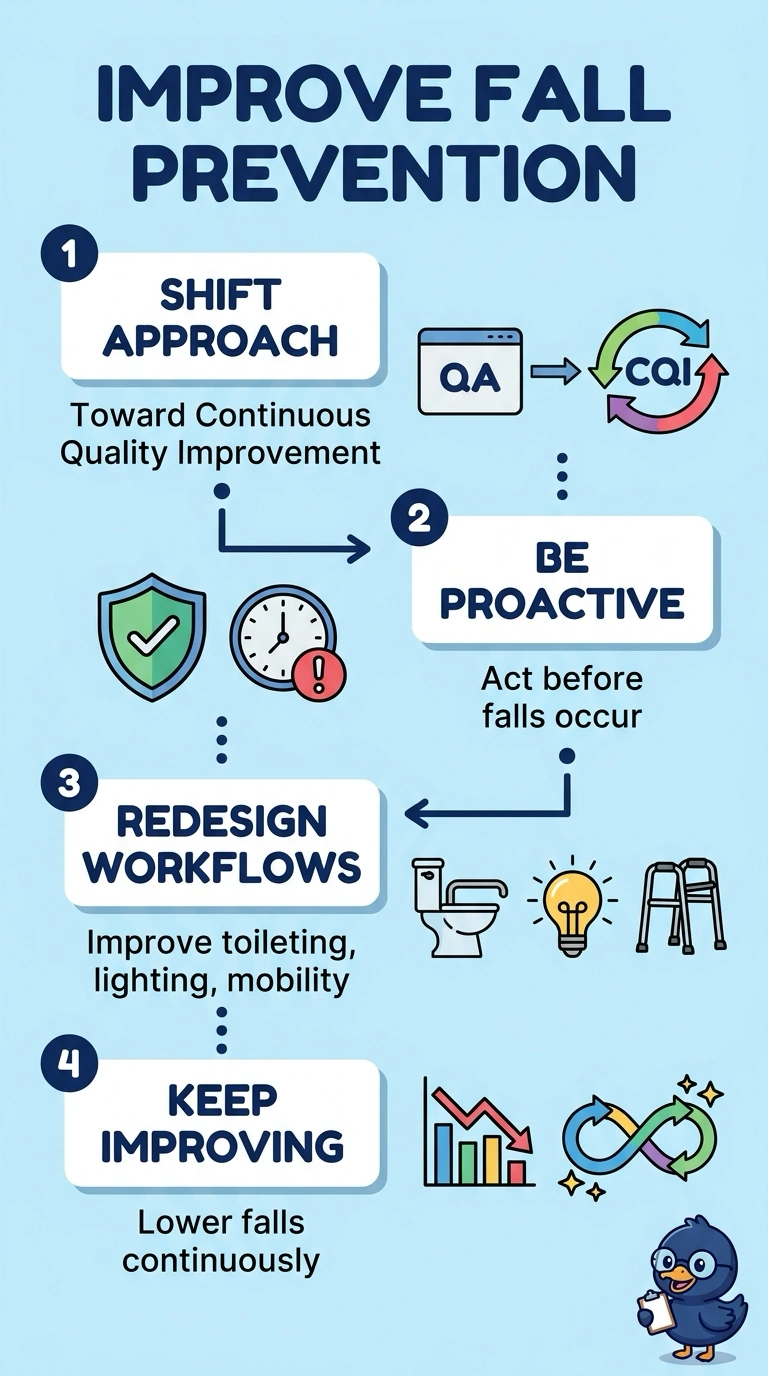
Quality assurance asks whether you cleared a minimum bar after the fact, while quality improvement asks how you can make the whole process safer tomorrow. The trap is thinking threshold policing alone prevents future falls when the underlying daily workflow stays broken.
Full Explanation
Moving from retrospective quality assurance toward proactive continuous quality improvement captures the transition from after-the-fact inspection and threshold enforcement to ongoing, system-level process redesign. While quality assurance verifies compliance against minimum standards, continuous quality improvement engages frontline staff in testing and refining daily workflows—such as rounding, lighting, and mobility—to reduce variation and prevent harm before it happens. Replacing evidence-based clinical guidelines with a single set of rules written by the state agency weakens standardization and moves away from structured improvement science. Shifting from interdisciplinary teamwork toward individual clinician accountability describes the older punitive model that leadership is leaving behind rather than the collaborative systems model it is adopting. Reducing outcome measurement to a single annual falls summary tied to regulatory inspections removes the ongoing data feedback loop that continuous improvement depends on to verify whether workflow changes actually reduce falls. A helpful caveat is that continuous improvement complements rather than replaces baseline regulatory assurance, since facilities still need minimum safety thresholds. Operationally, pair monthly fall-rate monitoring with weekly audits of proactive rounding and environmental safety checks.
Prefer to study offline? Printable PDF study book + test engine ($7.50, unofficial). These questions stay free here.