
A Six Sigma team working to cut laboratory specimen hemolysis rates is eager to purchase new collection tubes during week two, even though baseline hemolysis rates by unit and verified root causes have not been completed. Which governance step keeps the team disciplined?
Select an answer to reveal the explanation.
Short Explanation
Jumping straight to buying new supplies before proving what causes hemolysis is like replacing your car's alternator when the battery cable is loose. The trap is skipping phase gates out of eagerness instead of verifying evidence first.
Full Explanation
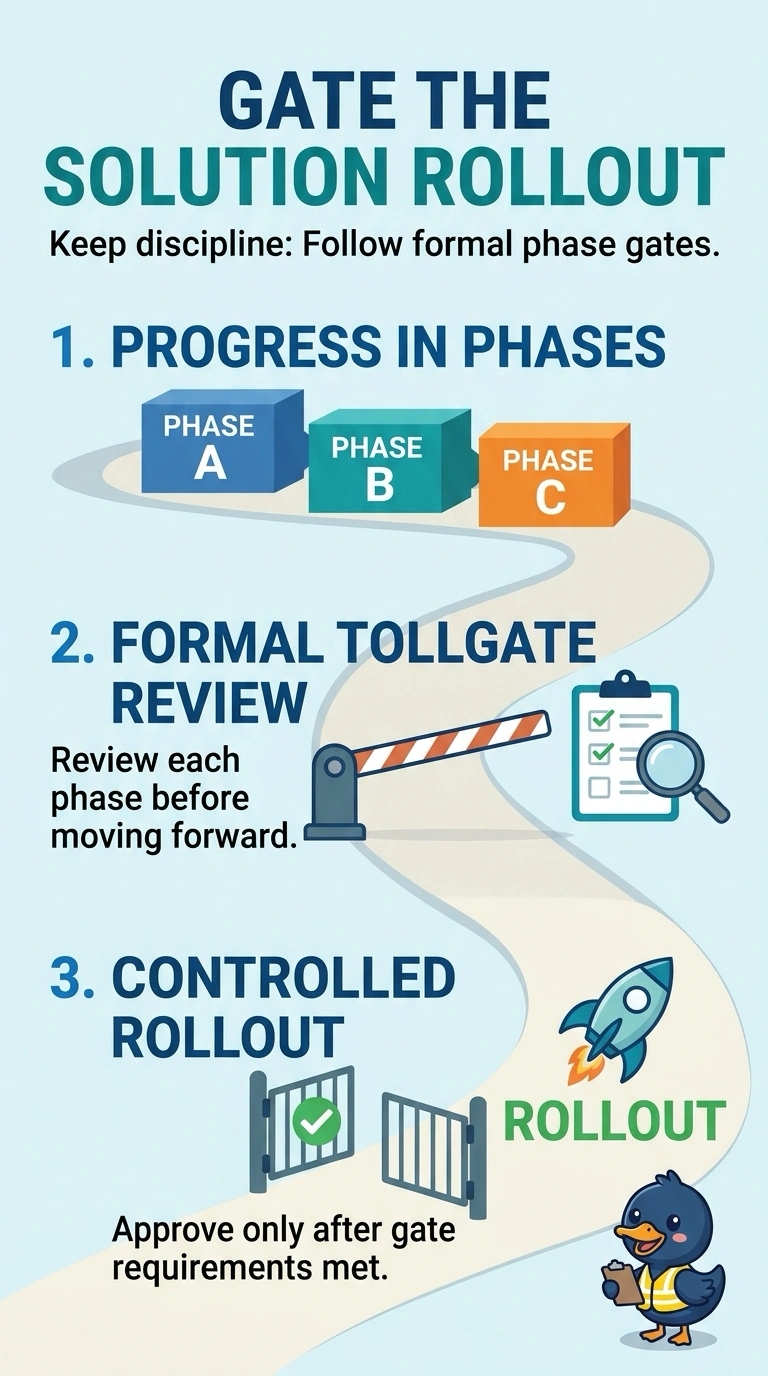
Conducting formal phase tollgate reviews before approving solution rollout requires the improvement team to present completed deliverables—such as a validated baseline measurement system and data-backed root causes—to the project sponsor before moving from Measure and Analyze into Improve. This checkpoint prevents teams from spending capital on fixes that miss the true cause, such as tourniquet dwell time or pneumatic tube transport rather than tube type. Expanding the project charter to include outpatient scheduling and courier routes introduces scope creep and delays resolution of the core hemolysis problem. Replacing the formal improvement charter with an informal staff suggestion box abandons structured problem-solving and accountability. Approving the tube purchase now because supplier data show lower hemolysis with the new tubes jumps to a solution based on vendor claims without verified internal causes and leaves the team unable to tell whether any improvement came from the tubes or random variation. As a caveat, tollgate reviews should be brisk, supportive coaching checkpoints rather than bureaucratic hurdles. Operationally, use a standardized one-page phase checklist at each sponsor review to confirm data readiness.
Prefer to study offline? Printable PDF study book + test engine ($7.50, unofficial). These questions stay free here.