
An outpatient wound clinic experiences recurring mid-week stockouts of sterile dressing kits because staff guess when to reorder supplies, yet nurses also hoard extra boxes in exam rooms out of fear of running short. Which Lean tool best stabilizes inventory?
Select an answer to reveal the explanation.
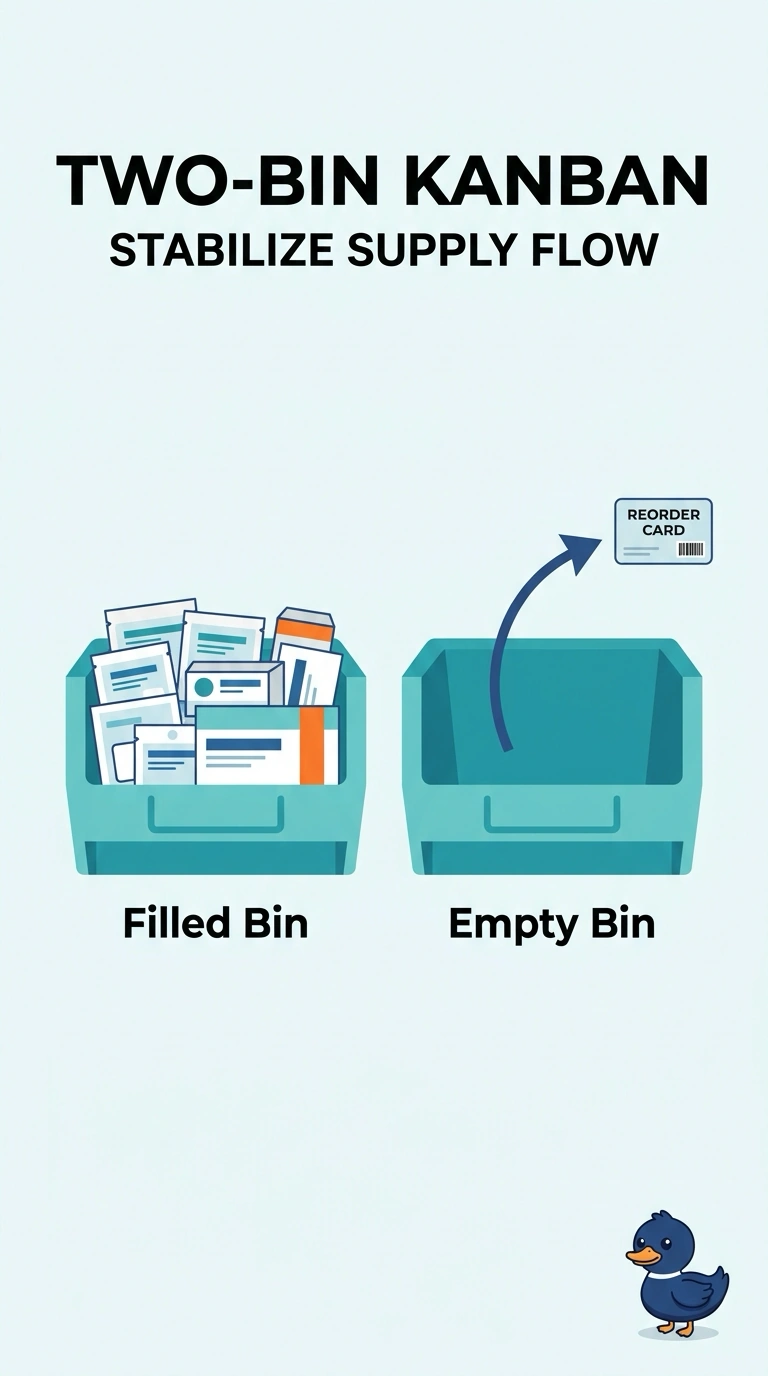
Short Explanation
Think of a two-bin Kanban system like the low-fuel light on your dashboard that triggers a refill long before the tank runs dry. The trap is blaming nurses for hoarding supplies when your clinic actually lacks a reliable visual pull signal.
Full Explanation
Supply stockouts and staff hoarding are classic symptoms of a push-based inventory process that relies on guesswork rather than real-time consumption. Implementing A two-bin Kanban pull system triggered by visual reorder cards solves this problem: staff draw supplies from the front bin until it is empty, place the attached reorder card in the replenishment queue, and immediately use the backup bin while new stock arrives. By contrast, A swimlane flowchart mapping who orders and who receives dressing kits clarifies roles and handoffs for ordering responsibilities rather than creating a consumption-driven pull signal to stabilize inventory. A scatter diagram comparing clinic visit volume to supply costs may show whether spending rises with volume, yet it provides no operational mechanism to trigger timely restocking. Likewise, A Pareto chart ranking dressing kit stockouts by supply category helps prioritize which categories drive most stockouts without fixing the replenishment workflow. As a caveat, Kanban bin quantities must be sized to cover lead time plus a modest safety buffer, or stockouts will still occur during supplier delays. Operationally, audit the supply room weekly to confirm empty front bins have active reorder cards and zero stockout incidents.
Prefer to study offline? Printable PDF study book + test engine ($7.50, unofficial). These questions stay free here.