
A primary care clinic tests a revised rooming checklist with one physician and two medical assistants for three days, notices the allergy section slows intake, and adjusts the form before testing it for another week. Which quality improvement method is the clinic using?
Select an answer to reveal the explanation.
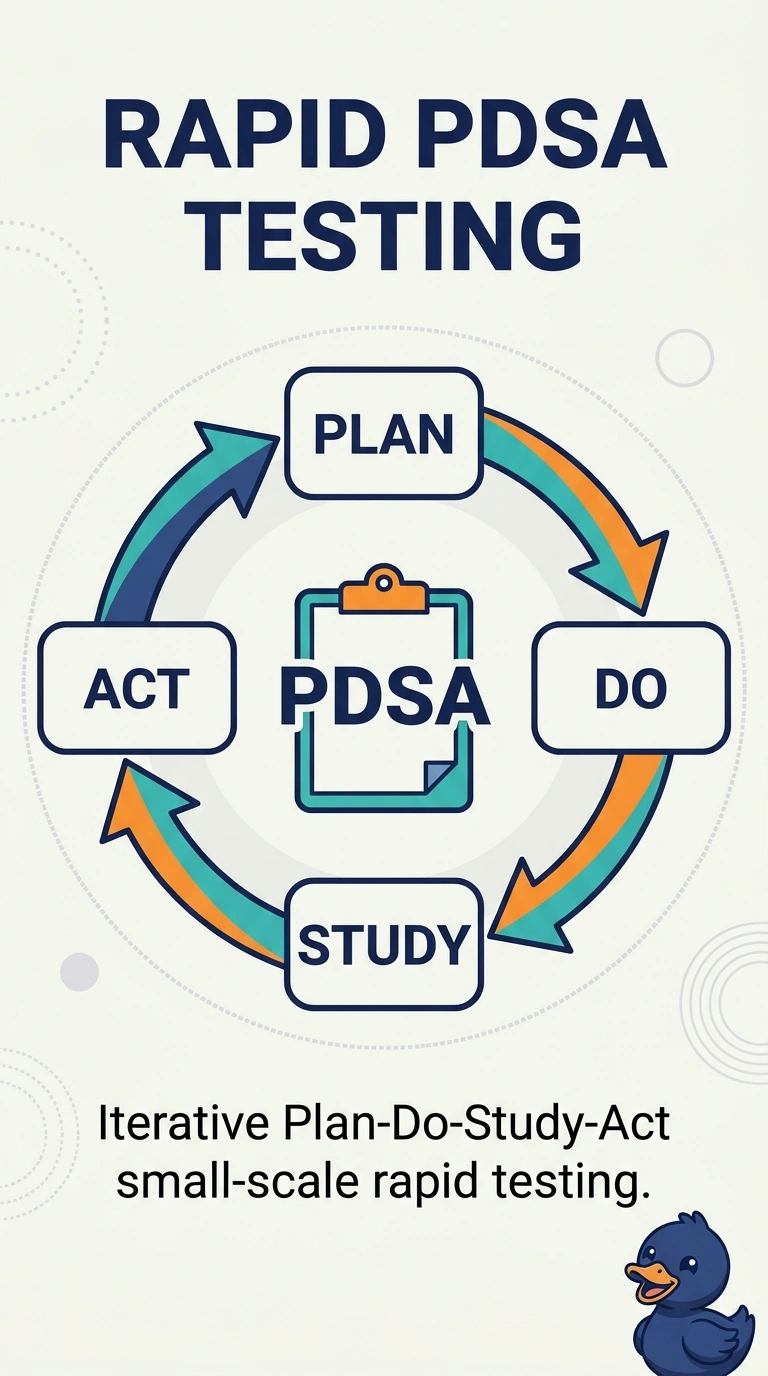
Short Explanation
Before you cook a holiday meal for fifty guests, you taste-test a small batch on the stove. That quick trial-and-adjust loop is classic Plan-Do-Study-Act testing, whereas the trap is mistaking a tiny three-day pilot for a full Six Sigma project or a backward-looking root cause analysis.
Full Explanation
Iterative Plan-Do-Study-Act small-scale rapid testing describes this workflow because the team planned a change, tested it on a tiny scale with one clinician, studied the intake delay, and acted to refine the form before running a second cycle. A Six Sigma define-measure-analyze-improve-control audit is a structured methodology focused on reducing statistical variation and defects across an entire process rather than running quick, informal three-day form trials. A hospital-wide policy rollout after a single committee approval vote bypasses small-scale learning altogether and risks spreading a flawed checklist to every clinic at once. A retrospective root cause analysis after a sentinel event investigates the underlying system failures behind a serious adverse event rather than proactively testing a new intake workflow. As a caveat, moving from a successful small PDSA cycle to full clinic adoption still requires testing across busier shifts and different staff roles. For an operational check, document the predicted intake time, actual measured duration, and staff feedback after each cycle before scaling the checklist clinic-wide.
Prefer to study offline? Printable PDF study book + test engine ($7.50, unofficial). These questions stay free here.